

Victoria Falls: Where the Earth Opens and the Sky Learns to Listen.
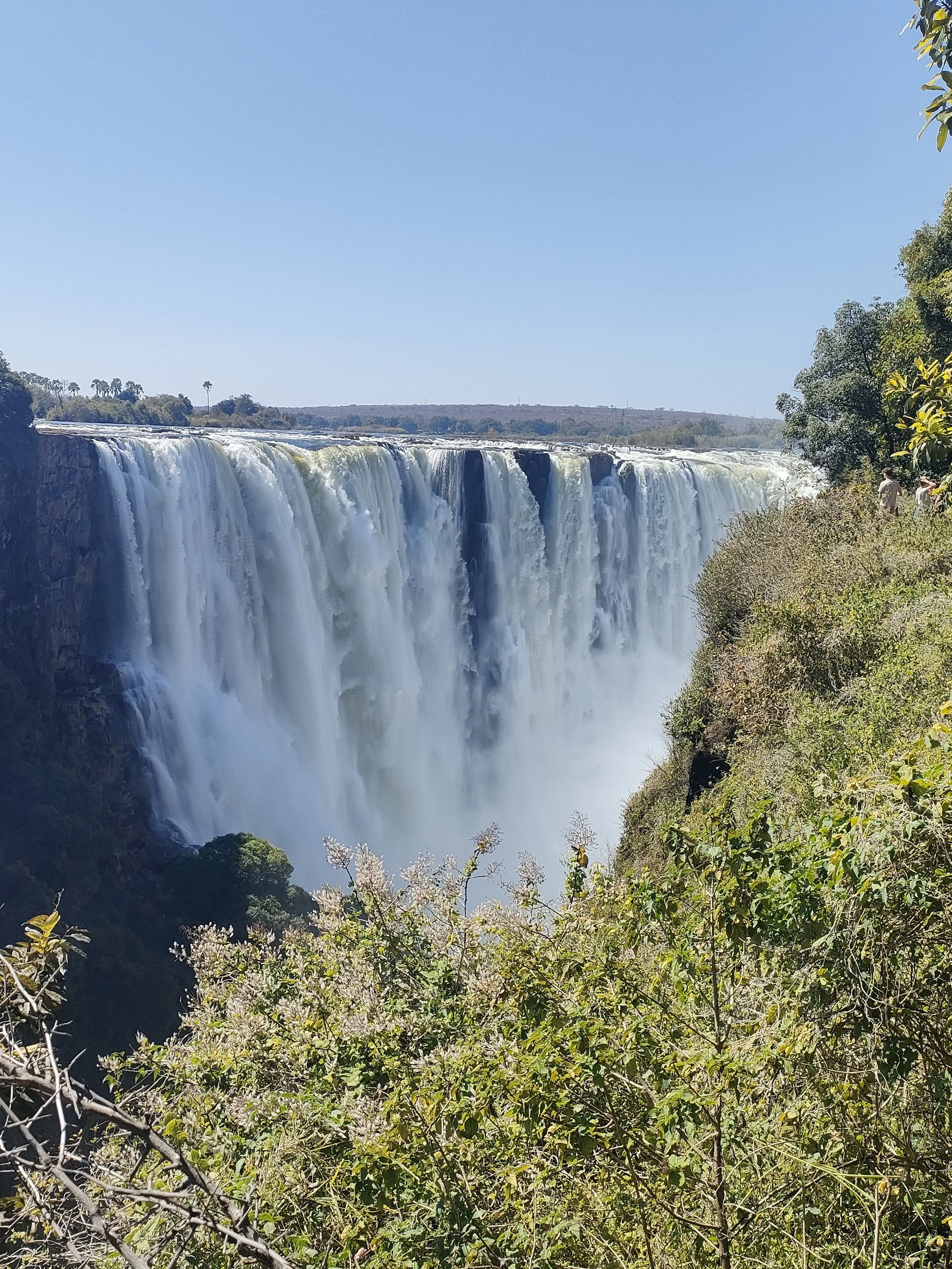
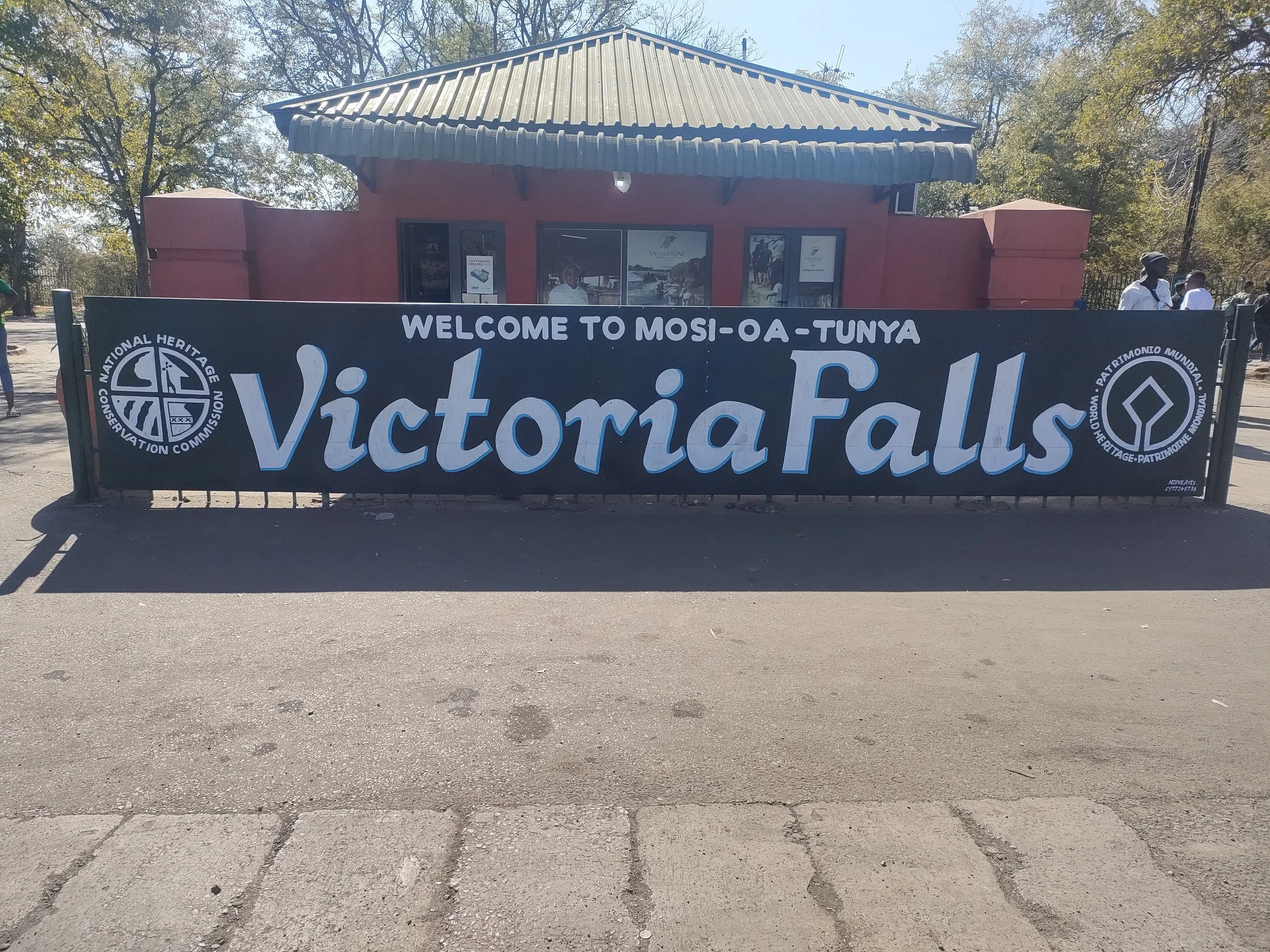
The smoke that thunders. Mosi oa Tunya. A name that captures the force, the rhythm and the ancient presence of the Zambezi as it falls into the gorge. Few places show the scale of nature as clearly as this.
Victoria Falls does not behave like an ordinary landmark. It announces itself long before you see it. The first sign is the distant rumble, a low vibration that travels through the ground. Then comes the rising column of mist, towering above the treeline like smoke from a hidden fire. When you finally arrive at the edge, you discover that the land has opened into a colossal fracture and that the Zambezi River is hurling itself into the gap with a force that feels almost mythic. For generations, people living along this part of southern Africa have known the Falls by a name that captures both presence and personality: Mosi oa Tunya, the smoke that thunders. It remains the truest description. Victoria Falls is not a static curtain of water. It is motion and sound and elemental strength, the river reinventing itself at the moment of descent.
The River That Leads to the Edge.
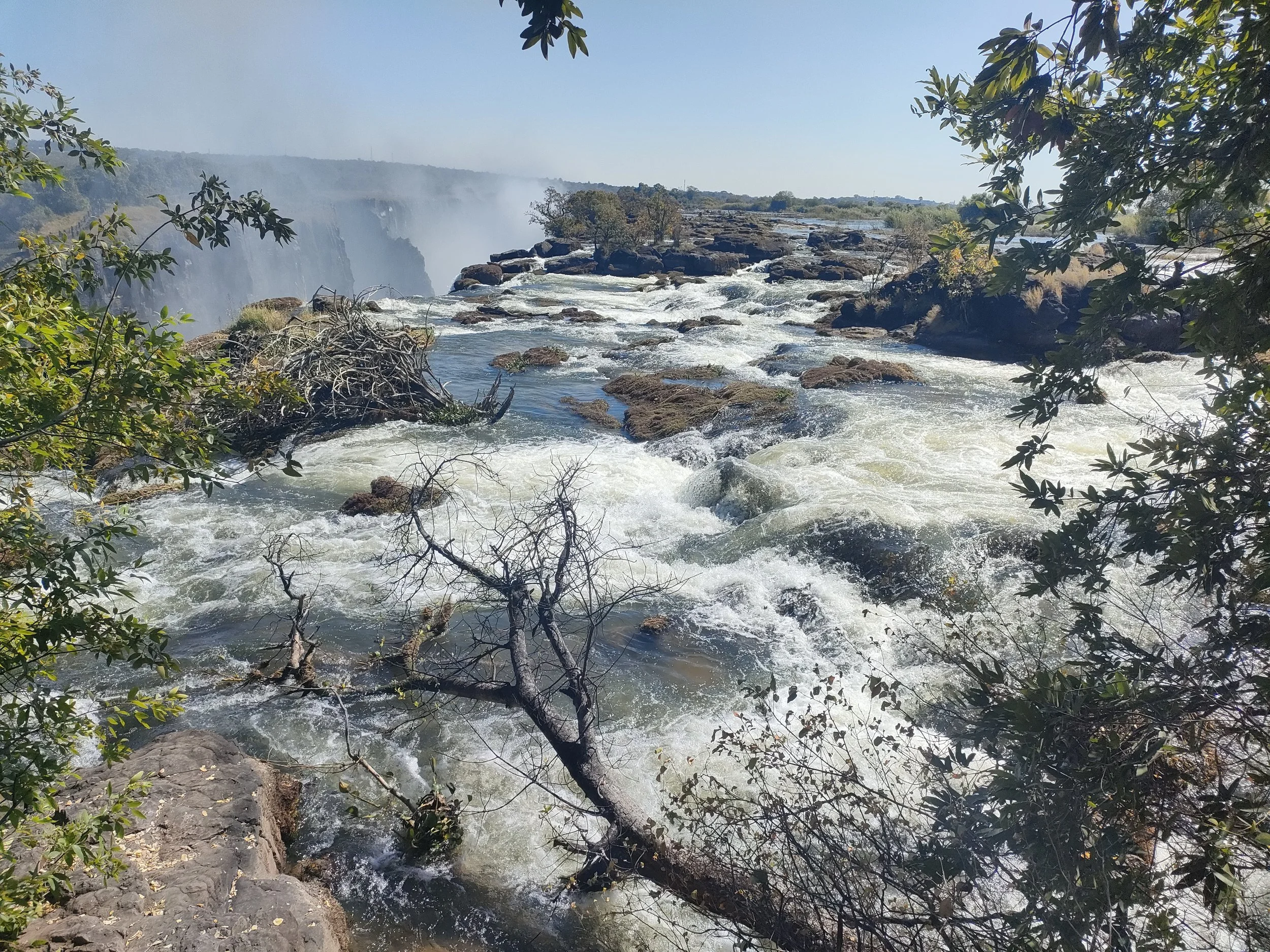
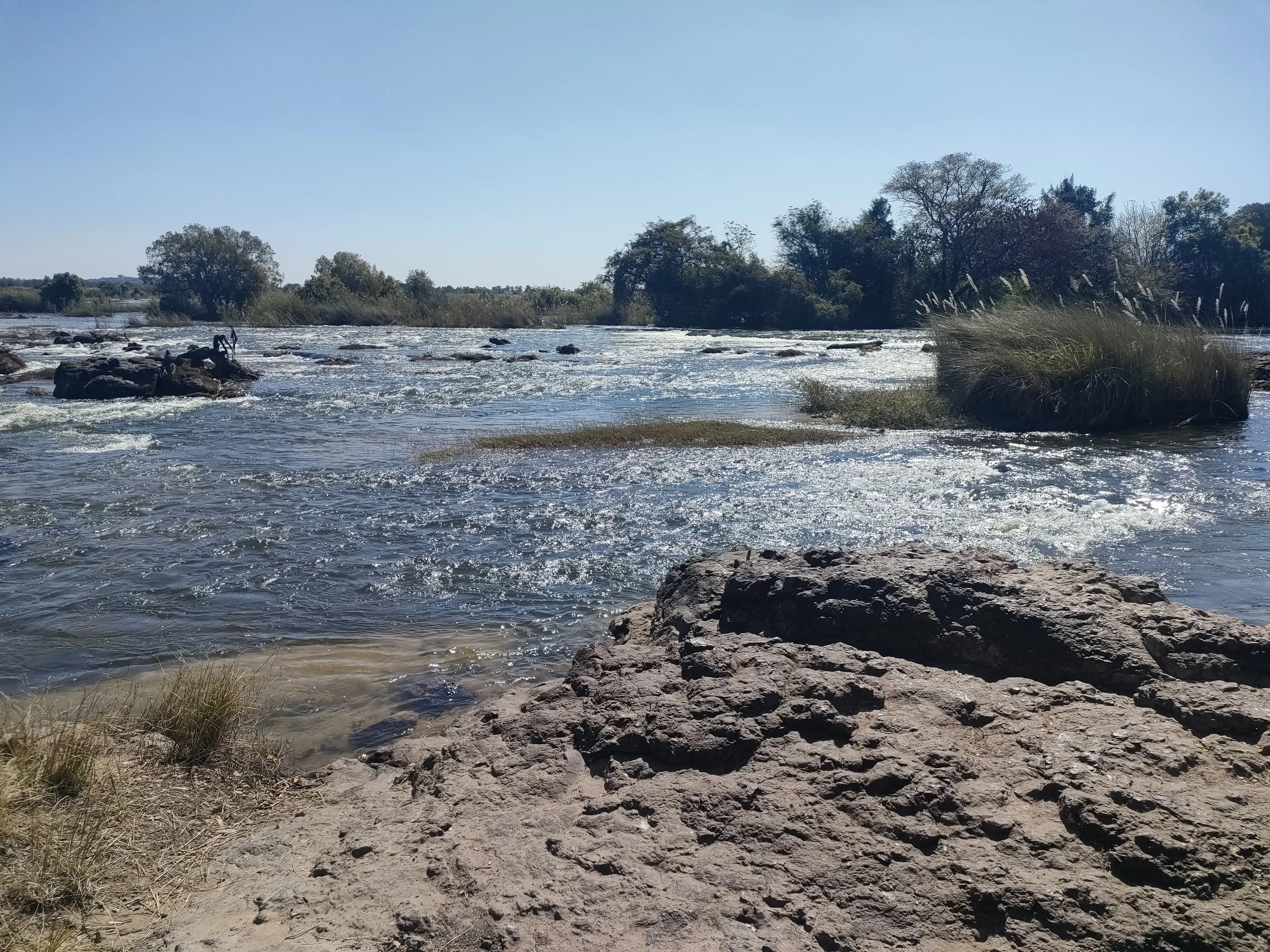
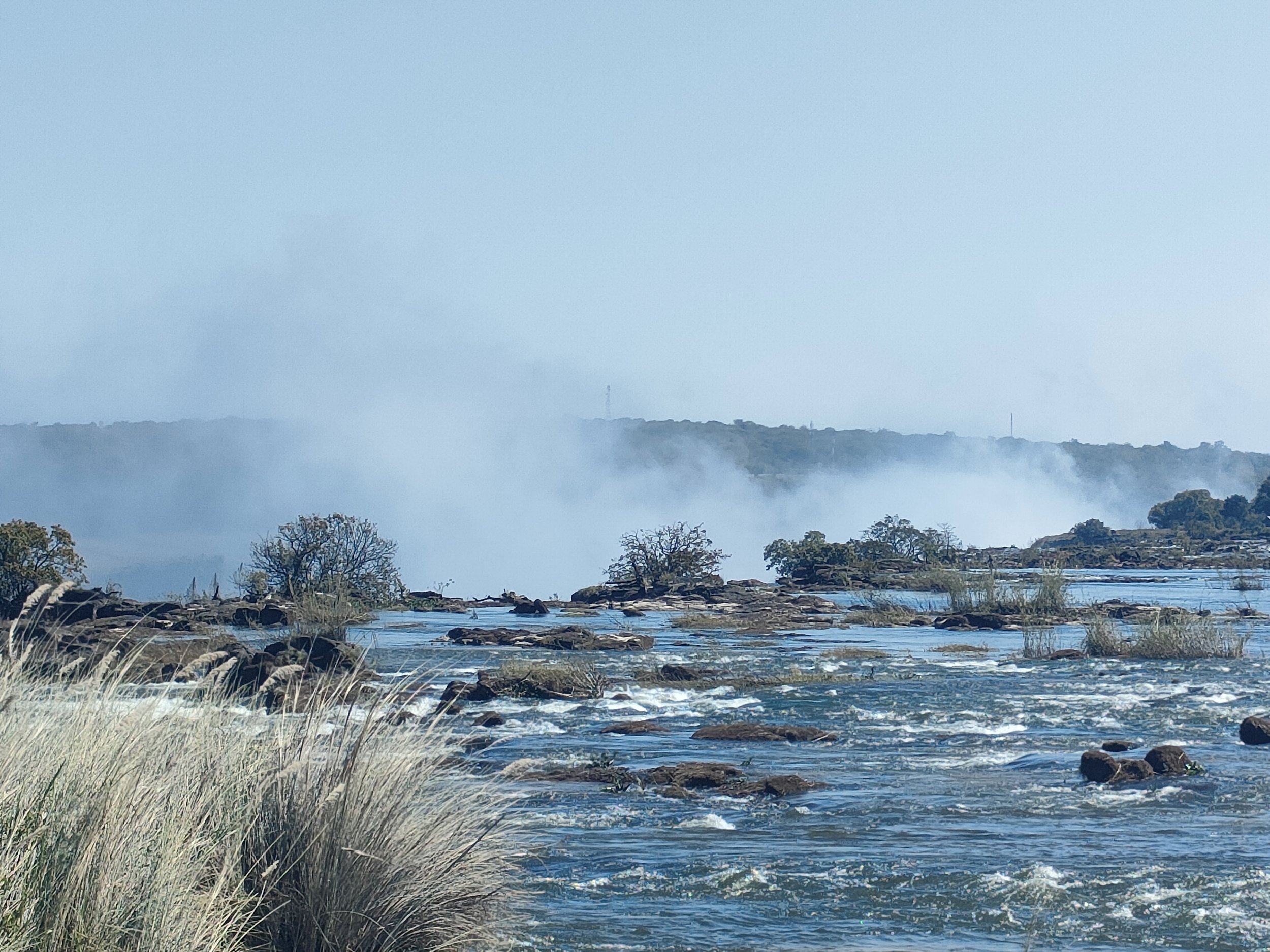
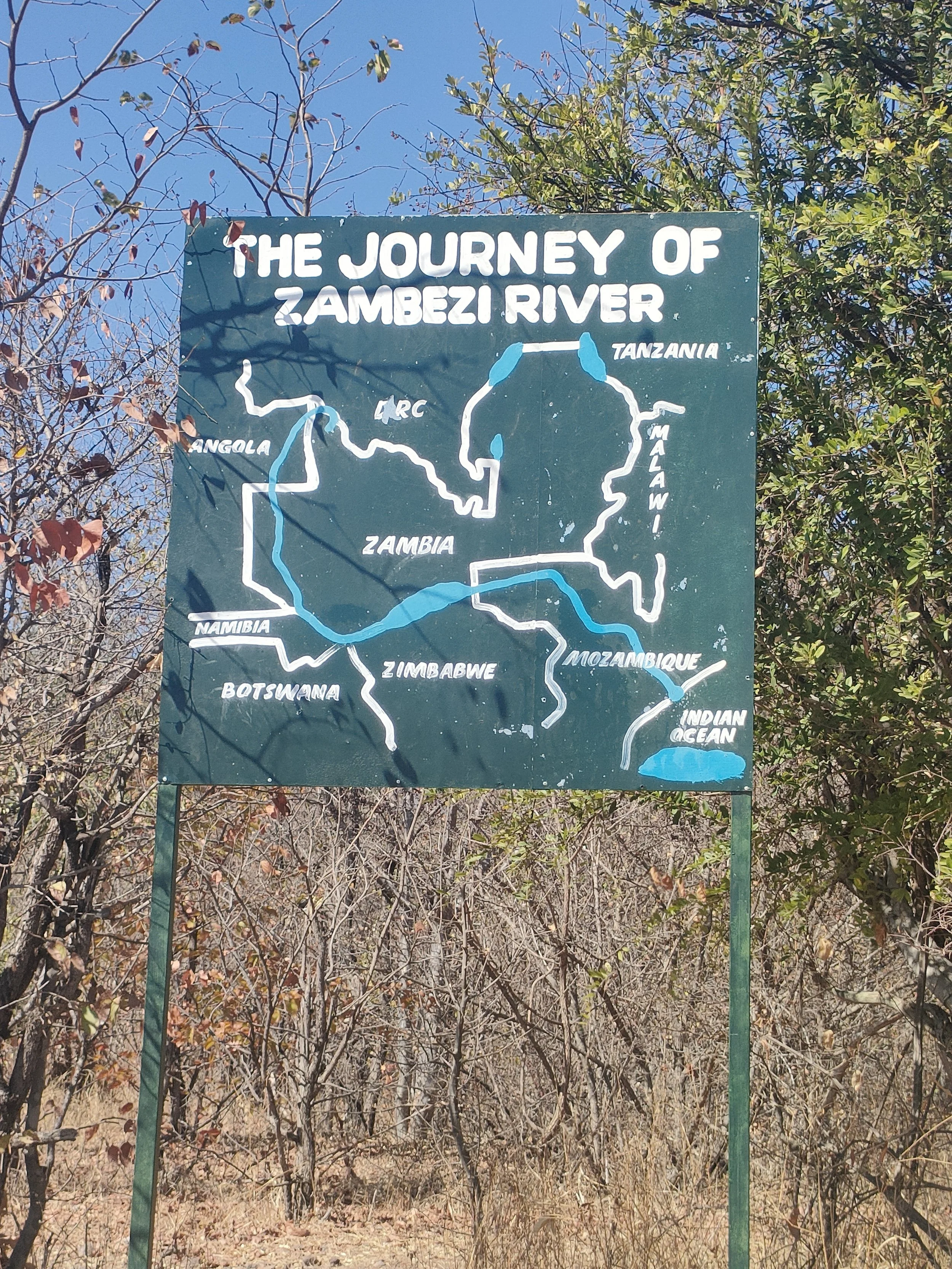
Upstream, the Zambezi is deceptively quiet. It glides through reed beds and islands with little urgency, its surface broad and unbroken. Nothing in its gentle movement hints at what lies ahead. The river begins its journey in the highlands of Zambia and Angola, flowing for more than 2,500 kilometres before reaching the Indian Ocean. Along the way it becomes a lifeline for communities, a boundary line between countries, and a source of stories that travel from generation to generation. At Victoria Falls the river undergoes a transformation. It gathers speed, approaches the basalt lip and then releases itself into open air. The drop is approximately 108 metres, sending the water into a narrow chasm called the First Gorge. At 1,708 metres across, the Falls form the largest continuous falling sheet of water on the planet. Not the tallest. Not the widest. But the most powerful combination of both. The result is an experience that overwhelms the senses. The air thickens with spray. The roar becomes a physical pressure. Rainbows form and dissolve in seconds. You step into a landscape that behaves as if it is alive.
How the Earth Made a Waterfall.
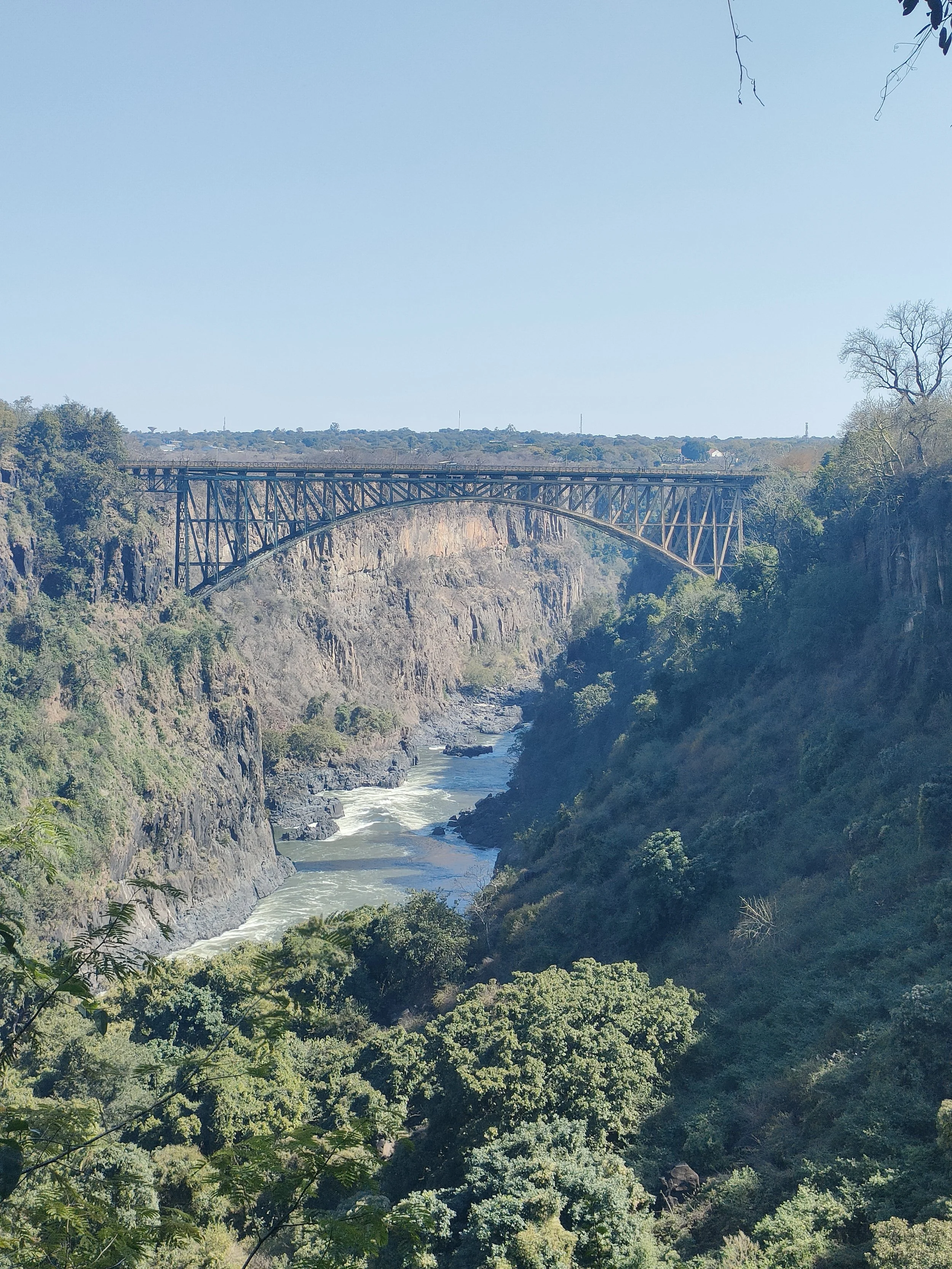
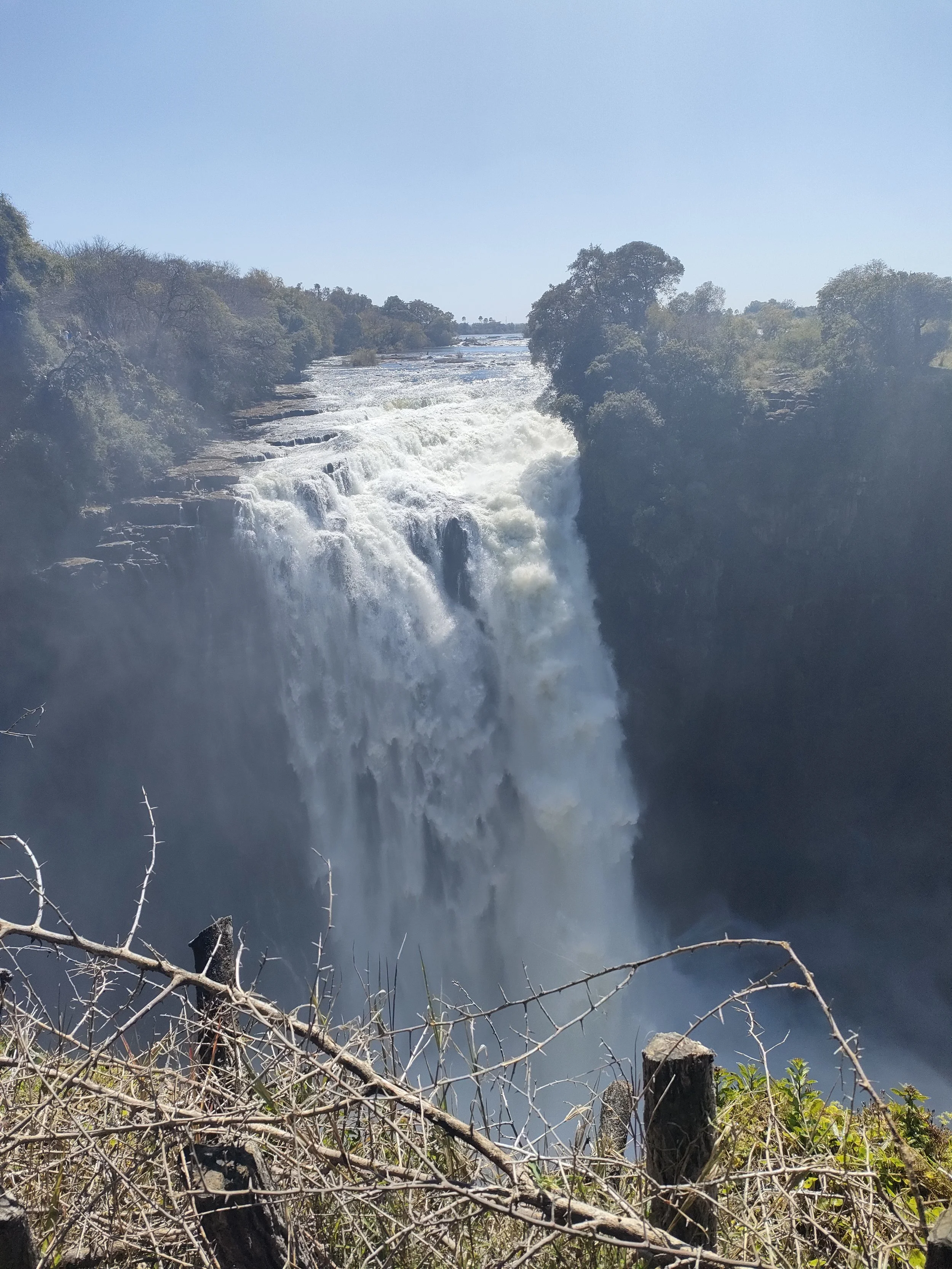
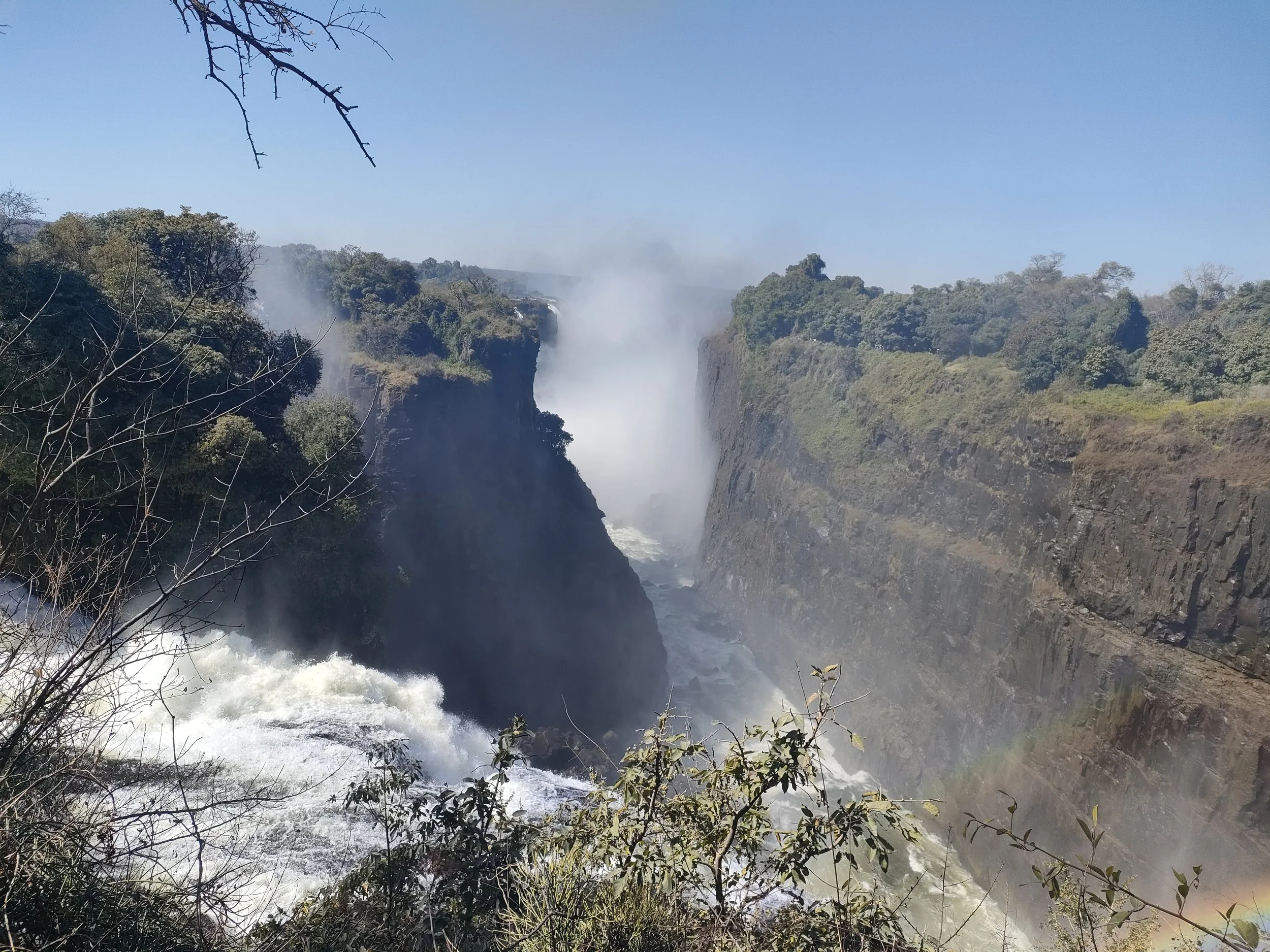
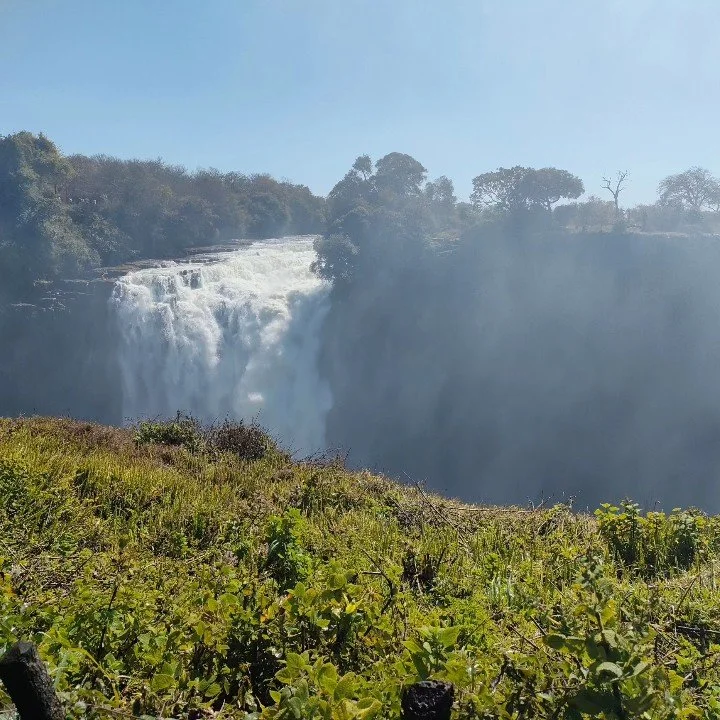
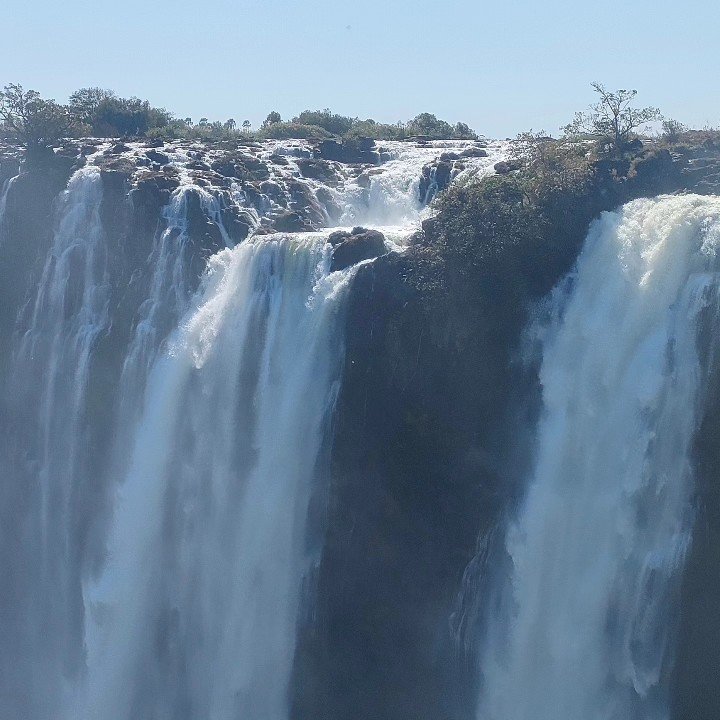
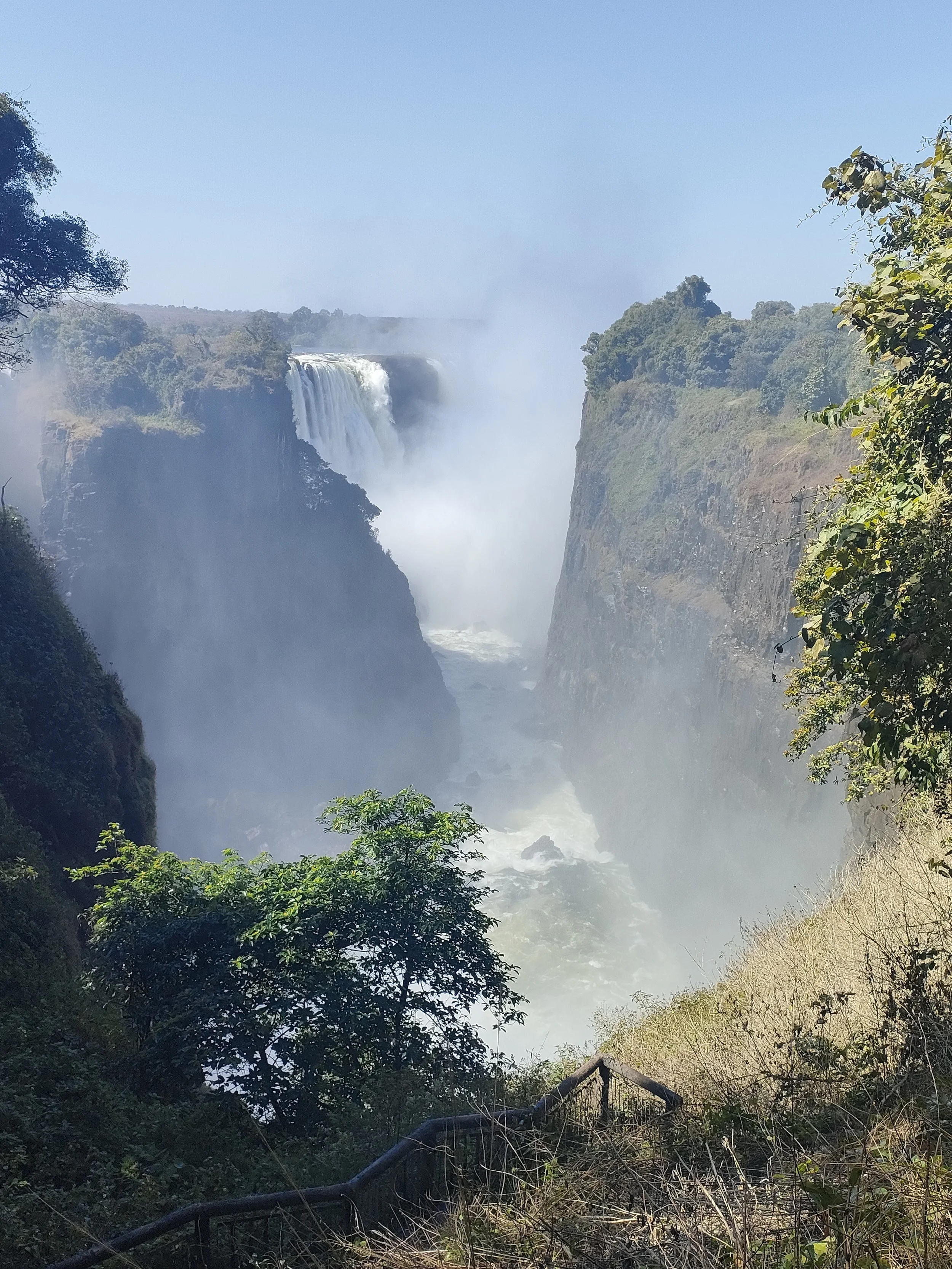
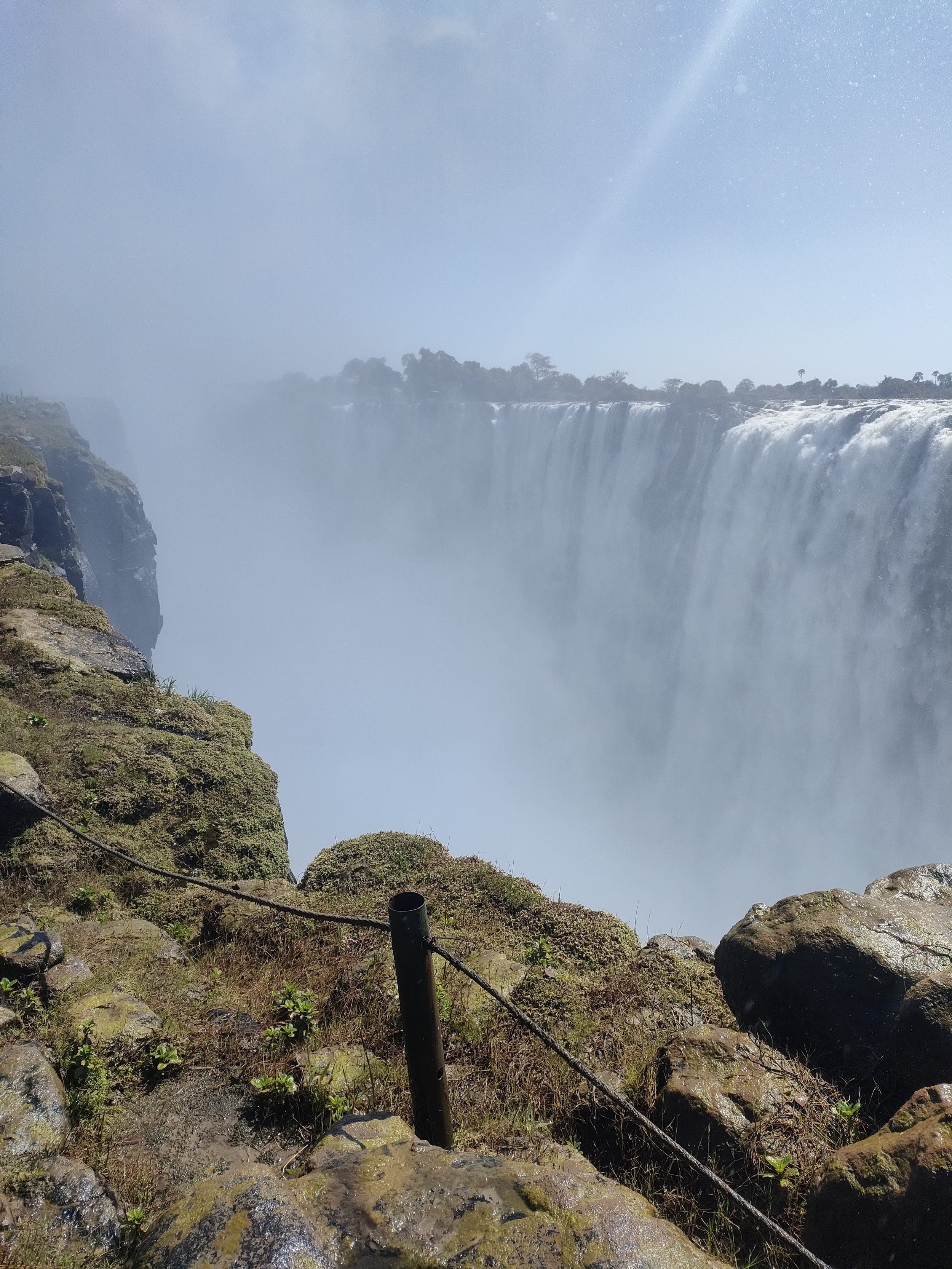
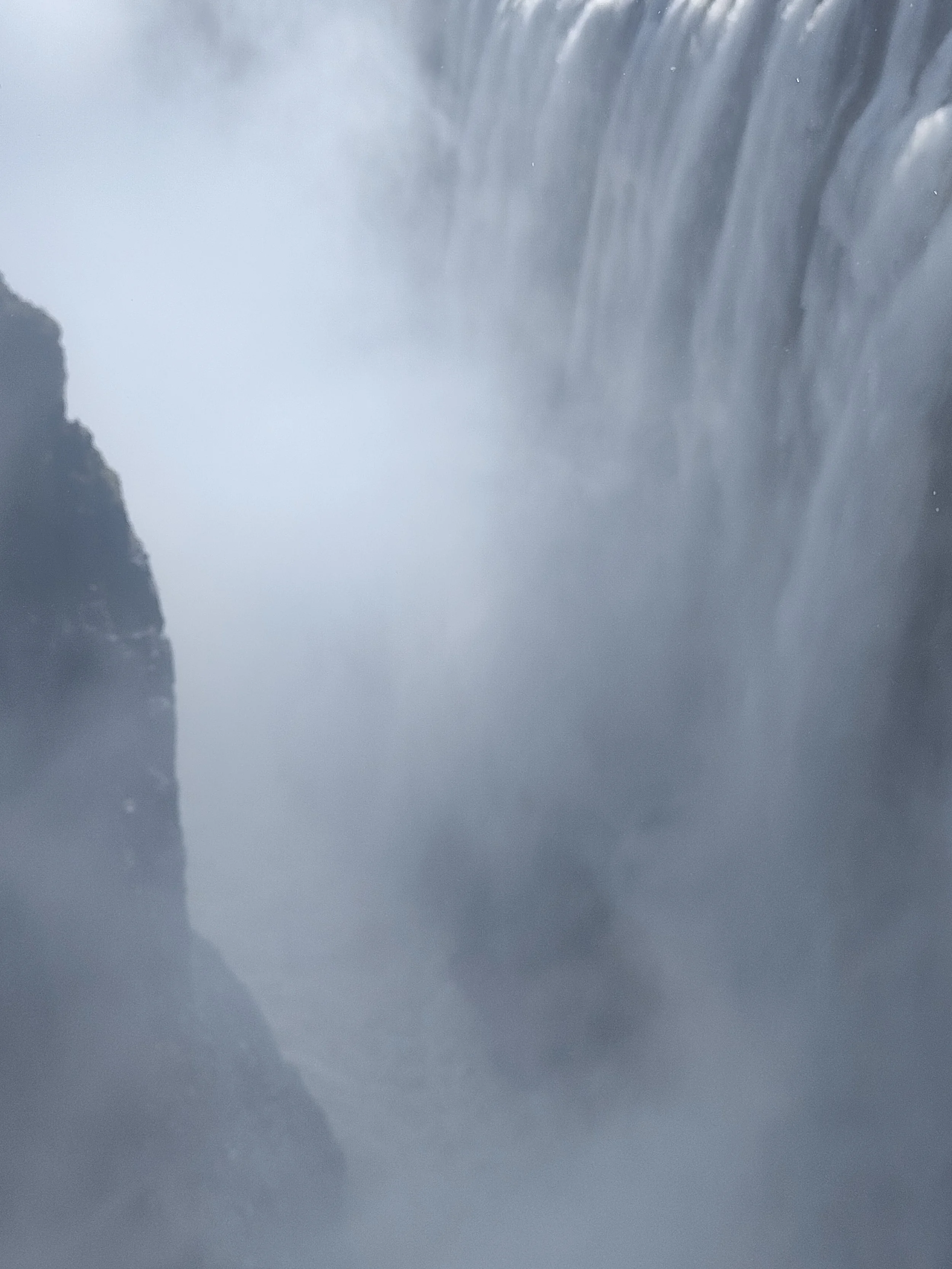
The story of Victoria Falls begins long before the river existed. Around 180 million years ago, enormous volcanic eruptions covered southern Africa with vast layers of basalt. As these flows cooled they fractured into grids of joints and faults. Over geological time the Zambezi encountered the weakest lines in this basalt and began carving its way through them. The waterfall we see today is simply the latest stage in a slow retreat through the landscape. Downstream, the zigzagging series of gorges marks the former positions of the Falls. Each gorge represents a chapter in the river’s past, created as the waterfall eroded backwards, abandoning one position and establishing another upstream. This process, known as headward erosion, continues today. Scientists estimate the Falls retreat at roughly half a metre each year. That sounds minor until you imagine the cumulative effect. Over thousands of years the river has shifted its entire line of descent, carving fresh corridors and deepening the existing ones. Victoria Falls is not fixed. It is an ongoing conversation between water and rock, shaped by pressure, fracture, season and time.
People of the Zambezi.
Humans have been watching the Zambezi plunge into this gorge for at least 100,000 years. Archaeological evidence of Stone Age habitation appears throughout the region. For the Tonga people and other communities who have lived along the river for centuries, the Zambezi is not simply water. It is a presence, an ancestor and a provider. Traditions speak of its moods, its seasons and the power held in the rising spray. Early travellers recorded that local guides approached the edge with respect, fully aware of the spiritual weight of the place. When David Livingstone visited in 1855 he became the first known outsider to write about the Falls, but he was not the first to understand their significance. He was guided there by people with a relationship to the river far older than any written record. His famous remark about angels gazing upon this sight was a reflection of his own astonishment, not a discovery of something unknown. Communities had been living, fishing, farming and telling stories here long before he arrived.
A Border Carved by Water.
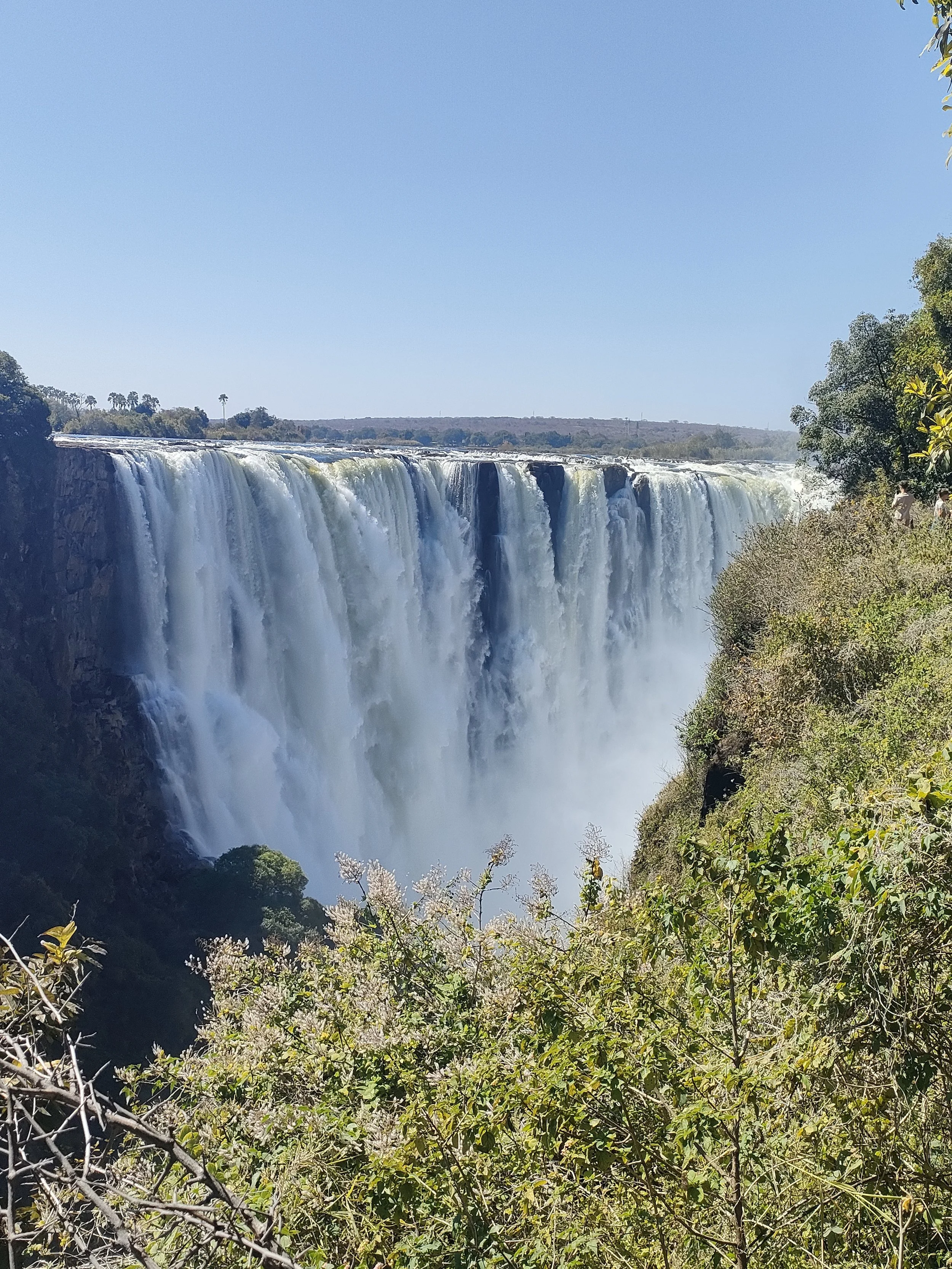
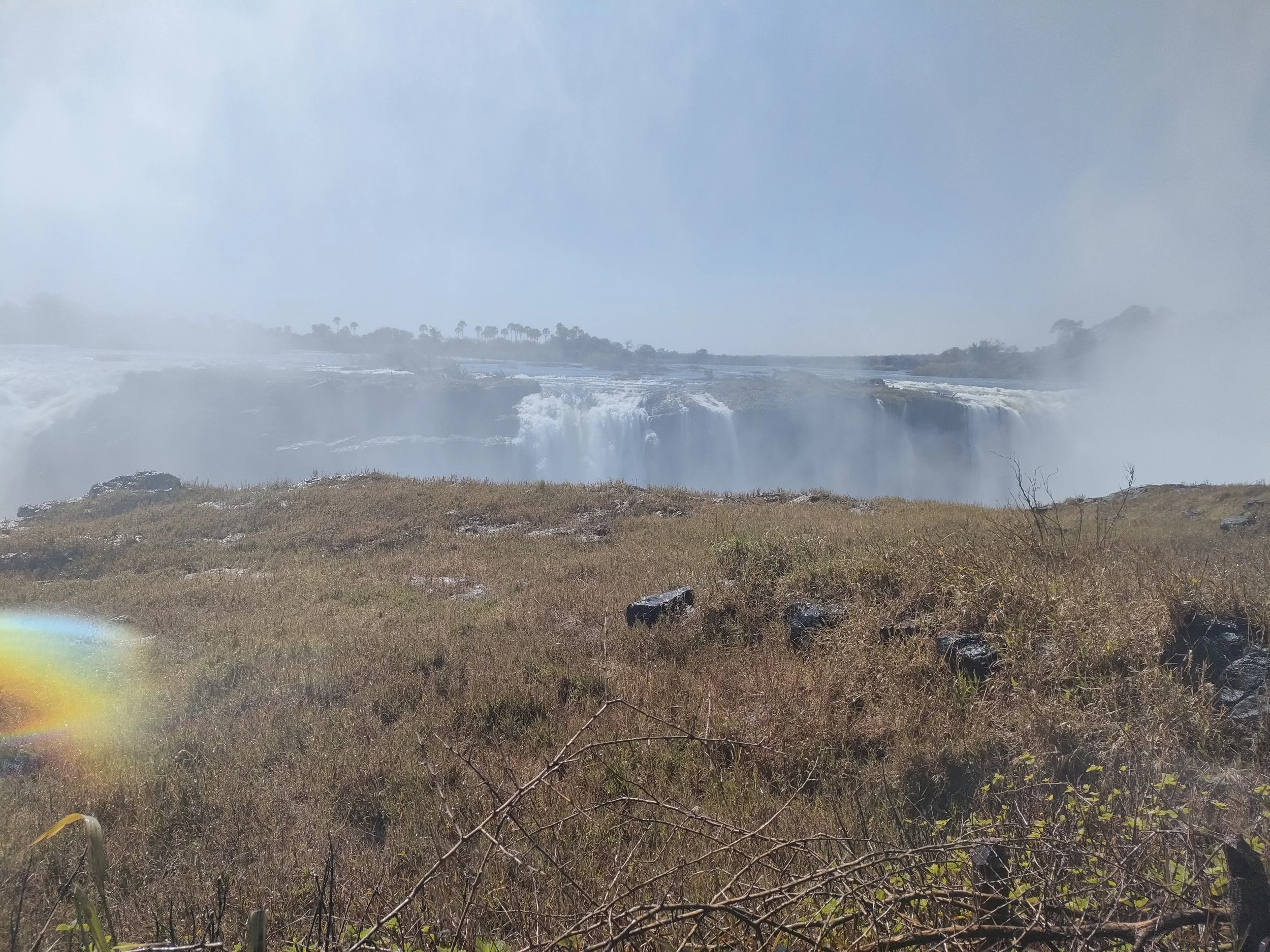
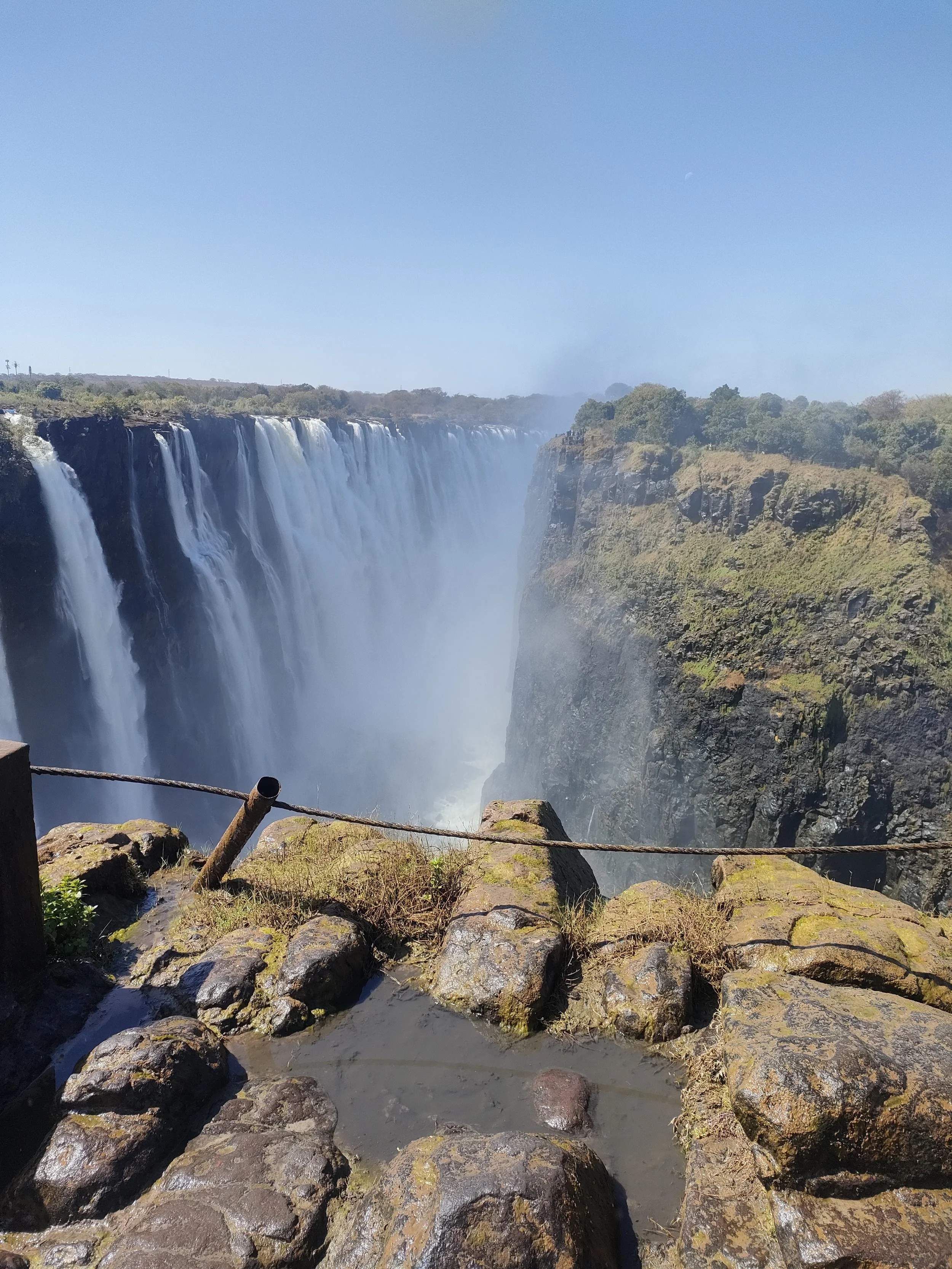
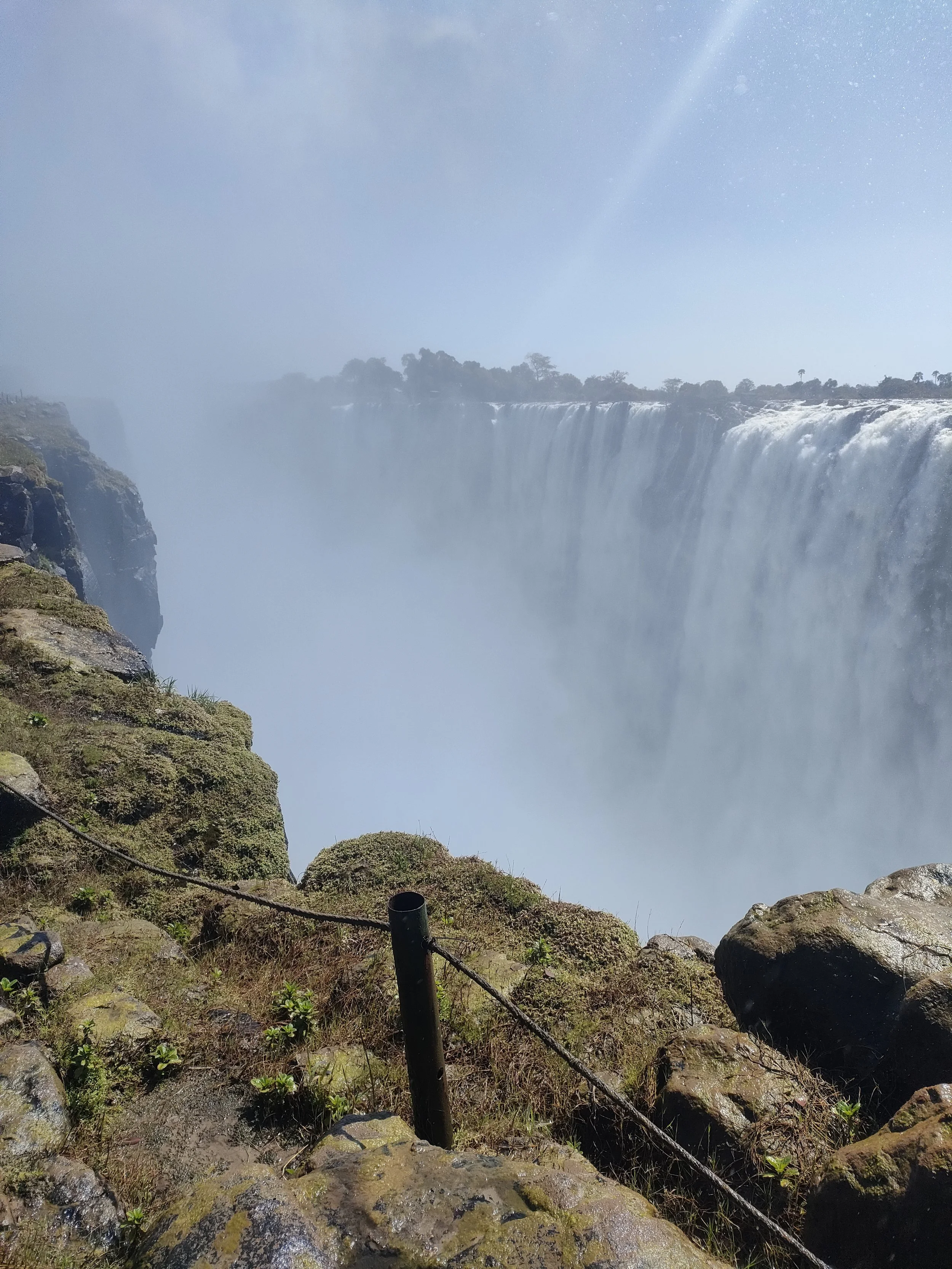
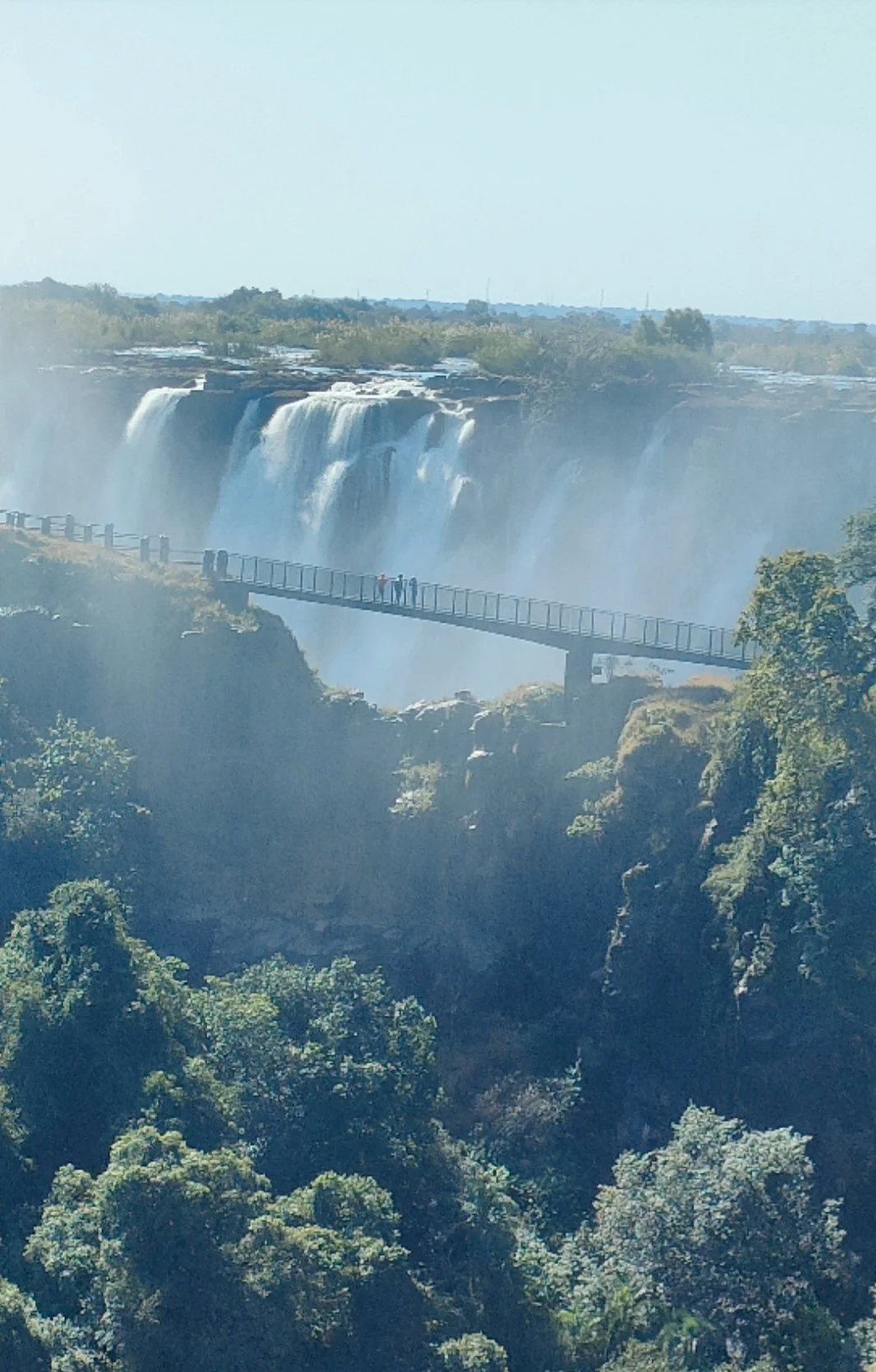
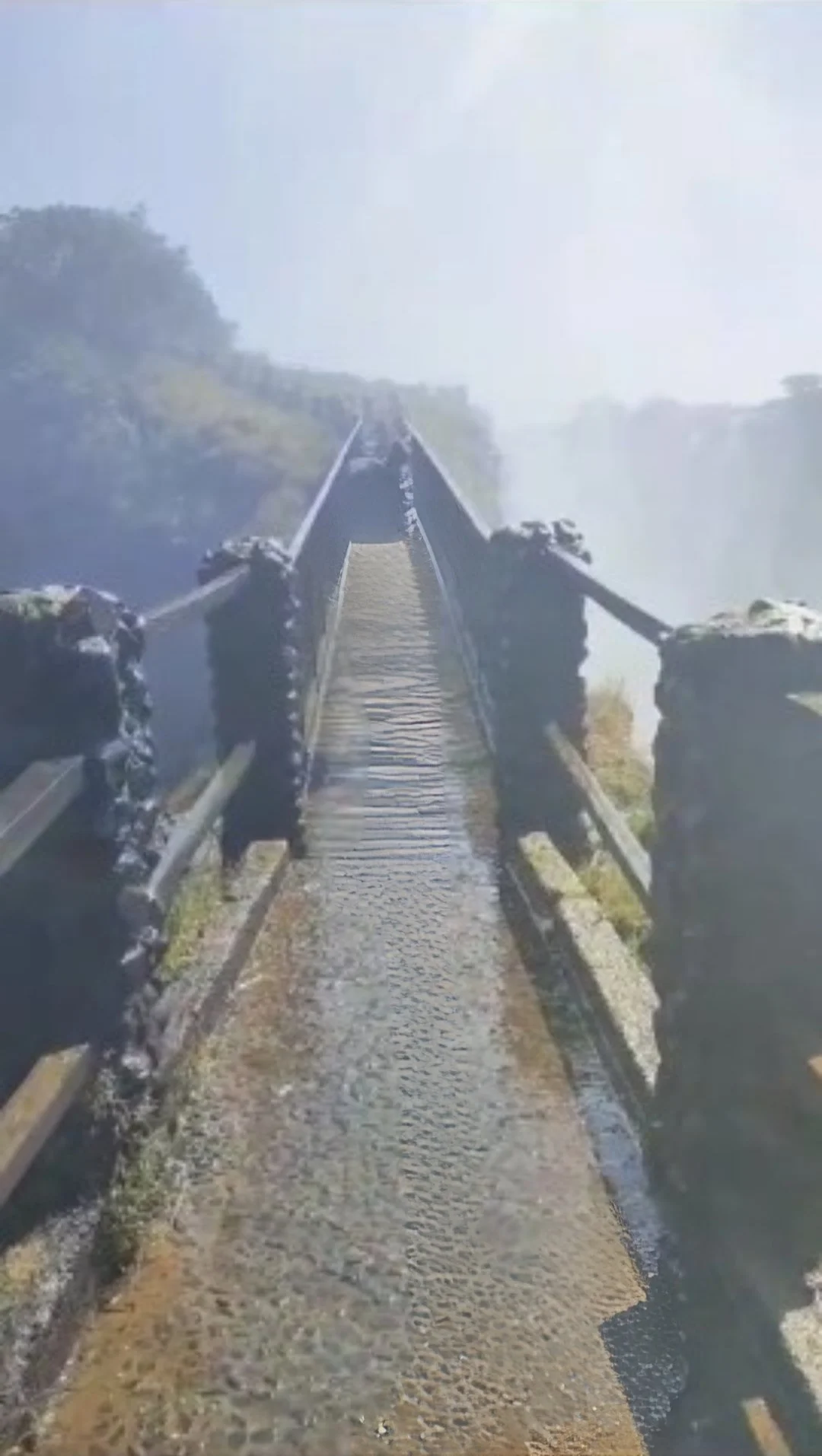
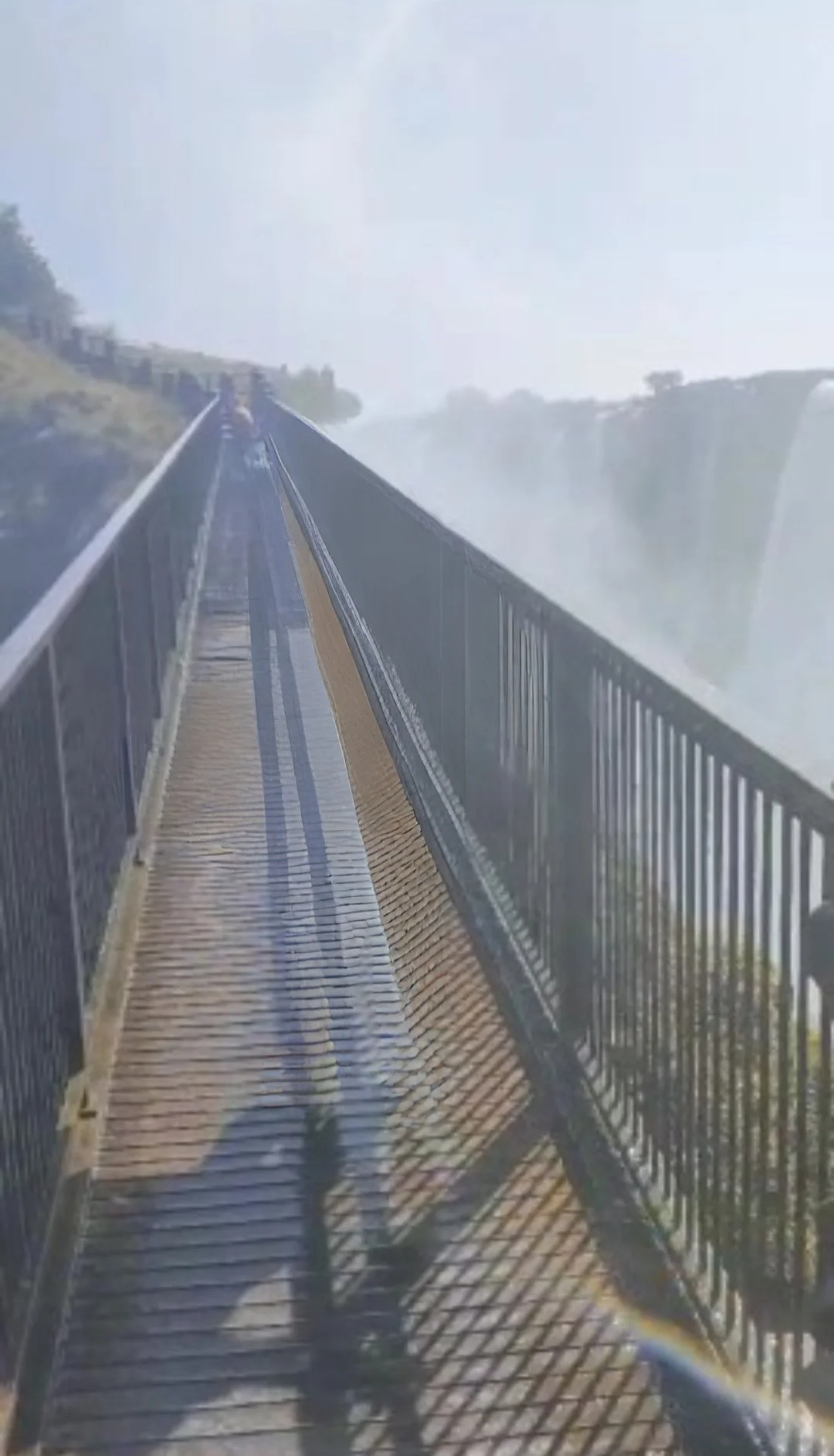
Today the Falls form part of the border between Zambia and Zimbabwe. Each side offers a different encounter with the landscape. The Zambian side, centred on the Knife Edge area, delivers immediacy. During the high-water months the spray is so intense that visibility drops to almost nothing. Paths turn to rain-soaked tunnels, and visitors walk through clouds that obscure the cliffs only metres away. The Zimbabwean side offers the full panorama. From viewpoints along the edge you can trace the entire sweep of the waterfall, watching individual segments such as the Devil’s Cataract and Rainbow Falls. The border between the two countries is an administrative line drawn across a landscape that predates any human division. The Zambezi does not recognise it. The river flows through the gorge as it always has, carving its own boundaries and allowing people to adapt around them.
Seasons of Power and Silence.
Victoria Falls is a seasonal phenomenon. Its personality changes with the rains that fall in the distant highlands to the north. When the wet season peaks the Zambezi swells, and the Falls erupt into their most dramatic form. The spray becomes a permanent weather system, rising hundreds of metres and creating its own microclimate. Forests on the opposite cliff remain soaked even in sunlight. Rainbows drift through the mist as if carried by the wind. In the dry months the river retreats. The once-continuous sheet of water breaks into separate channels. Vast sections of basalt are exposed on the Zambian side. The Devil’s Pool becomes accessible to visitors willing to stand on the edge of the abyss. This seasonal shift reveals a second identity. The Falls do not lose their grandeur but instead reveal their structure. What was hidden beneath the spray becomes visible. The landscape moves from chaos to clarity, offering insight into the forces shaping it.
Exploration, Colonisation and the Rise of Tourism.
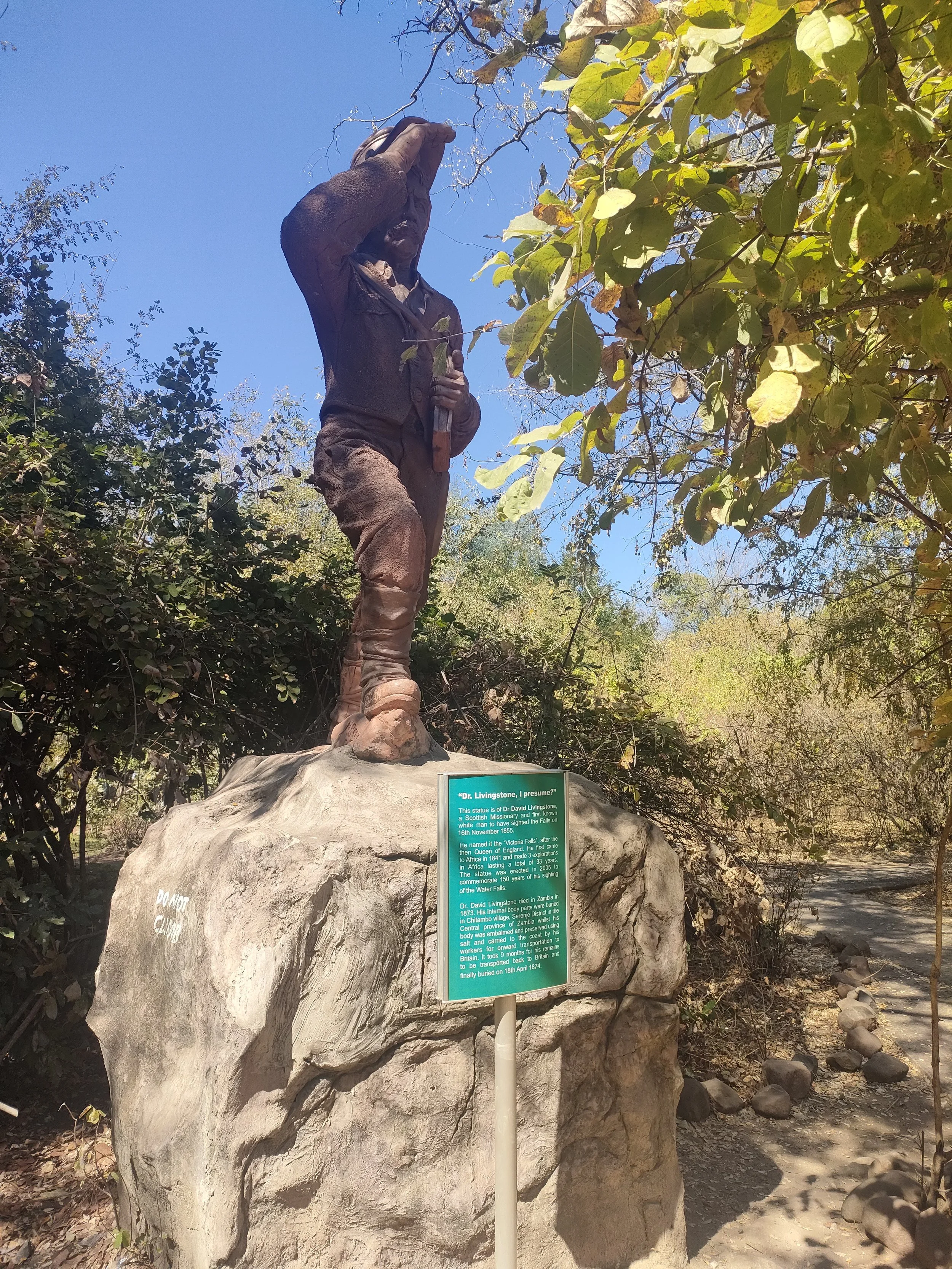
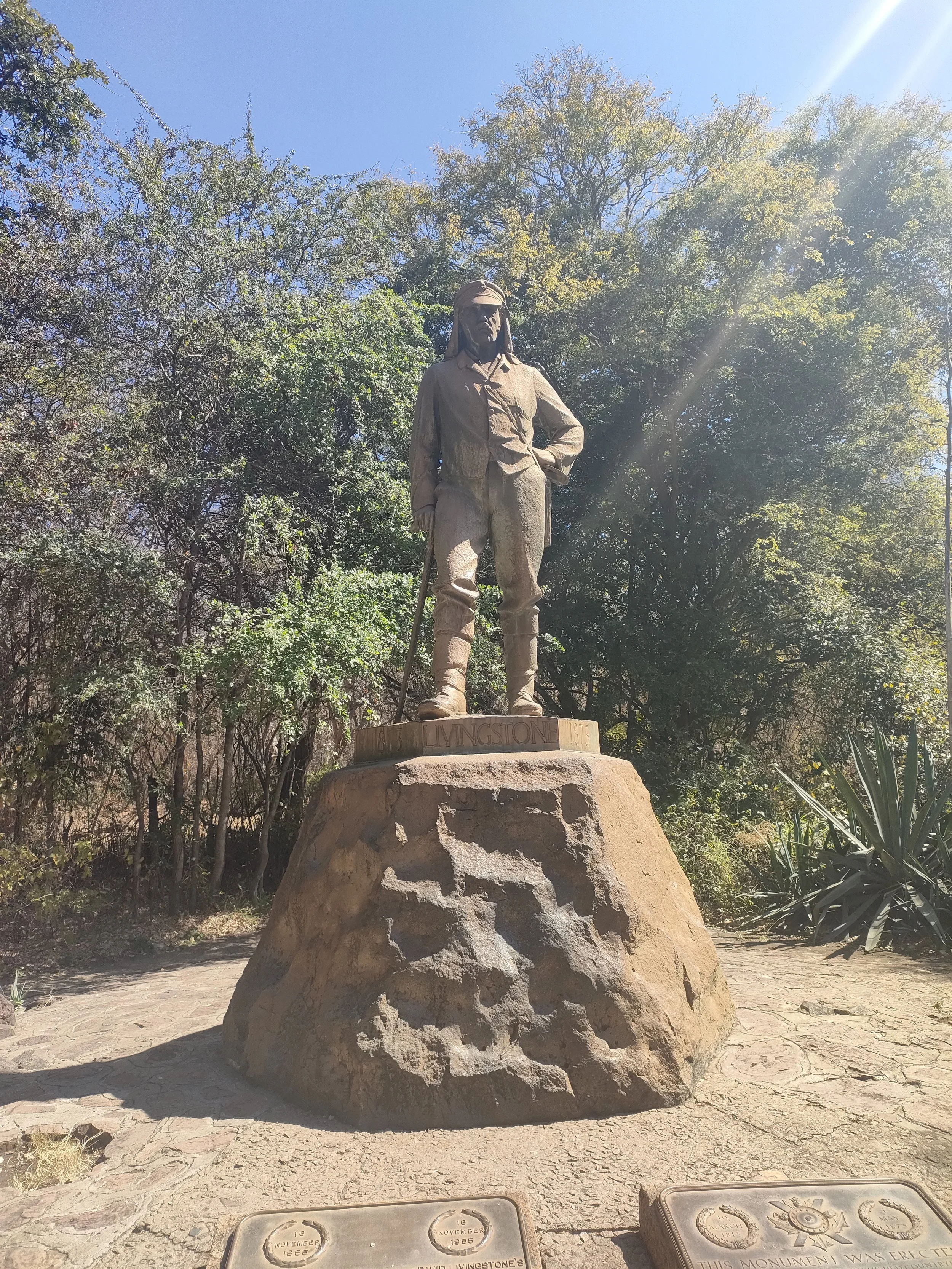
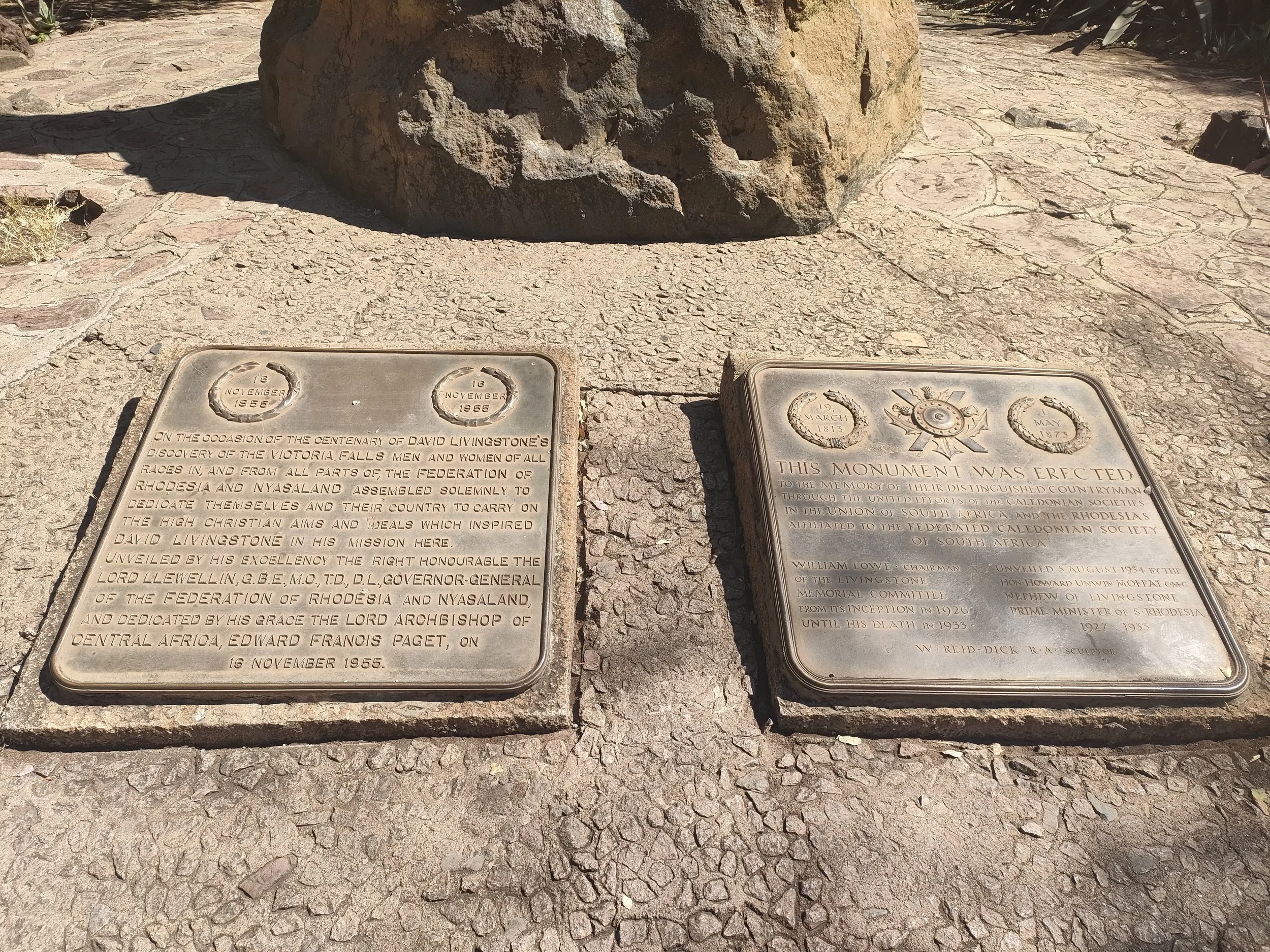
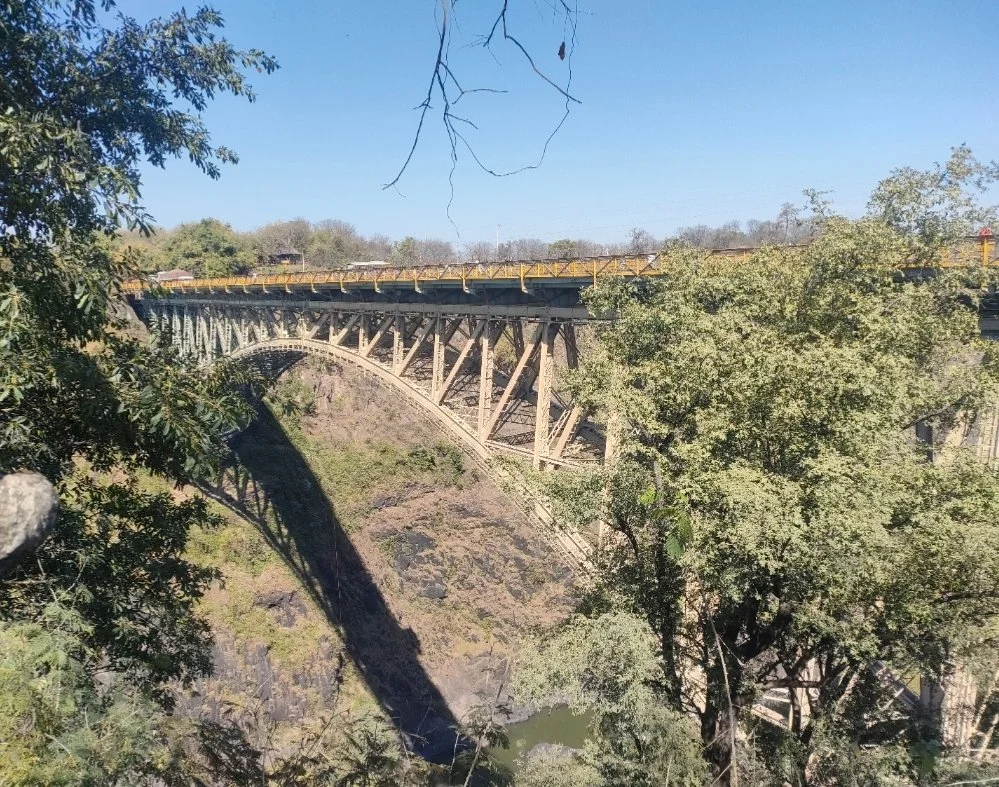
The arrival of Livingstone in the mid-nineteenth century signalled the beginning of imperial interest in the region. European powers quickly mapped the Zambezi as part of their broader ambitions in Africa. Settlements grew. Railways pushed into the interior. The famous Victoria Falls Bridge opened in 1905, intended to allow steam trains to pass through the spray. Although Rhodes did not live to see the bridge completed, his influence on the region remains woven into its infrastructure. Tourism evolved through several phases. Early visitors came for exploration and documentation. Later visitors arrived in pursuit of spectacle and adventure. By the twentieth century the Falls had become an internationally recognised destination. Today the region supports a varied tourism economy built around conservation areas, adventure sports, wildlife encounters and cultural tourism. Yet beneath all of this remains the constant presence of the river and the communities who call it home.
Conservation and Future Challenges.

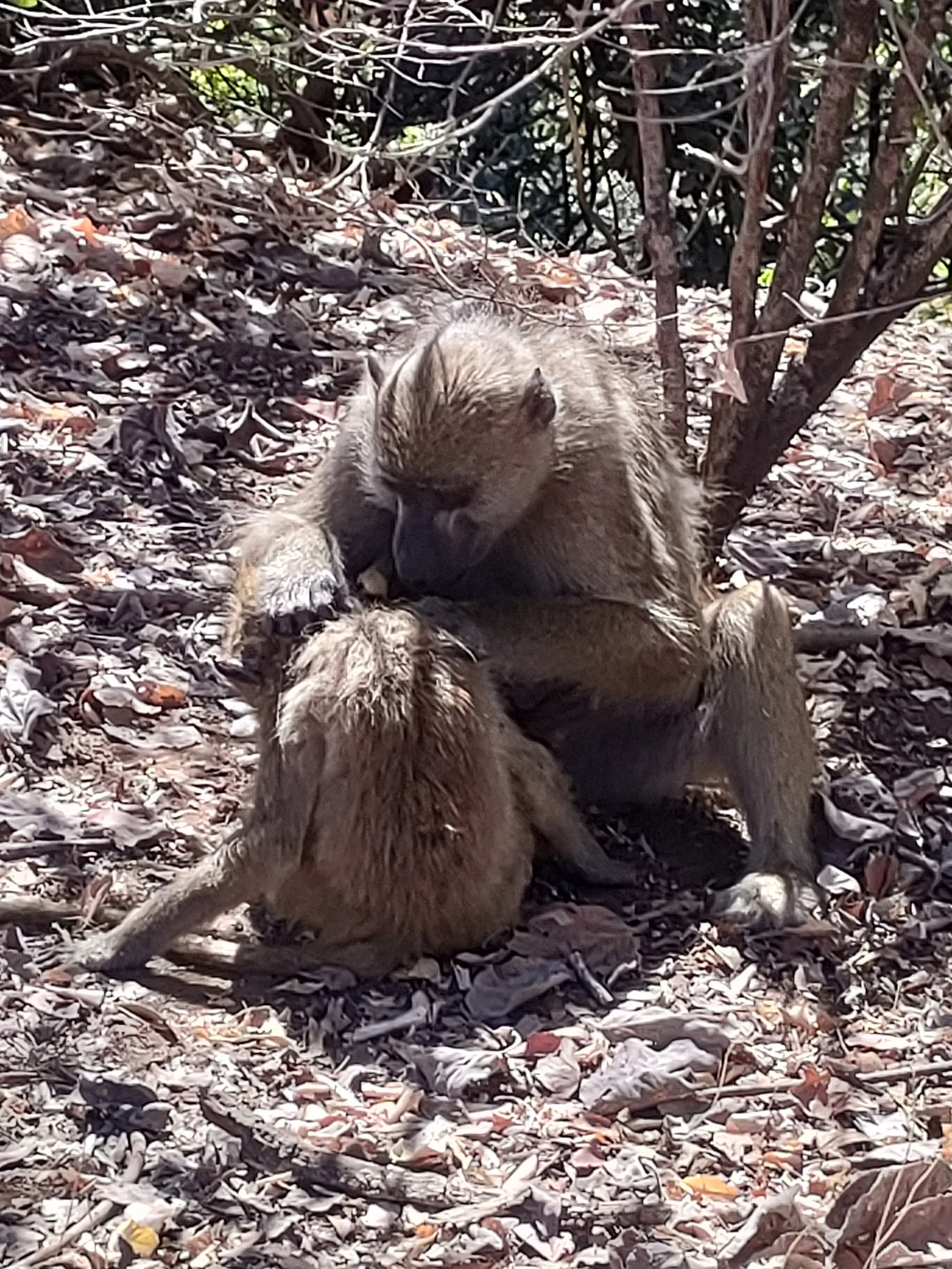
Although the Zambezi is powerful, it is sensitive to change. Climate variability, upstream water extraction and hydroelectric projects all have the potential to alter flow patterns. Periods of low rainfall have already reduced the volume of the Falls during some years, prompting debate about long-term stability. Scientists caution against sensational claims, but the broader truth remains clear. Large river systems depend on balanced climates, and landscapes like this depend on the rivers that feed them. The surrounding national parks protect wildlife and ecosystems that rely on seasonal flooding. Elephants, hippos, birds and smaller mammals all navigate the shifting boundaries of the river. The challenge going forward is finding ways for conservation, tourism and local livelihoods to support each other rather than compete.
The Falls and the Idea of Deep Time.
Few places on Earth reveal deep time as vividly as Victoria Falls. To stand at the edge is to witness a landscape in transition. The present waterfall is only a temporary phase in a much longer journey. It will continue to retreat. New gorges will form. Old ones will widen. The river will find fresh weaknesses in the basalt and carve yet another chapter into the continent. Visitors often arrive expecting a single moment of awe. What they find instead is an understanding that landscapes are always moving. The Falls have thundered for thousands of years. They will continue long after we are gone. Their story sits at the intersection of geology, climate, culture and memory. To watch the smoke rise above the gorge is to realise that the earth is not static. It breathes. It shifts. It teaches. Victoria Falls offers not just spectacle but perspective, reminding us of the scale of the planet and our place within it.
