Al-Balad: Gateway, Trade, and the Architecture of Survival.
A Threshold City.
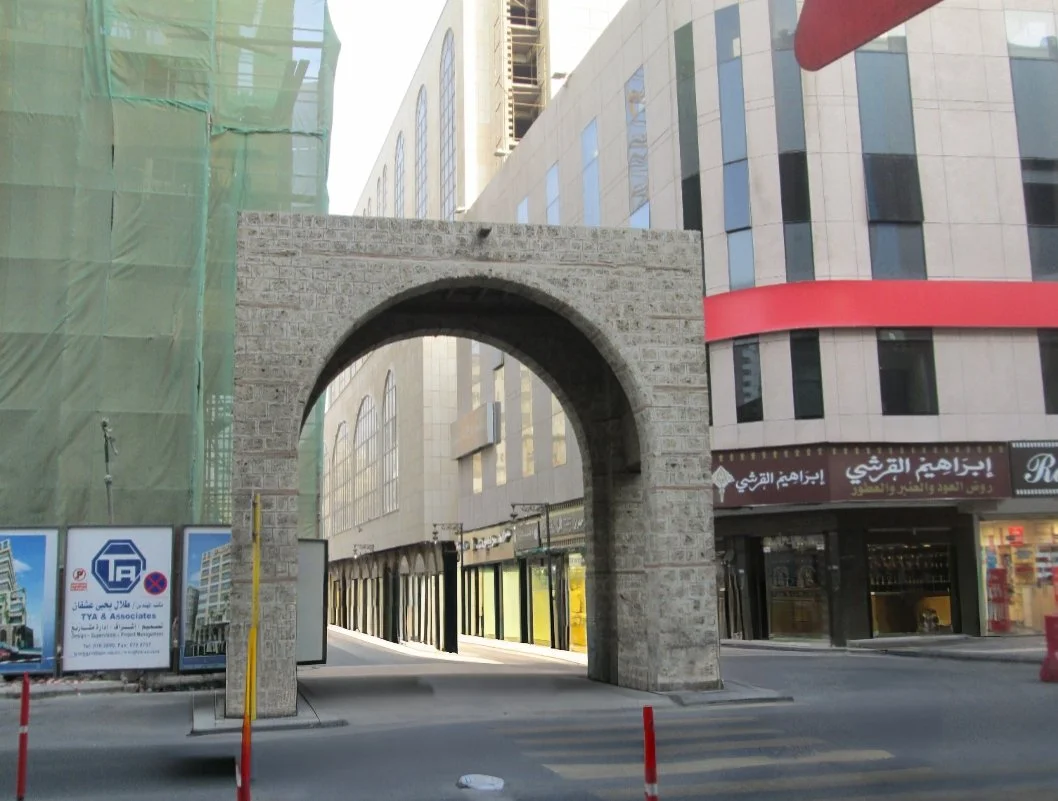
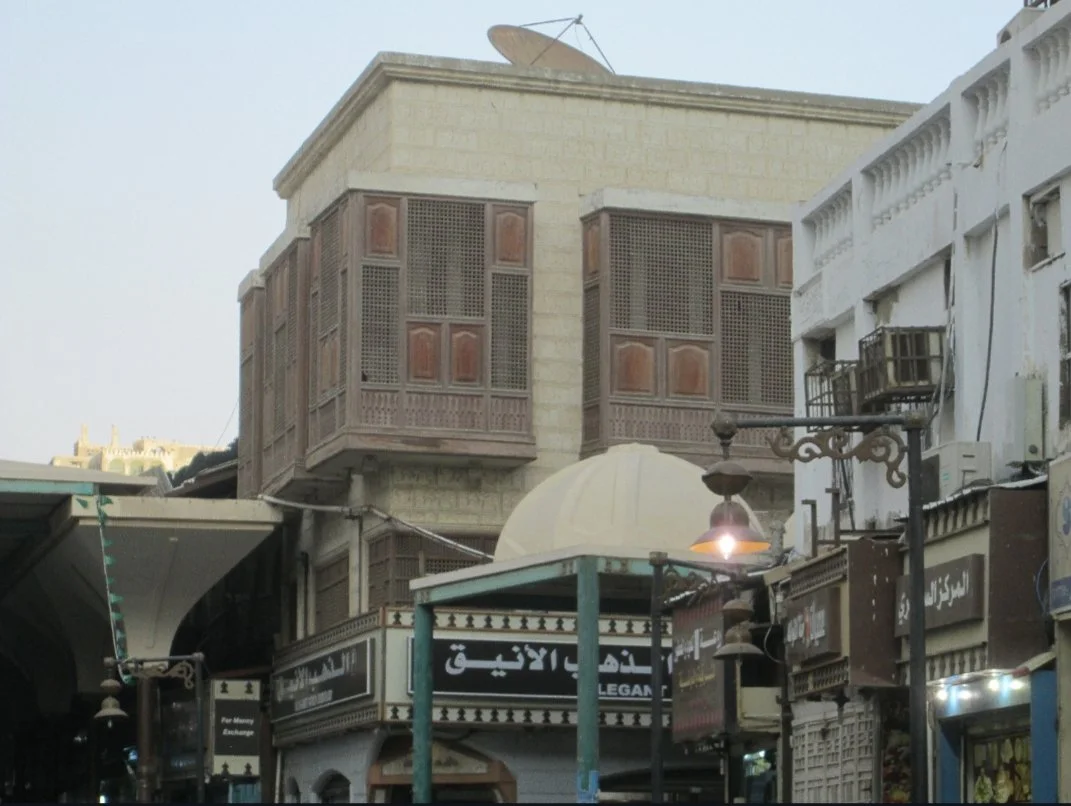
Al-Balad begins not with spectacle, but with subtle difference. The streets narrow. Stone replaces concrete. You do not feel welcomed so much as ushered inward. What unfolds is not a curated museum quarter, but the lived territory of arrival and movement.
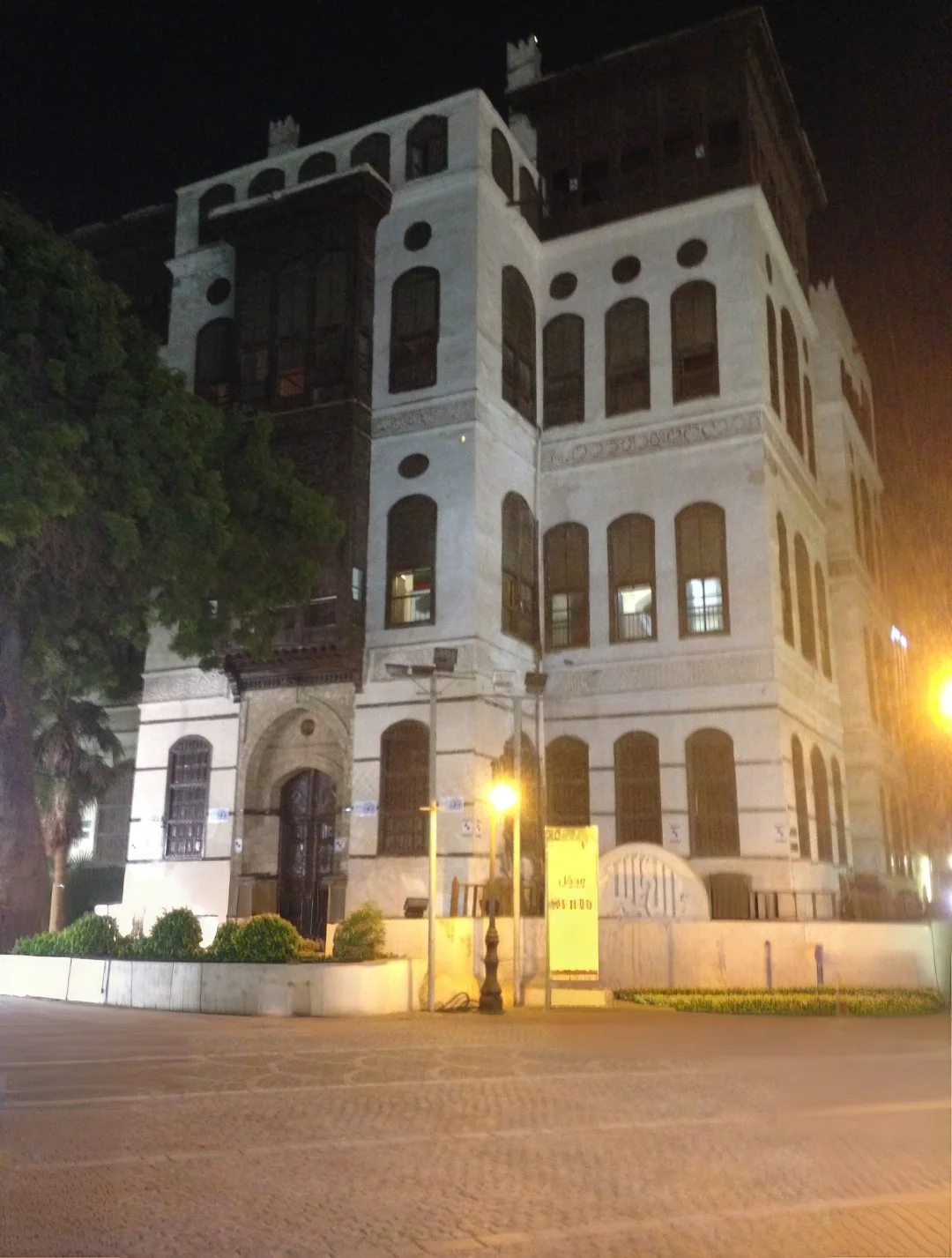
Al-Balad’s threshold, where historic stone sits against the modern city.
This was once the working heart of Jeddah, the Red Sea port through which pilgrims passed on their way to Makkah and Madinah, and where merchants arrived from Africa, Egypt, Yemen, and beyond. Al-Balad was designed for purpose, not pageantry. It is a city shaped by regular arrival and endless departure.
Built from the Sea.
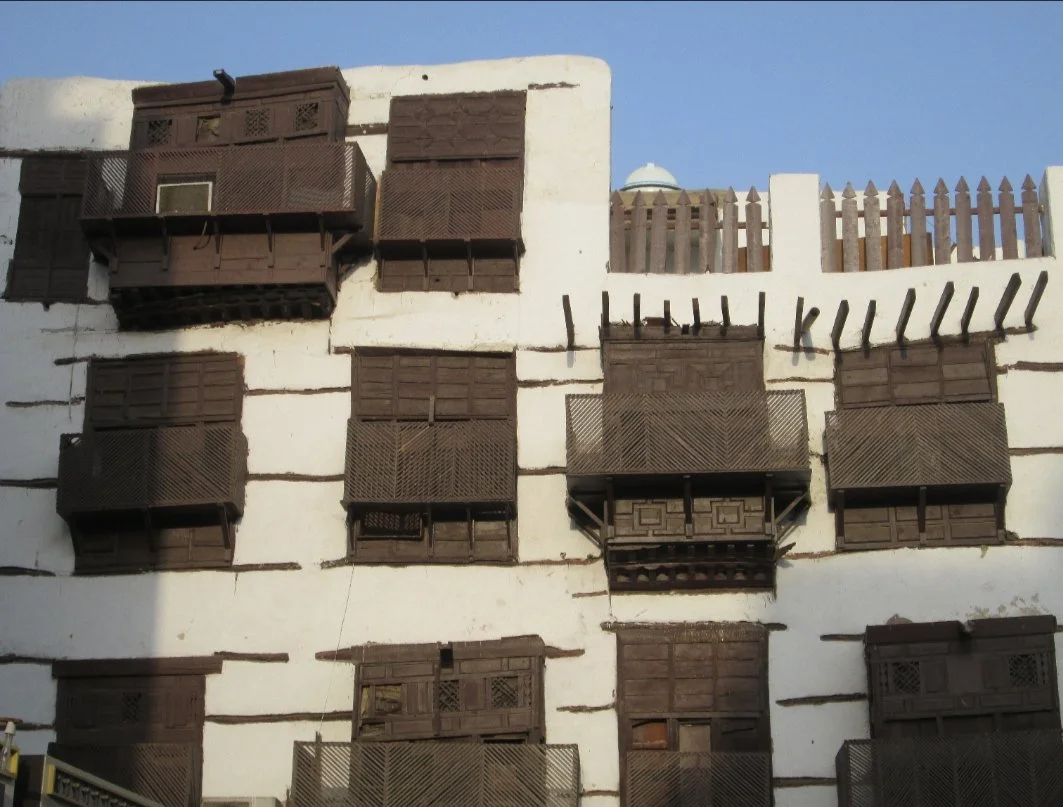
The materials of Al-Balad are plain, honest, and purposeful. Coral limestone quarried from the nearby Red Sea forms the walls that hold the city together. The stone is porous and breathable, absorbing heat during the day and releasing it slowly after sunset. This was not aesthetic experimentation. It was climate architecture.
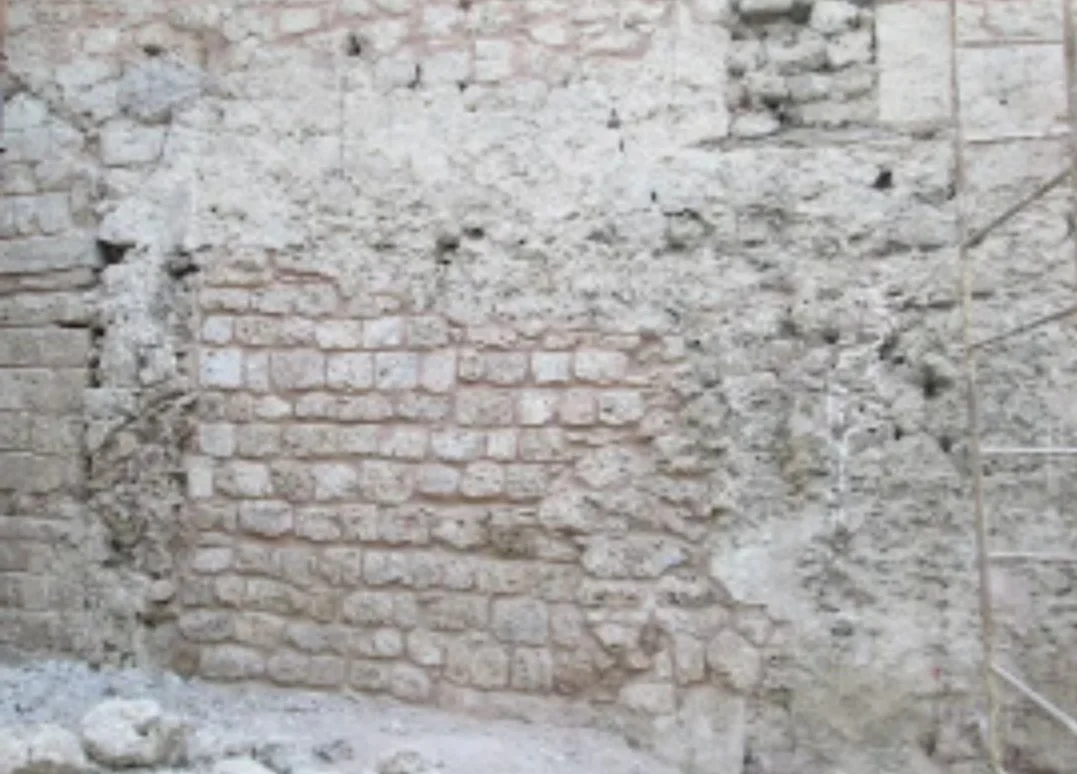
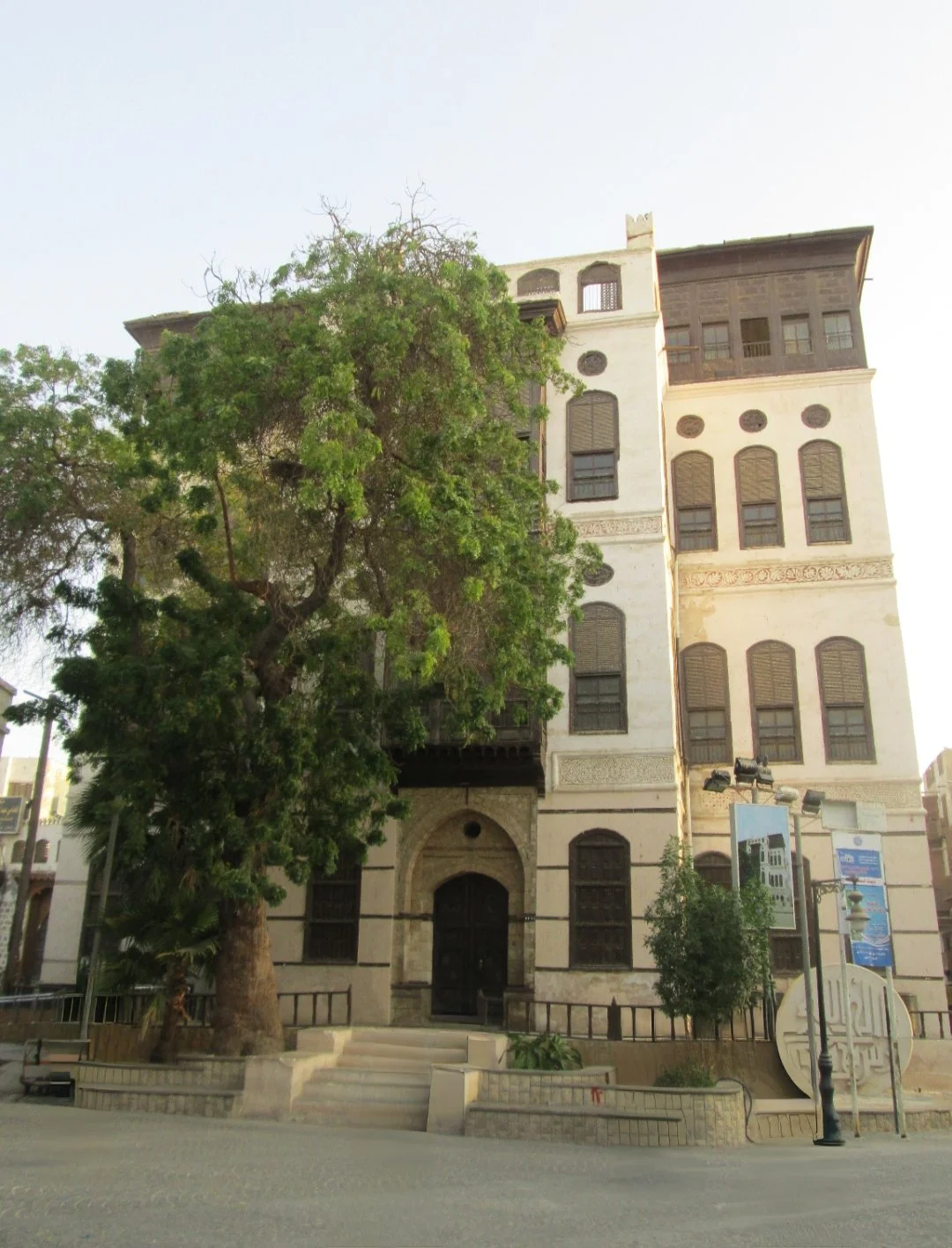
Coral limestone walls with their variegated texture and weathered seams.
The walls tell their own history. Repairs are visible. Blocks vary in size and tone. Mortar lines shift and soften. Al-Balad was never preserved in isolation. It was maintained by people who needed it, adjusted by everyday use.
Vertical Living.
Space was scarce. People were not. Al-Balad grew upward.
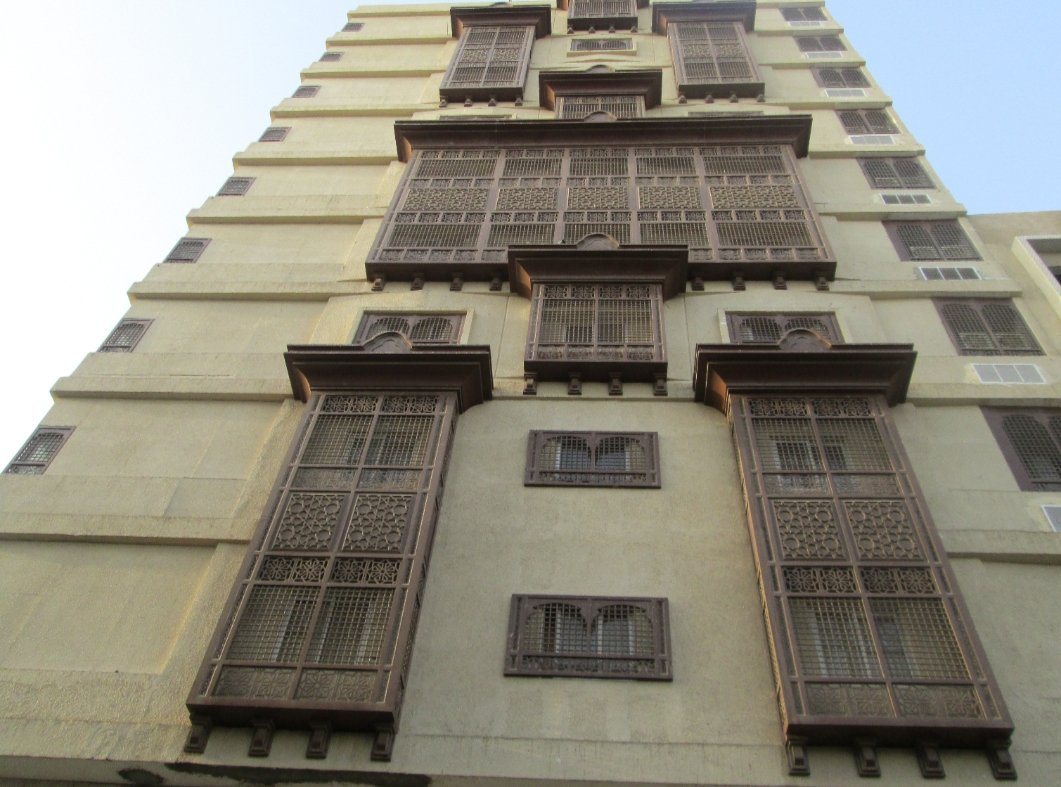
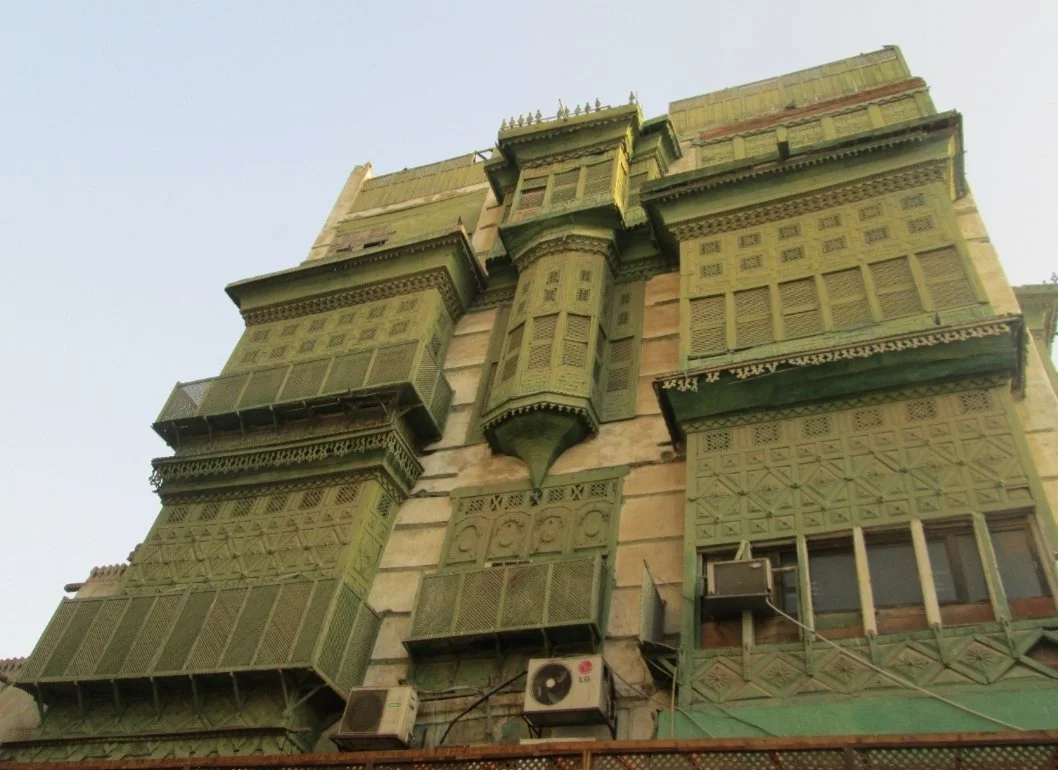
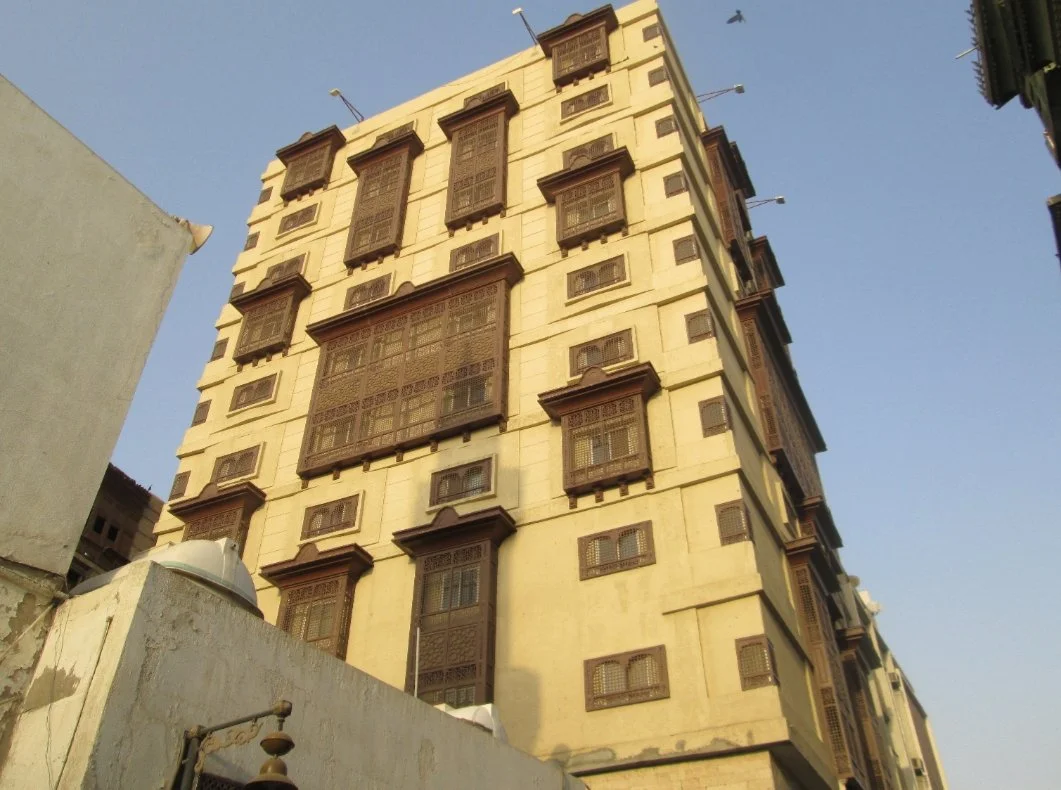
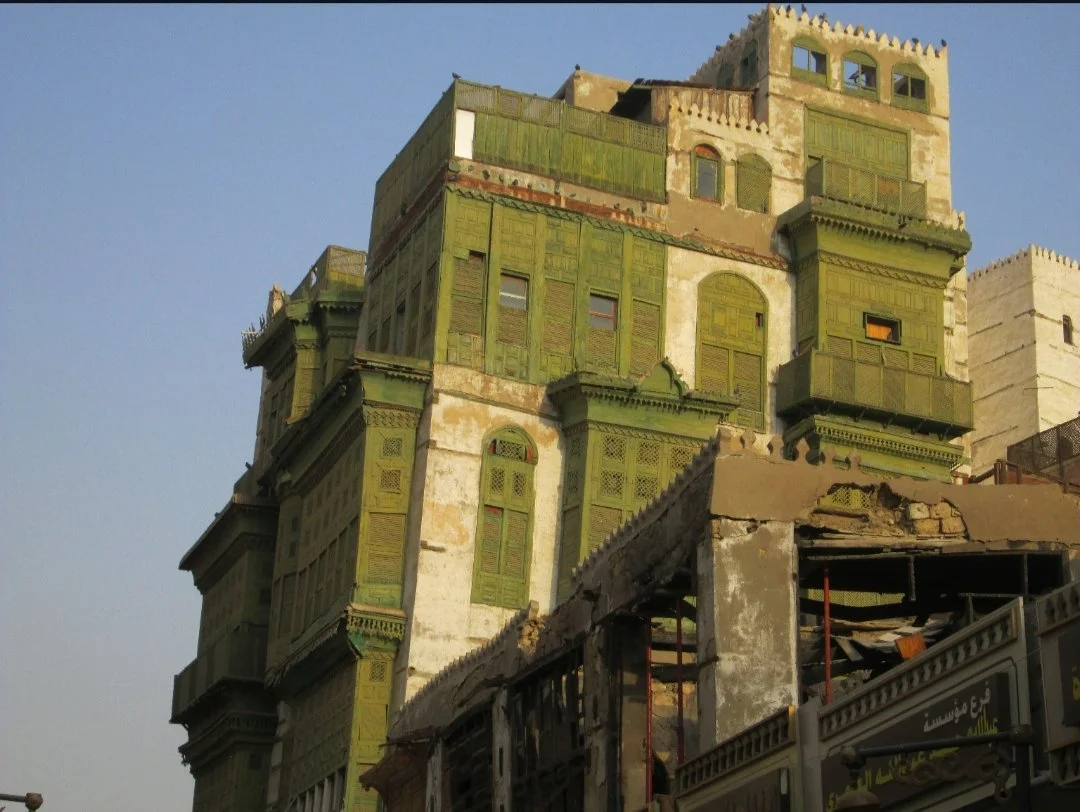
Homes were stacked above shops. Second floors pushed out over the street. Families expanded into the limited vertical space available. This is how density found form long before the term was fashionable.
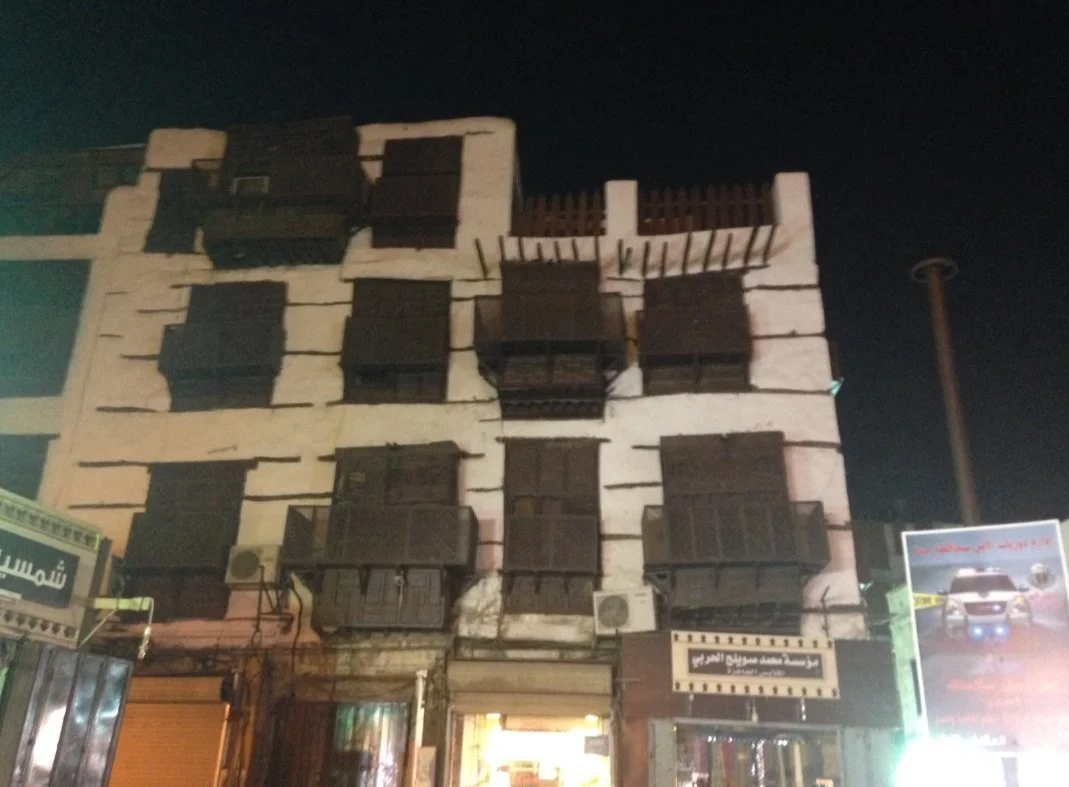
Multi-storey façades rising over narrow lanes, a solution to spatial constraint.
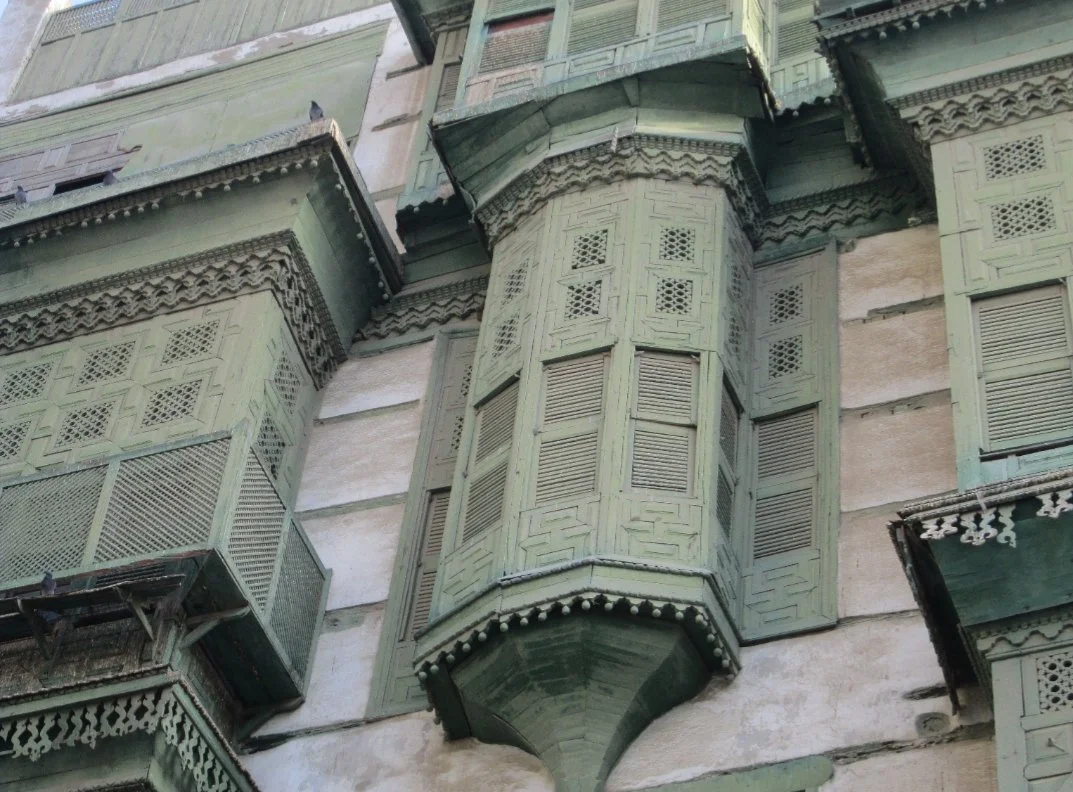
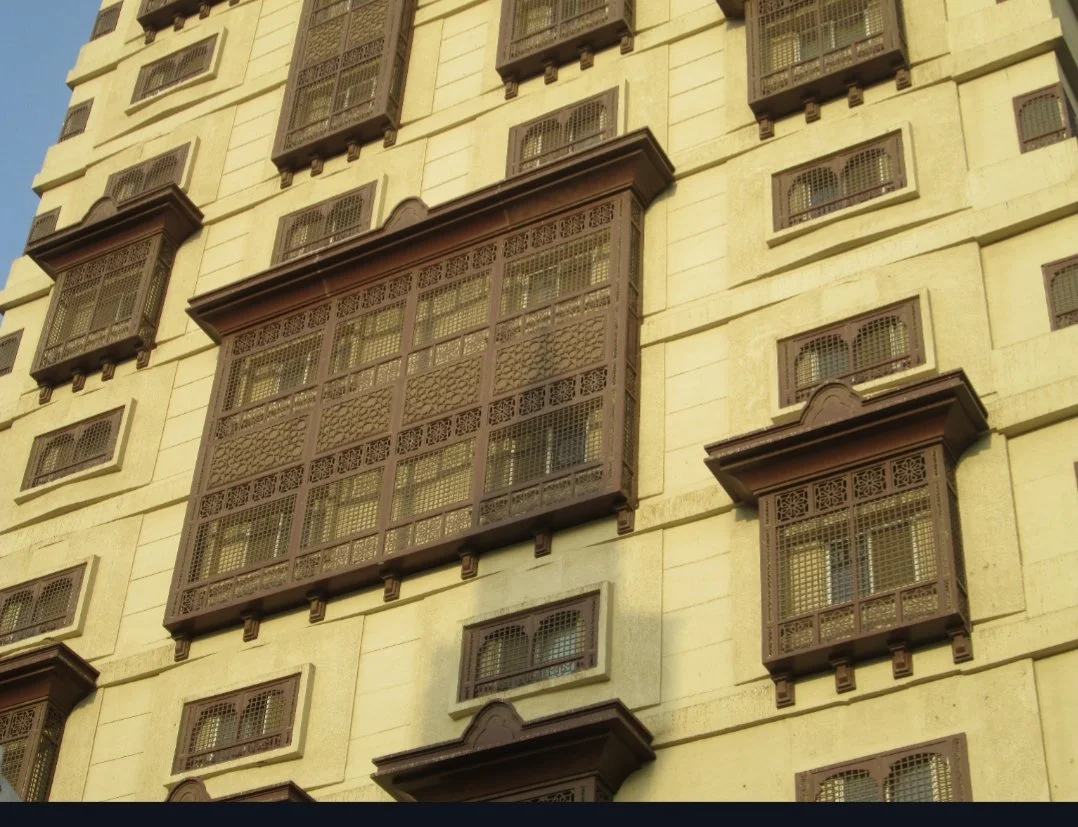
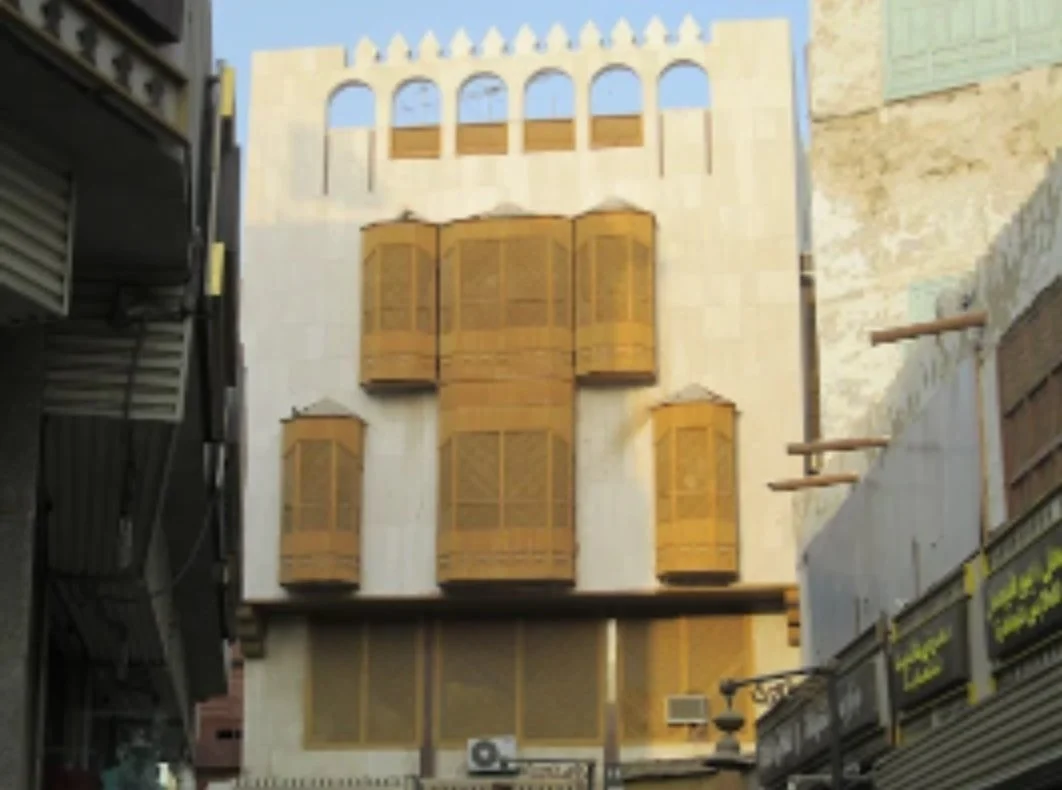
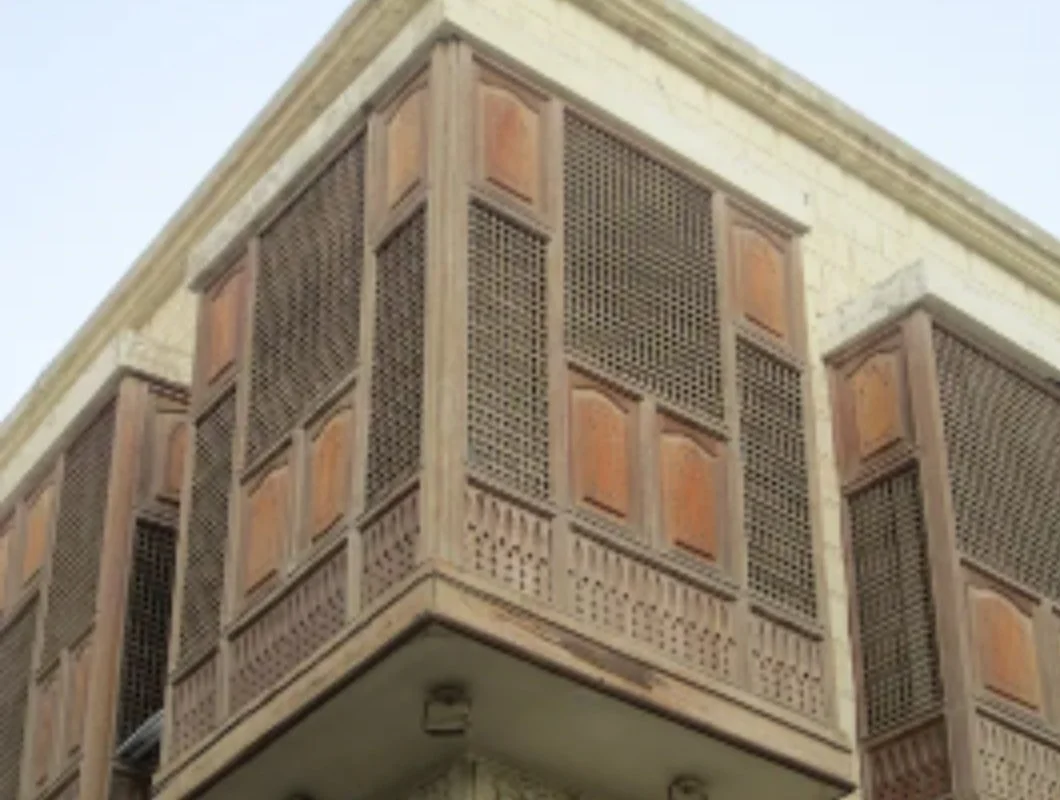
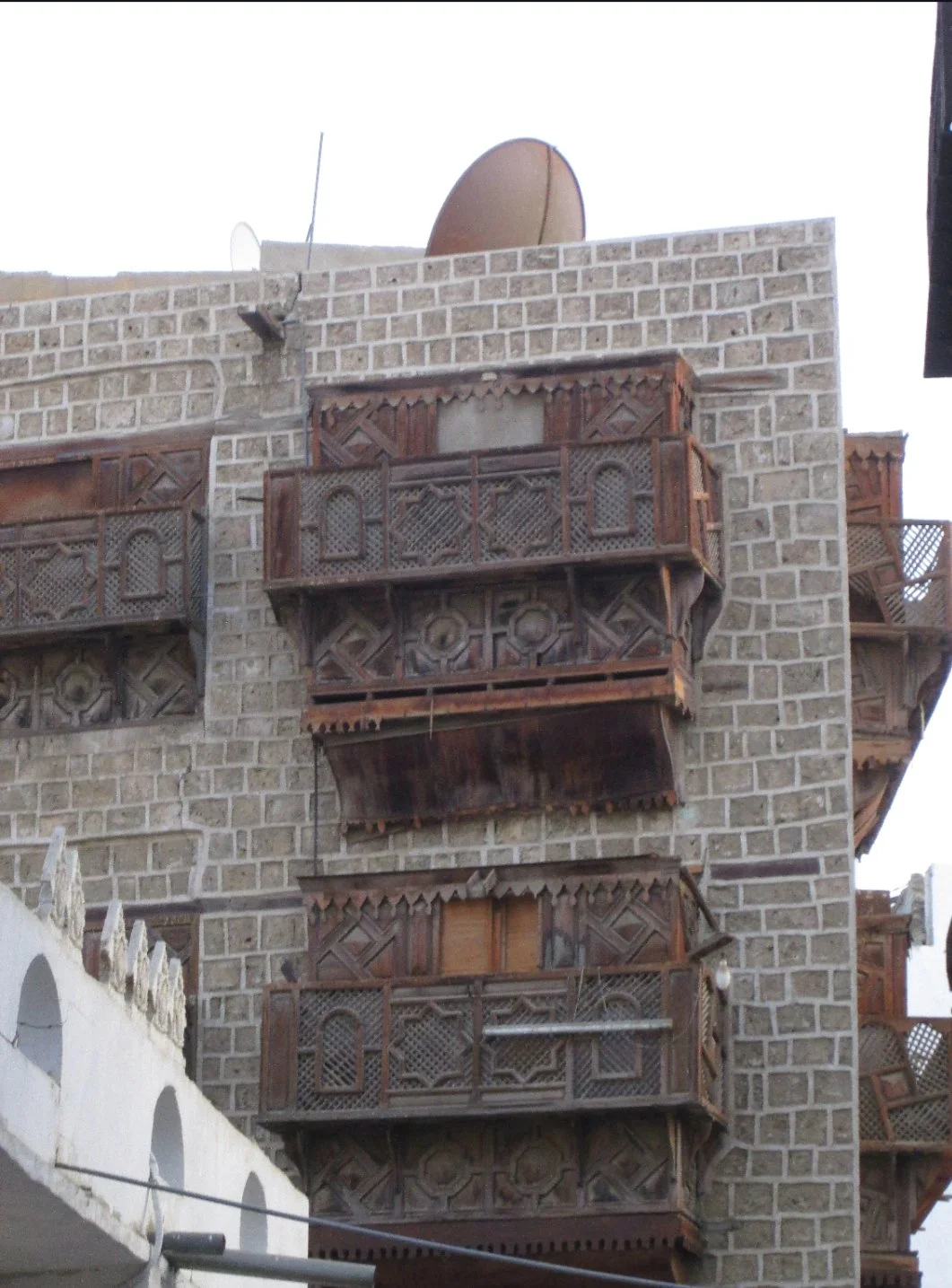
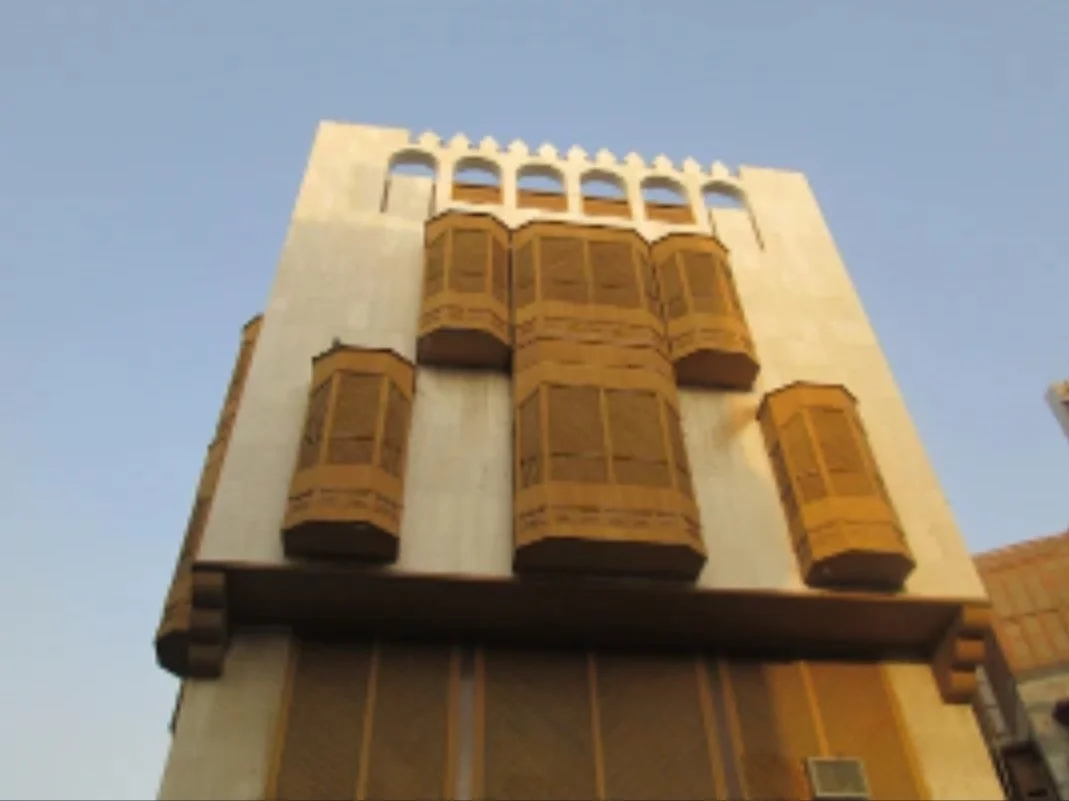
The rawashin are the city’s most distinctive architectural feature. These projecting wooden balconies are often mistaken for decoration, but their logic is far more functional. Rawashin filter light, draw air into interiors, and allow eyes on the street without exposure.
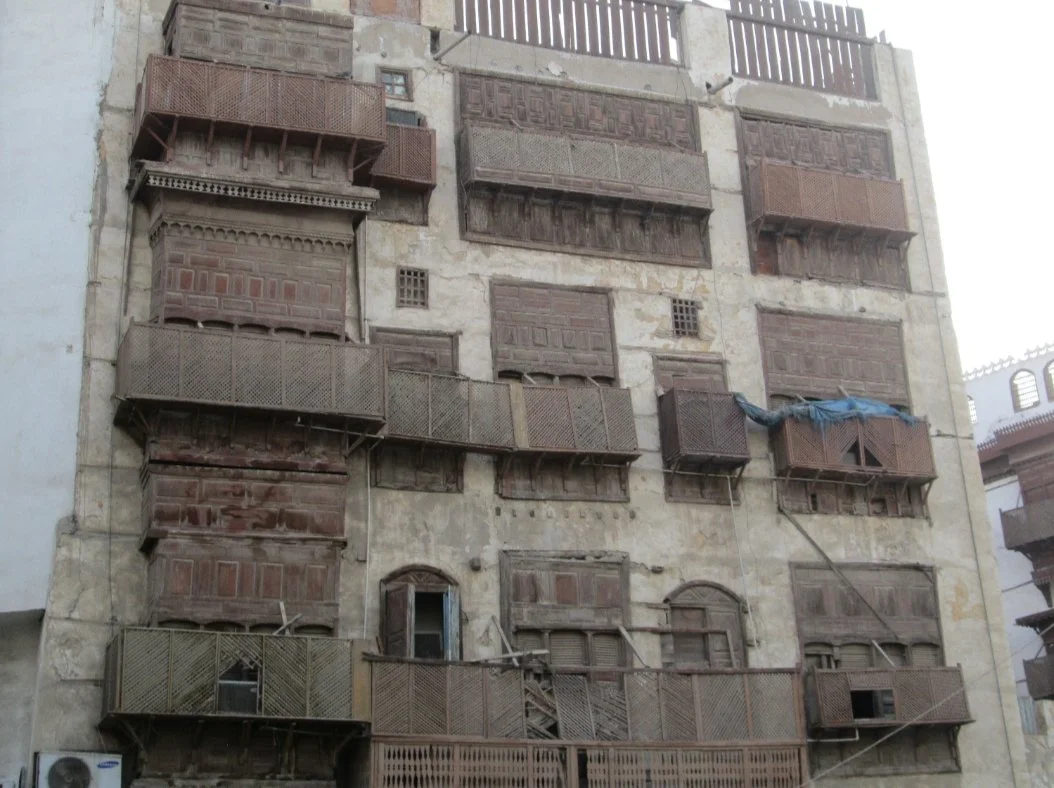
The Streets Shape Experience.
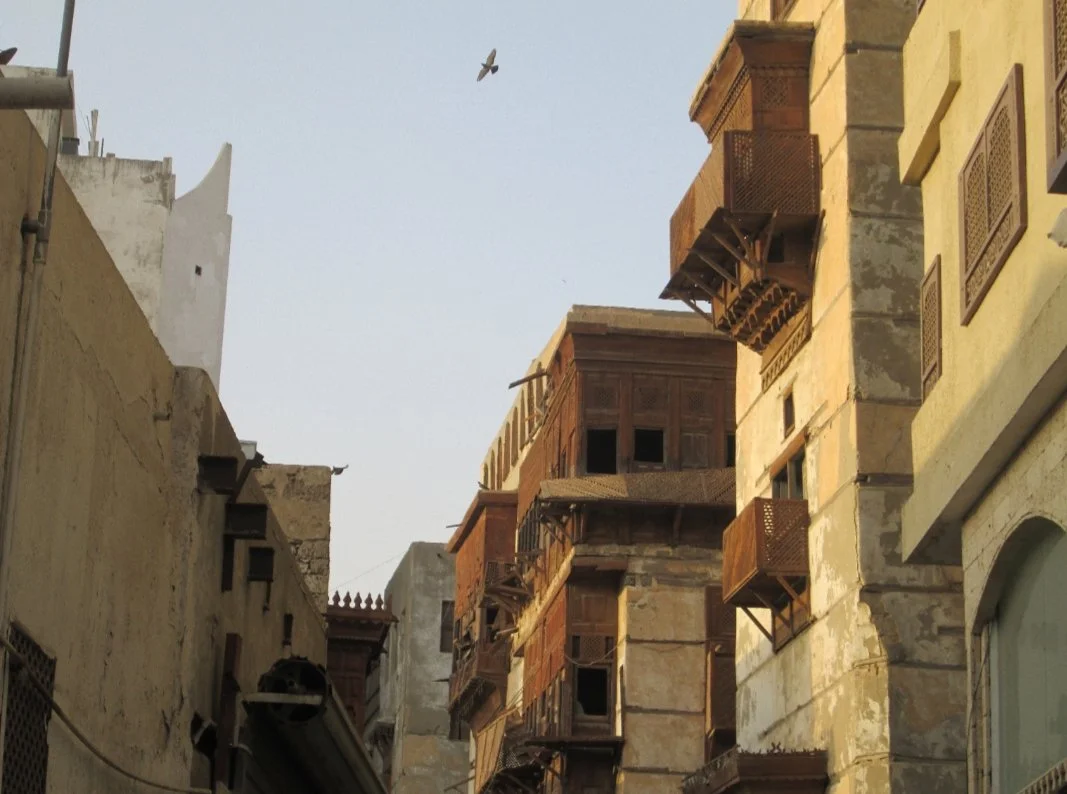
Inside Al-Balad, the street itself is part of the architecture. Narrow lanes create shade. Tall façades shape moving air. Light enters in fragments rather than floods. Here the city governs comfort through spatial rhythm rather than mechanical systems.
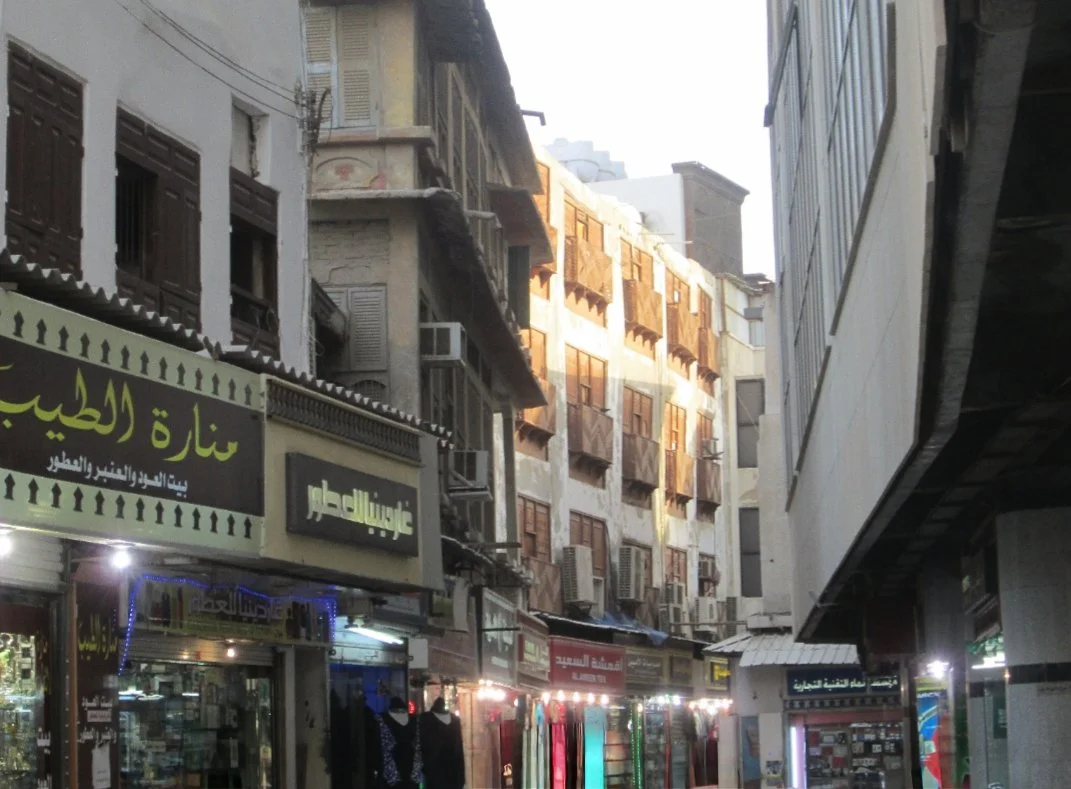
A street view showing dense building form and human scale.
Ground level is commerce. Above it is domestic life. This vertical mixing makes Al-Balad efficient but never claustrophobic. Each layer answers a different need, and each layer was added over time.
Defence and Daily Life.
Jeddah was not only a trade gateway. It was a city that needed defending. Its position on the Red Sea made it valuable and vulnerable. Evidence of this past remains muted, integrated into the streets rather than displayed.
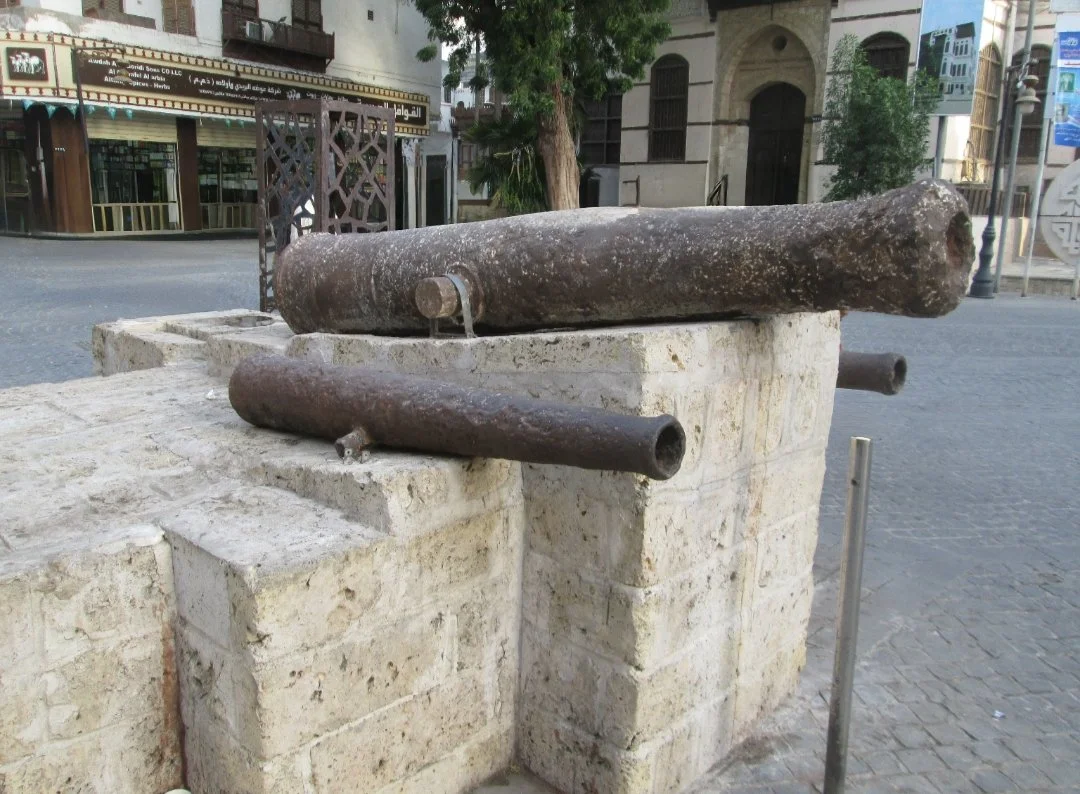
Historic cannon remnants, quiet markers of a fortified port.
These elements remind us that survival was not only environmental but also strategic.
Preservation in Plain View.
Al-Balad today is a UNESCO World Heritage Site, but it has not been turned into a reliquary. Restoration happens in public view. Coral stone is reused rather than replaced. Scaffolding sits beside shops. Conservation is process, not performance.
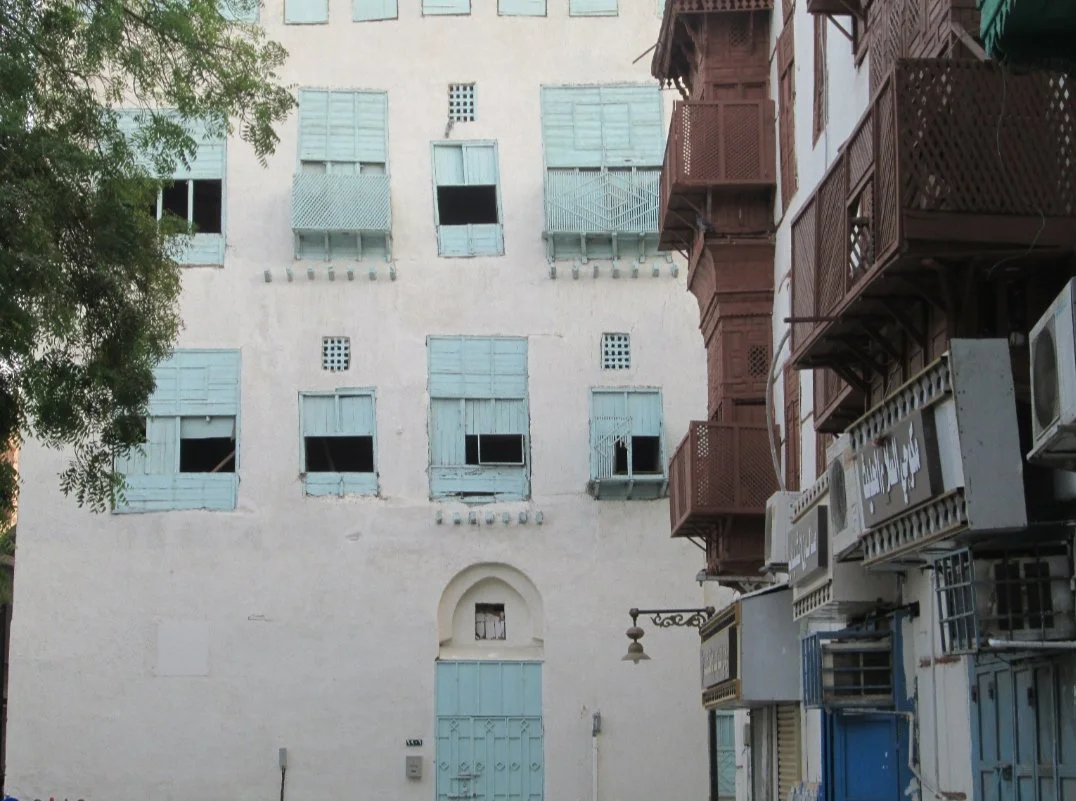
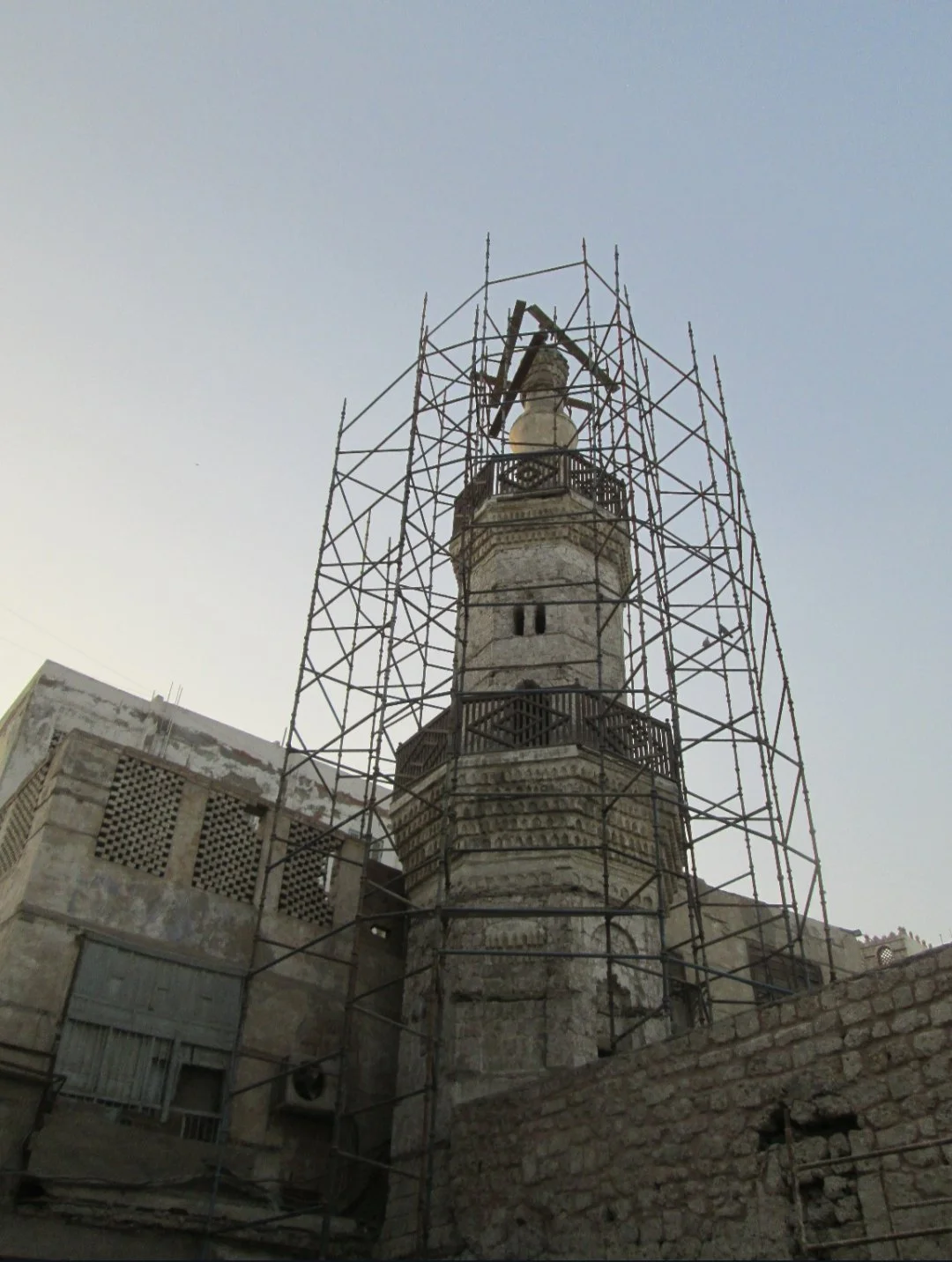
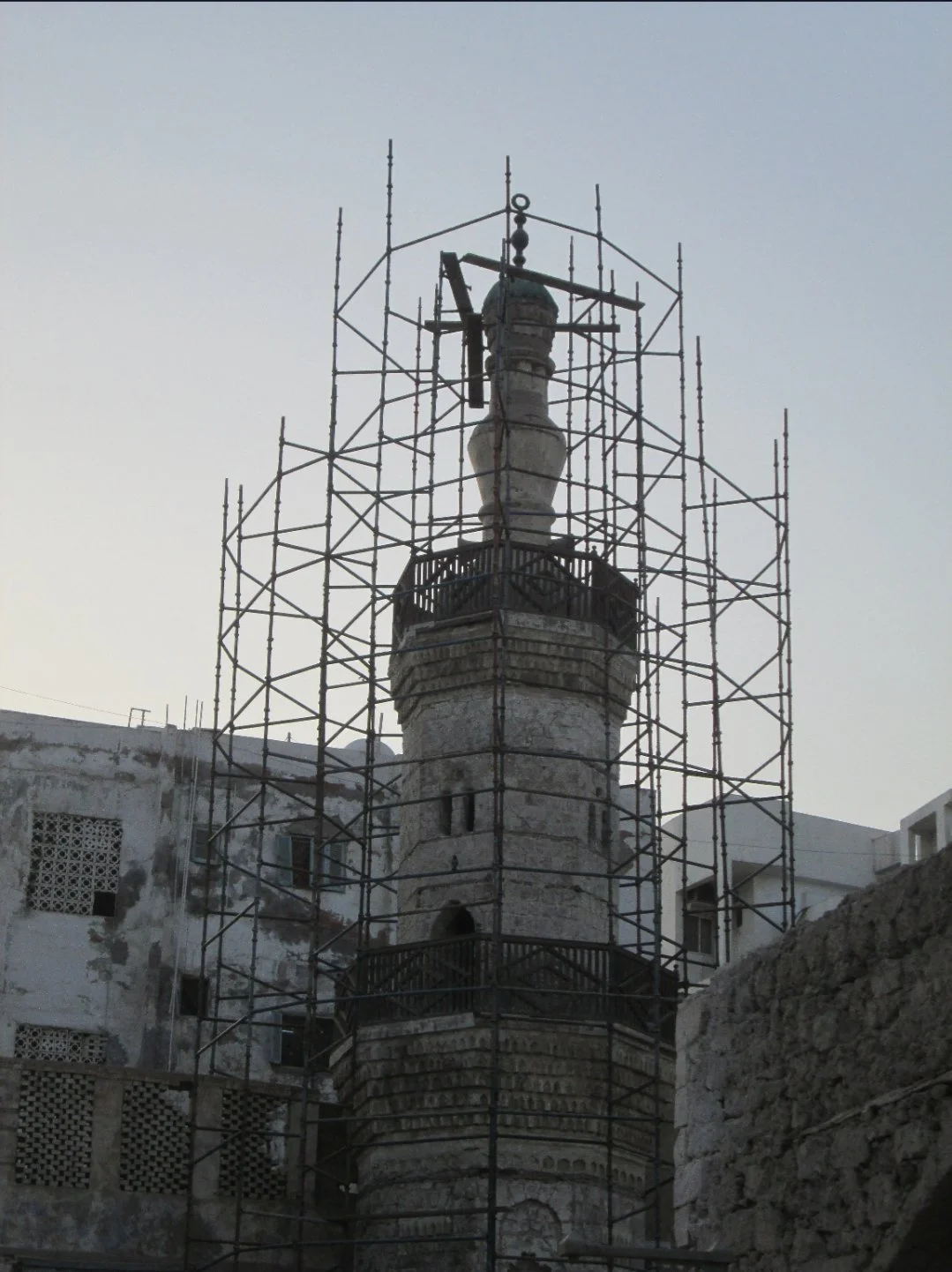
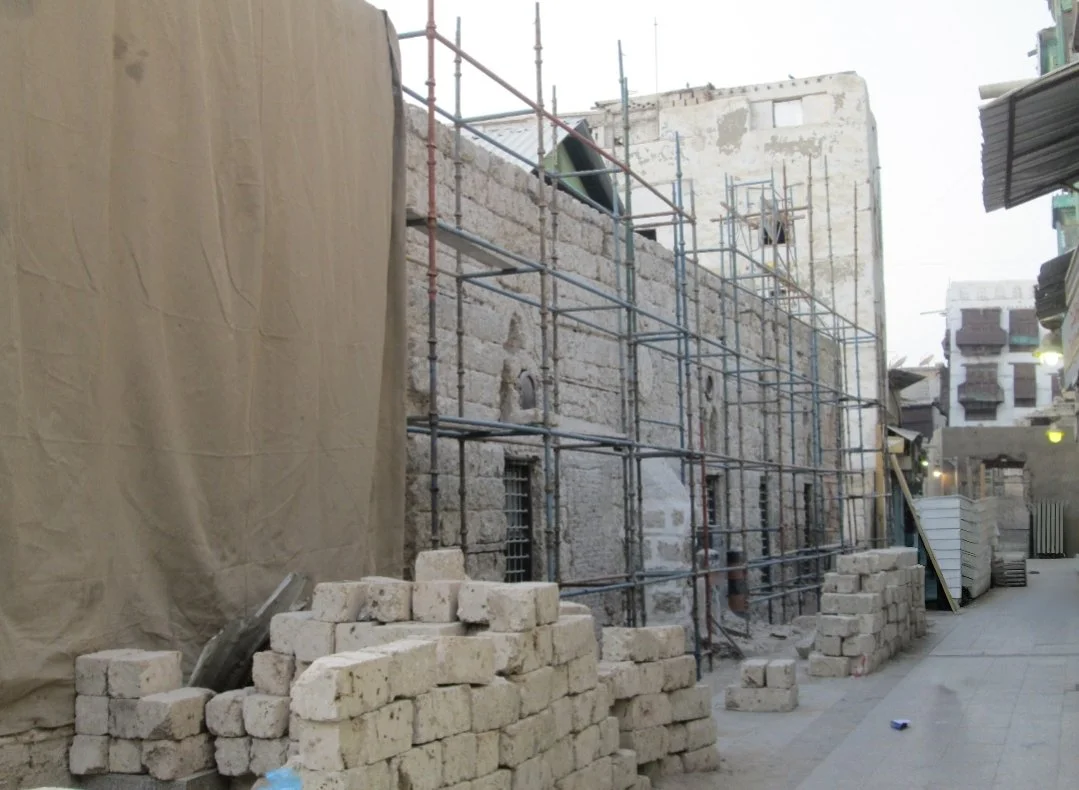
Modernity sits comfortably on ancient stone. Satellite dishes, signage, and everyday commerce coexist without apology.
Legacy of Survival.
Al-Balad does not ask to be admired. It asks to be understood. This is not a city built for display. It was built to endure, to accommodate, and to absorb. Climate, crowding, faith, trade, and change all left their marks in stone and timber.
When you step back from its streets and façades, you see that Al-Balad is less a static relic and more an ongoing negotiation between past and present.
It was never built to impress the world.
It was built to carry it, briefly, as it passed through.