

The Voortrekker Monument.
Stone, Memory, and the Architecture of Belief.
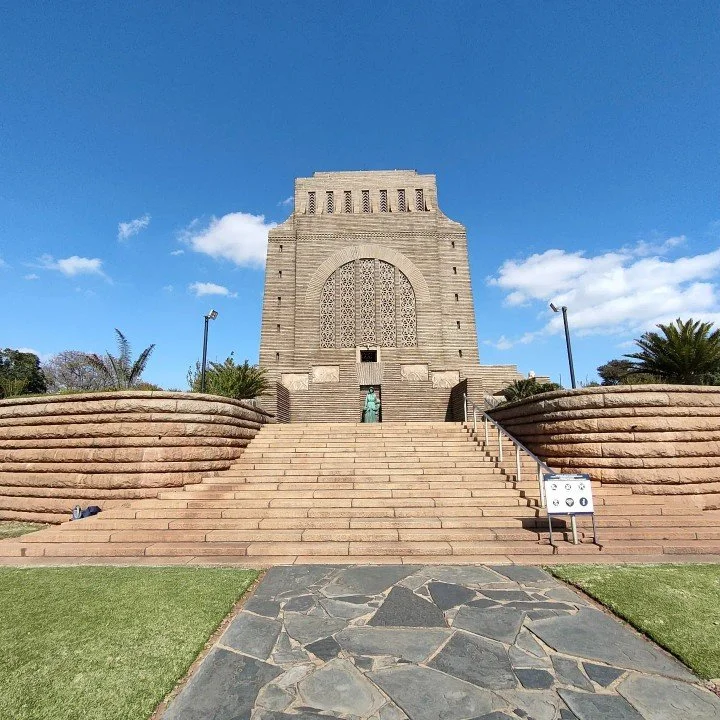
Built to turn movement into permanence. Stone steps rising toward a single version of history, framed by light, symmetry, and belief.
The Voortrekker Monument does not rise gently from the land. It asserts itself.
Set on a hill south of Pretoria, the structure dominates its surroundings through scale, symmetry, and intent. The long axial approach forces the visitor to walk directly toward it, framed and guided by geometry that diminishes the individual while elevating the building. This is not a monument designed to be encountered casually. It is meant to be approached deliberately and without distraction.
Completed in 1949, the monument was conceived as a permanent expression of Afrikaner identity, rooted in the nineteenth-century migration later known as the Groot Trek. Its architectural language draws on global monumental traditions: mausoleums, temples, and memorial halls designed not to question history, but to settle it.
From a distance, the building appears almost sealed. Thick granite walls rise with minimal interruption, projecting endurance, permanence, and authority. This is deliberate. The Voortrekker Monument is less a building than a declaration.
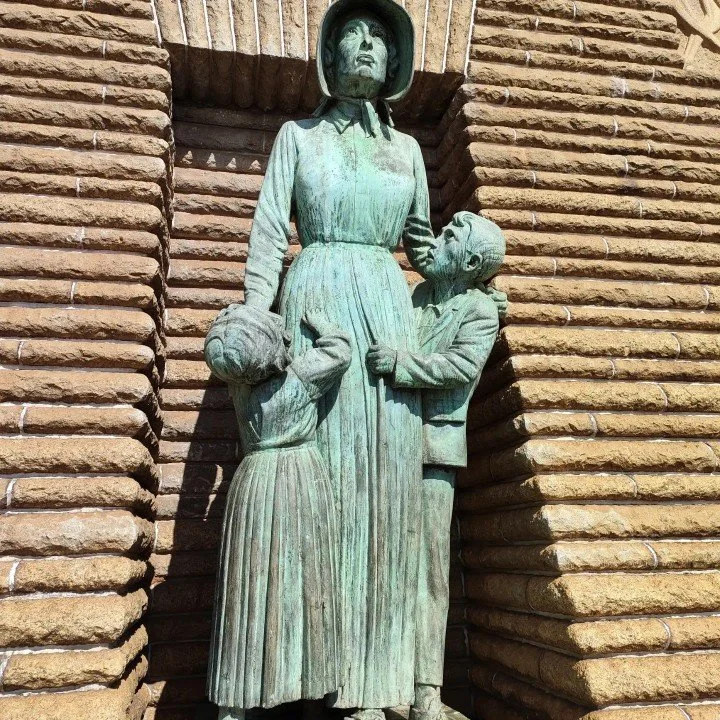
The mother becomes the nation. Children inspire upward, the future is fixed. History here is not a debate, it is destiny.
At the base of the structure stands the figure of a Voortrekker woman, flanked by children. She is calm, resolute, immovable. The symbolism is unambiguous: family, continuity, sacrifice, destiny.
The absence of visible men in this central sculpture is telling. Masculine struggle is assumed, absorbed into the wider narrative. What is foregrounded instead is permanence. Women as carriers of culture. Children as the future guaranteed by endurance. The monument does not celebrate movement for its own sake. It celebrates settlement.
This is not a memorial to uncertainty. It is a memorial to inevitability.
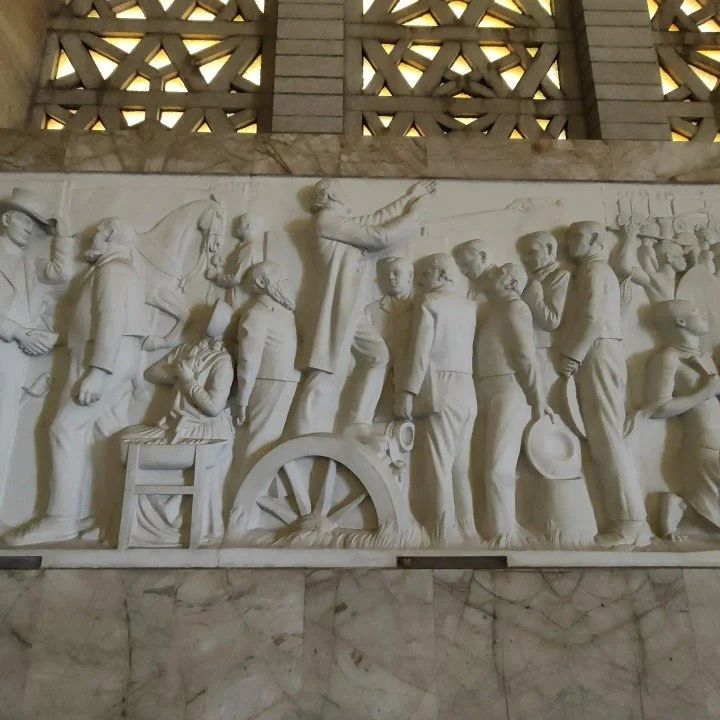
History carved as a procession. Every figure moving forward, every doubt smoothed away.
Inside, the monument’s tone shifts from intimidation to orchestration.
Encircling the interior Hall of Heroes is a continuous marble frieze, one of the largest of its kind in the world. It depicts scenes from the Groot Trek in chronological order: departure, migration, negotiation, conflict. Every figure is idealised. Every moment is resolved.
History here is not debated. It is presented as complete.
What is absent matters as much as what is shown. Indigenous peoples appear largely as background figures or as obstacles to progress. Violence is stylised. Suffering is selective. Complexity gives way to clarity. The frieze does not lie, but it edits with confidence.
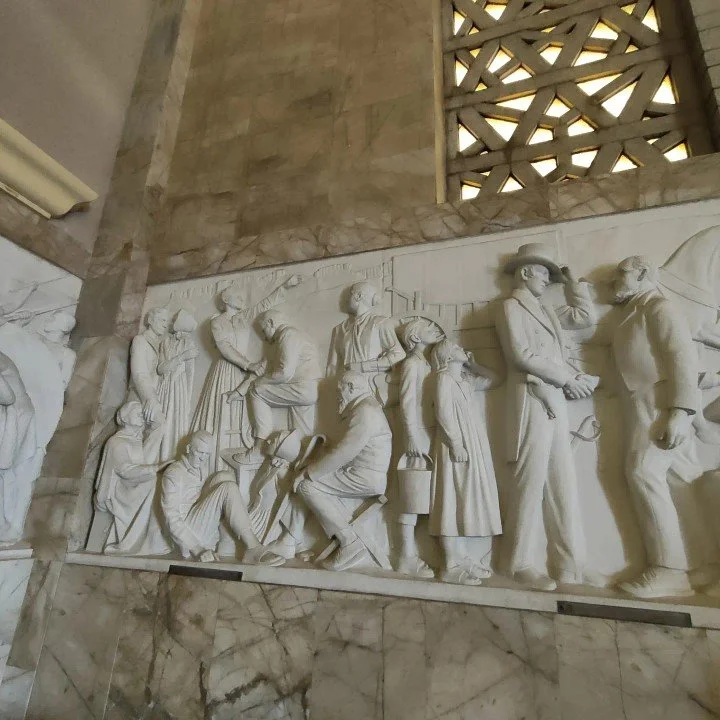
The Groot Trek carved, conflict and migration fixed forever in stone.
The scale of the frieze reinforces its authority. It surrounds the visitor, leaving no neutral vantage point. You do not observe the narrative from outside it. You stand inside it.
At the heart of the monument lies its most carefully constructed moment.
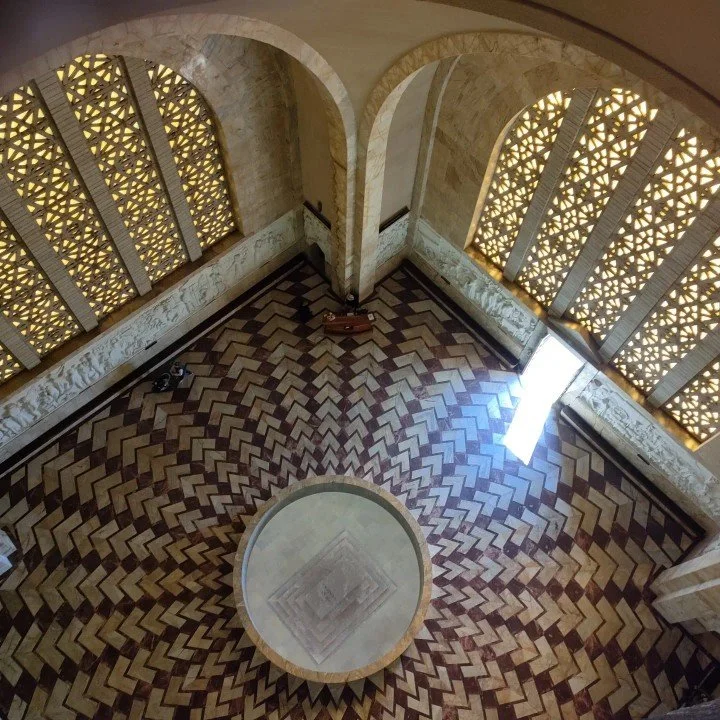
Light engineered into meaning. Once a year, the sun completes the story, striking stone to affirm belief. Memory here is not remembered, it is timed.
At the centre of the lower hall sits the cenotaph, inscribed with the words “Ons vir jou, Suid-Afrika” — We for thee, South Africa. Above it, a circular opening allows sunlight to enter the building at precisely noon on 16 December each year, illuminating the inscription.
This is not metaphorical symbolism. It is an architectural ritual.
Time, light, and stone are aligned to produce meaning on a specific day, at a specific hour. The monument does not simply remember history. It reenacts it annually. Memory becomes performance.
Even the ceiling participates in this choreography, drawing the eye upward and reinforcing a vertical hierarchy of belief: earth below, meaning above, destiny fixed between the two.
Elsewhere within the complex, objects complete the narrative.
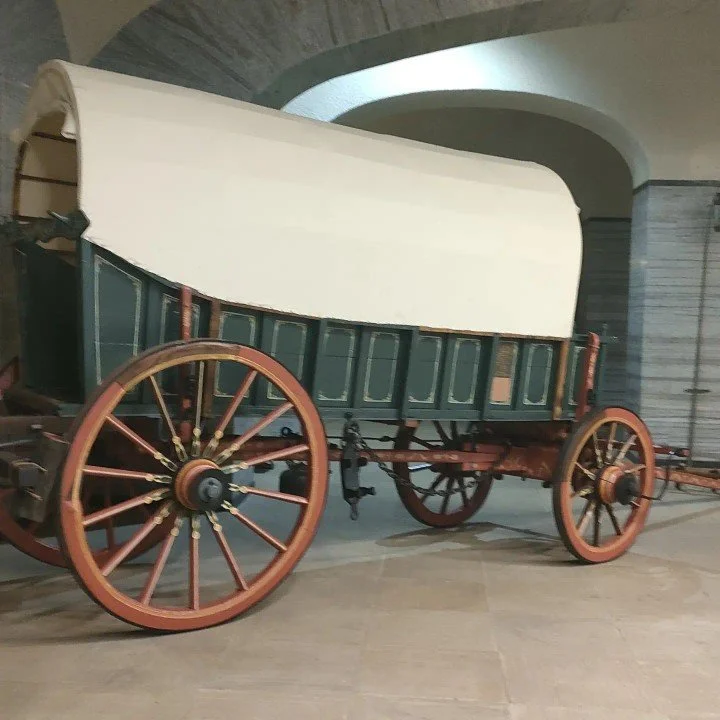
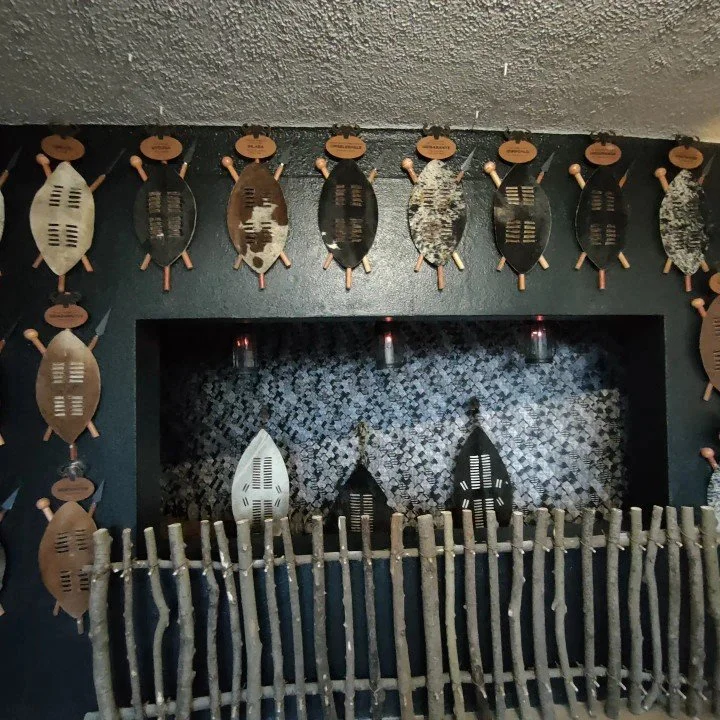
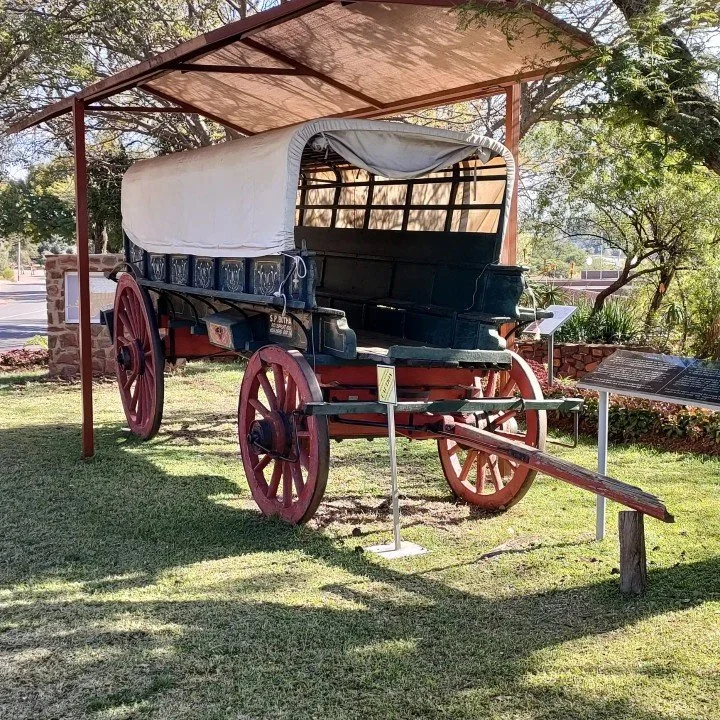
The wagon is perhaps the most potent artefact of all. It represents movement, vulnerability, and resolve. Yet here it is immobilised, preserved, sanctified. What was once a tool of migration becomes a relic.
The journey ends in stone.
The Voortrekker Monument stands today in a country profoundly different from the one that built it. Post-apartheid South Africa has neither erased the monument nor rebranded it entirely. Instead, it exists in tension: preserved, contextualised, and contested.
It remains one of the most revealing structures in the country, not because it tells the full story of the past, but because it shows how history was once meant to be remembered.
Stone does not forget.
But it can be taught what to remember.
