

Londonderry / Derry: Walls Above the Bogside.
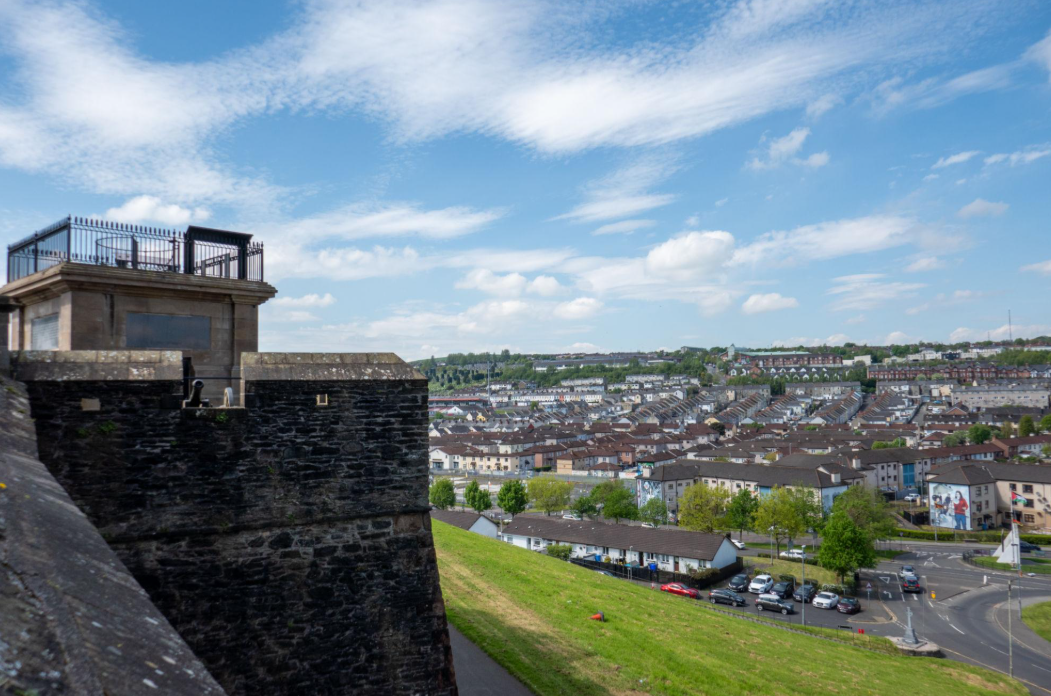
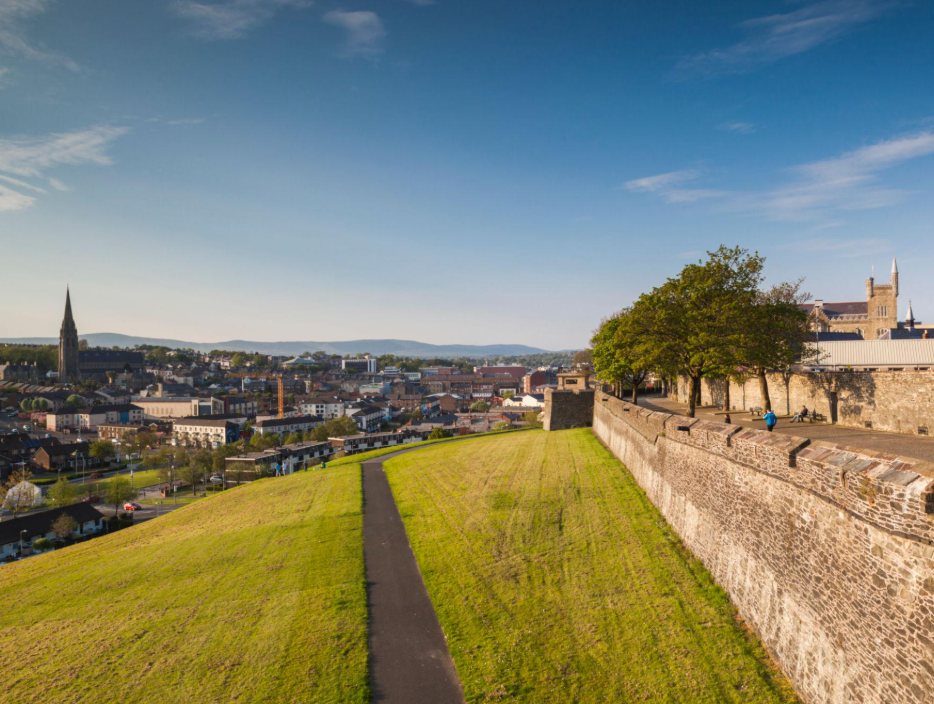
The walls come first.
Before the murals. Before the checkpoints that once cut through the city. Before the armoured vehicles, the riots, the funerals, and the painted names that still remain fixed across the Bogside.
They rise above Derry in a complete stone circuit, enclosing the old city exactly as they have since the early seventeenth century. From the top, the city unfolds in layers. Church towers. Terraced streets. The River Foyle moving through the centre. Beyond it all, the modern city stretches outward into districts shaped as much by memory as by architecture.
And below the walls, the Bogside waits beneath them.
That is where the story changes.
The Derry City Walls were built during the Plantation of Ulster, designed to defend a Protestant settlement established under English control. Unlike many fortifications across Ireland and Britain, they were never breached.
Centuries later, they would overlook one of the defining landscapes of the Troubles.
The Walled City.
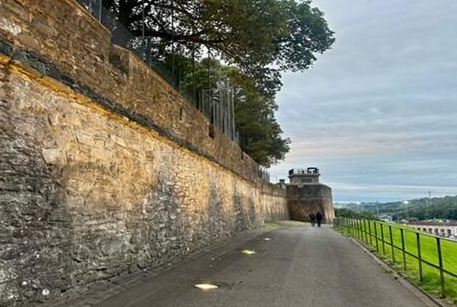
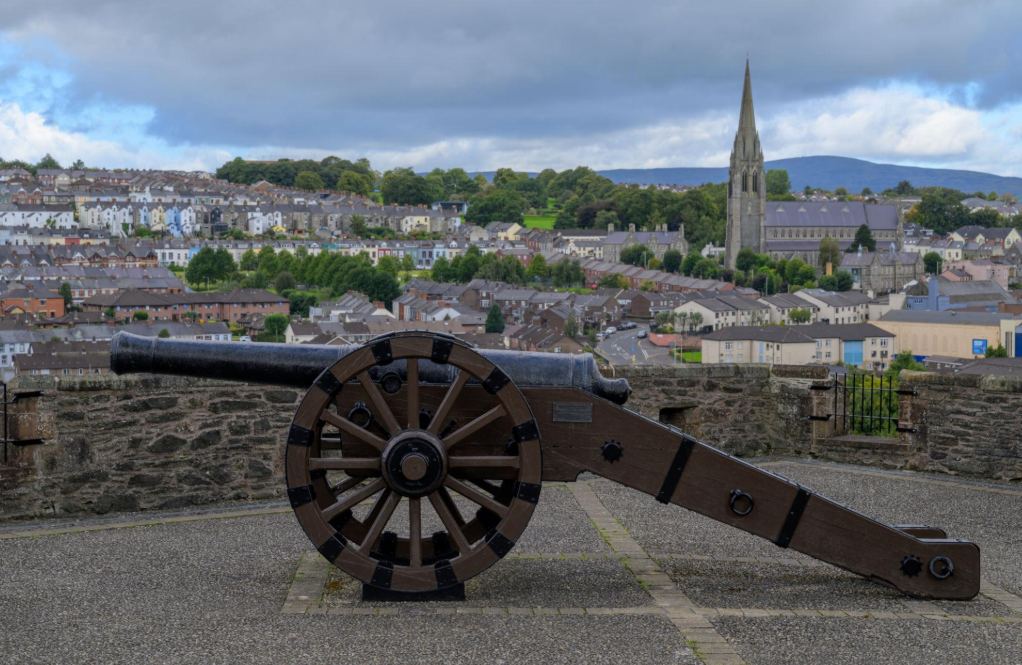
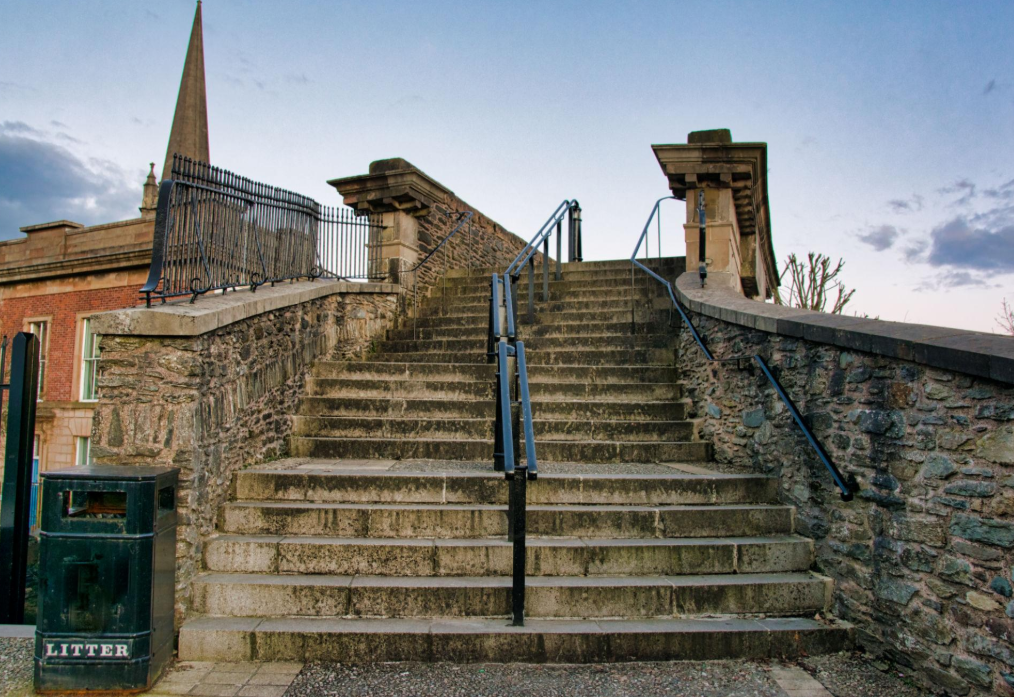
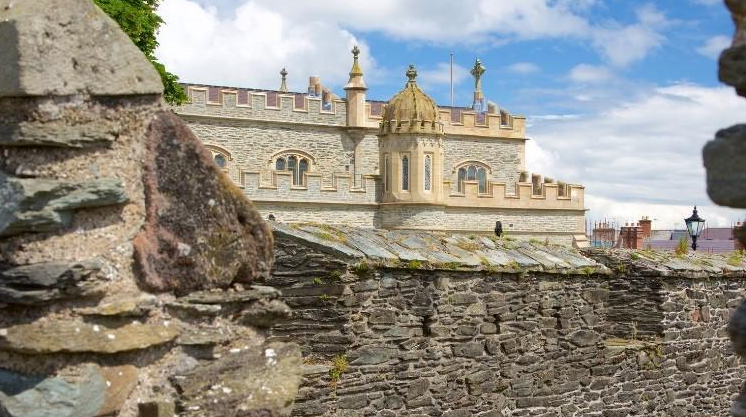
Walking the walls now, the city separates itself clearly.
Inside them, the streets feel compressed and deliberate, shaped by an older logic of defence and containment. Beyond them, the Bogside climbs the hillside in tighter rows of terraced housing, less ordered, more exposed.
The geography matters.
During the Troubles, these physical divisions became political ones. The elevated position of the walls meant they looked directly over districts that would become centres of protest, unrest, and confrontation. What had once defended a colonial settlement now overlooked armoured patrols, barricades, and civil rights marches.
The walls were no longer simply historical structures.
They became viewing platforms above a modern conflict.
The Bogside.
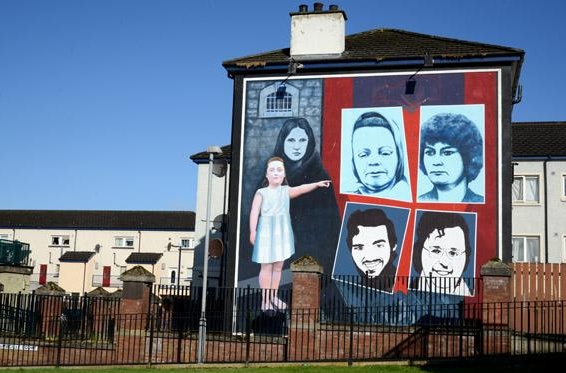
The transition into the Bogside is gradual at first.
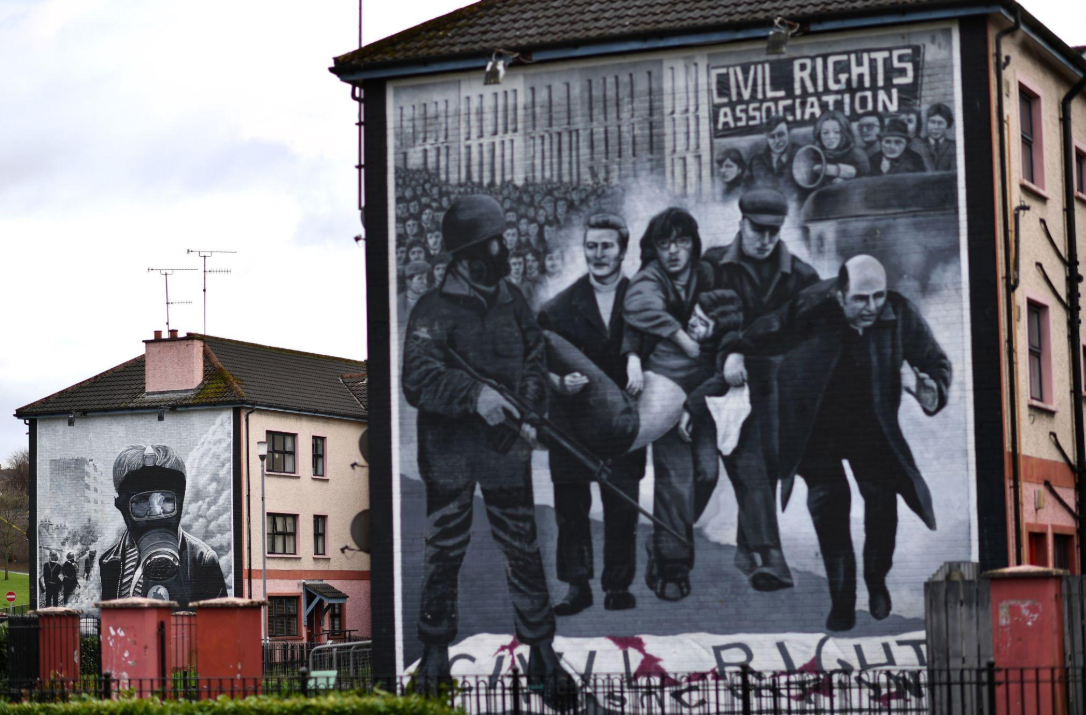
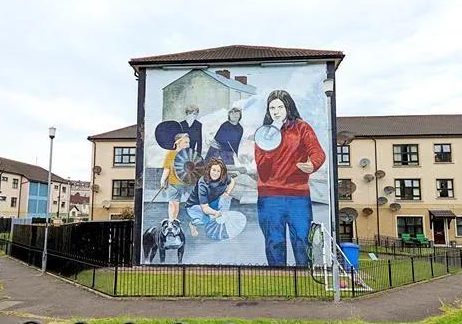
The streets widen. The old city loosens. Murals begin appearing across entire buildings, each one carrying names, faces, or moments fixed permanently into the structure of the area itself.
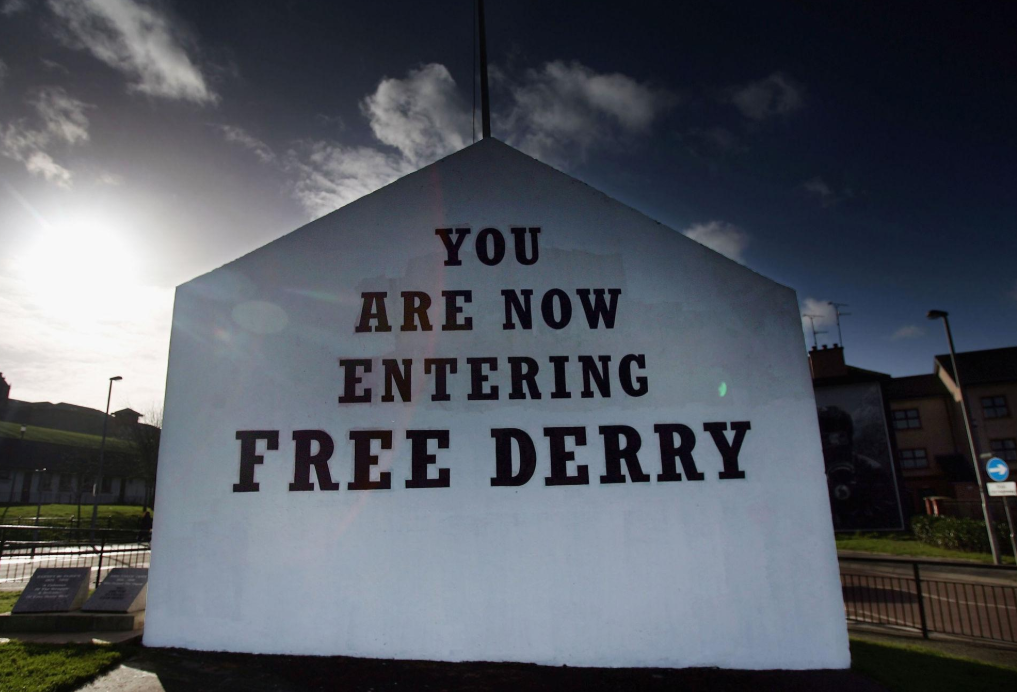
Then the words appear:
“You are now entering Free Derry.”
The slogan first emerged in January 1969 as tensions escalated between residents and the Royal Ulster Constabulary. Barricades were erected across the area. For a time, the Bogside effectively became a self-contained district beyond state control.
The wording remains exactly as it was.
Not preserved as decoration.
Maintained as position.
Today, the murals of the Bogside form what is often called The People’s Gallery, documenting decades of conflict directly onto the walls of the city. Unlike monuments separated into memorial parks or museums, these works remain embedded into ordinary streets.
Children walk past them.
Cars park beneath them.
Life continues around them.
Civil Rights and the Battle of the Bogside.
By the late 1960s, Northern Ireland had entered a period of growing instability.
Catholic and Nationalist communities faced long-standing inequalities in housing, employment, and political representation. Civil rights marches emerged demanding reform, inspired partly by similar movements elsewhere in the world.
Derry became one of the centres of that movement.
In August 1969, tensions erupted into what became known as the Battle of the Bogside.
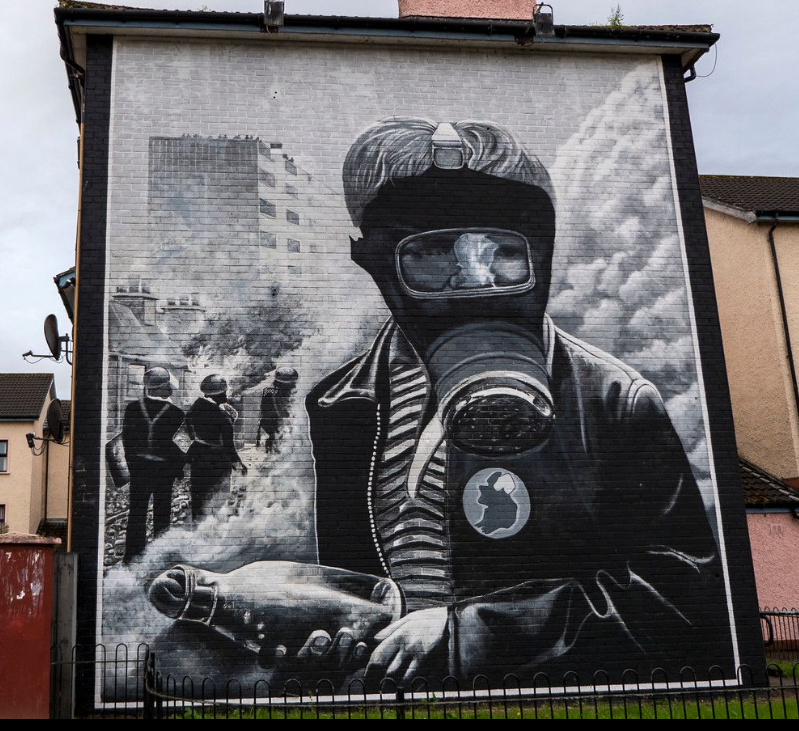
For three days, residents fought sustained clashes with the Royal Ulster Constabulary. Petrol bombs were thrown from behind barricades. Tear gas drifted through densely packed streets. Entire sections of the city became inaccessible.
The British Army was deployed soon afterwards.
What had begun as civil unrest hardened into something more permanent.
The Troubles had begun.
Bloody Sunday.
No event shaped modern Derry more than Bloody Sunday.
On 30 January 1972, a civil rights march moved through the Bogside despite a ban imposed by authorities. Thousands attended. British paratroopers were deployed nearby.
By the end of the day, fourteen civilians had been killed.
The impact extended far beyond Derry itself.
Trust in the British Army collapsed across Nationalist communities. International attention intensified. Recruitment into the IRA increased sharply. Any remaining belief that reform alone could resolve the conflict weakened dramatically.
The event altered the direction of the Troubles.
And in Derry, it altered the landscape permanently.
The murals that now dominate the Bogside are not simply commemorative artworks. They are acts of preservation. Public memory fixed permanently onto walls that once overlooked violence directly.
A War Inside the City.
The Troubles were not fought across distant front lines.
They unfolded within ordinary urban space.
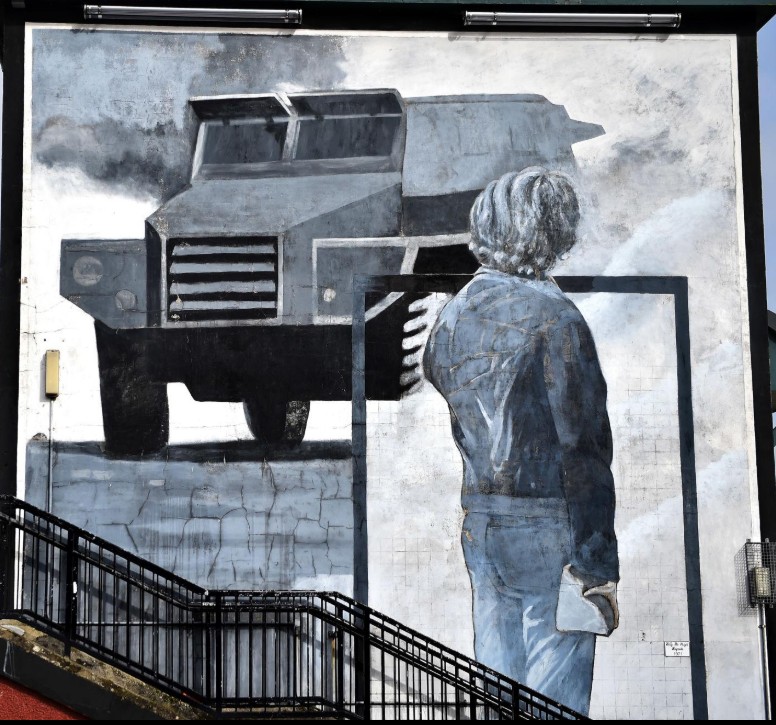
Armoured vehicles moved through residential streets. Soldiers patrolled areas filled with children walking home from school. Bomb scares interrupted daily routines. Checkpoints restricted movement across the city.
Violence was not constant.
But the possibility of it remained everywhere.
People adapted to it slowly. Routes changed. Habits shifted. Entire generations grew up understanding which areas carried tension and which streets to avoid after dark.
The conflict embedded itself into ordinary behaviour.
Not separate from life.
Part of it.
Murals and Memory.
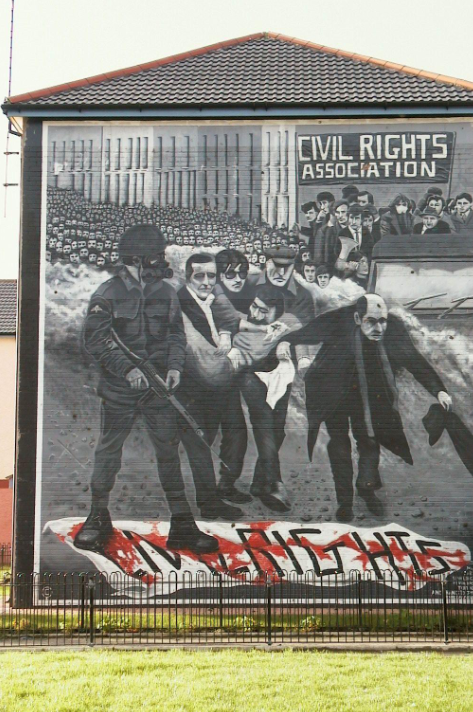
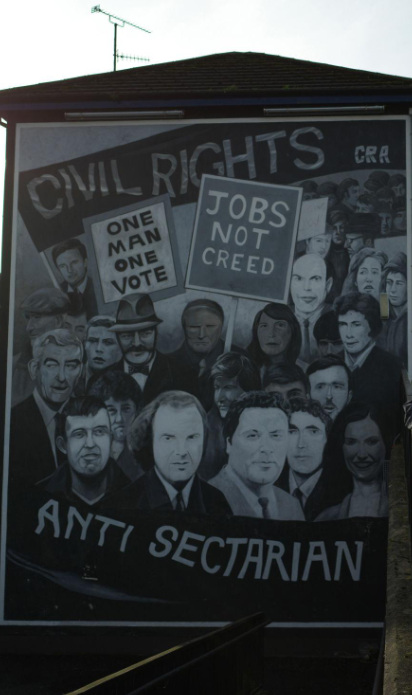
What remains in Derry now is not silence.
It is memory made visible.
The murals preserve not only events, but perspective. They present a version of history rooted directly within the communities that experienced the conflict themselves.
That is what gives them their weight.
They are not neutral.
They were never intended to be.
And yet together, they form one of the most powerful visual records of the Troubles anywhere in Northern Ireland.
Beyond the Conflict.
The city does not remain fixed in conflict.
The Peace Bridge now crosses the River Foyle in a long white curve, linking areas once heavily divided during the Troubles. Opened in 2011, it has become one of the clearest physical symbols of modern Derry’s attempt to reconnect itself.
It does not erase what happened here.
Nothing does.
But it changes how movement through the city feels.
The walls remain above the Bogside exactly as they did before the Troubles began. The murals remain fixed below them. The bridge crosses the river between them.
Old structures.
New structures.
Different versions of the same city.
Legacy.
Derry is not defined solely by conflict.
But it cannot be understood without it.
The city carries its history openly. In the walls above the Bogside. In the murals across ordinary streets. In the slogans that remain repainted year after year.
Nothing here feels fully separated from what came before.
The past remains visible.
And Derry continues to live alongside it.
