

Paphos: The Living City and the Cities of the Dead.
On the western edge of Cyprus, where limestone meets the Mediterranean, Paphos unfolds as one of the most layered archaeological landscapes in the ancient world, a place where myth, empire and belief exist not in isolation, but side by side.
This is the coastline where tradition places the birth of Aphrodite, where Roman officials once governed an imperial province, and where early Christianity first intersected with Roman authority. Yet just beyond the visible ruins of the city lies something quieter and more unsettling, an entire necropolis carved into the rock, hidden beneath the surface.
Paphos is not defined by a single story or a single era.
It is defined by contrast.
The living city beside the sea.
And the silent city beneath the earth.
The Roman City by the Sea.
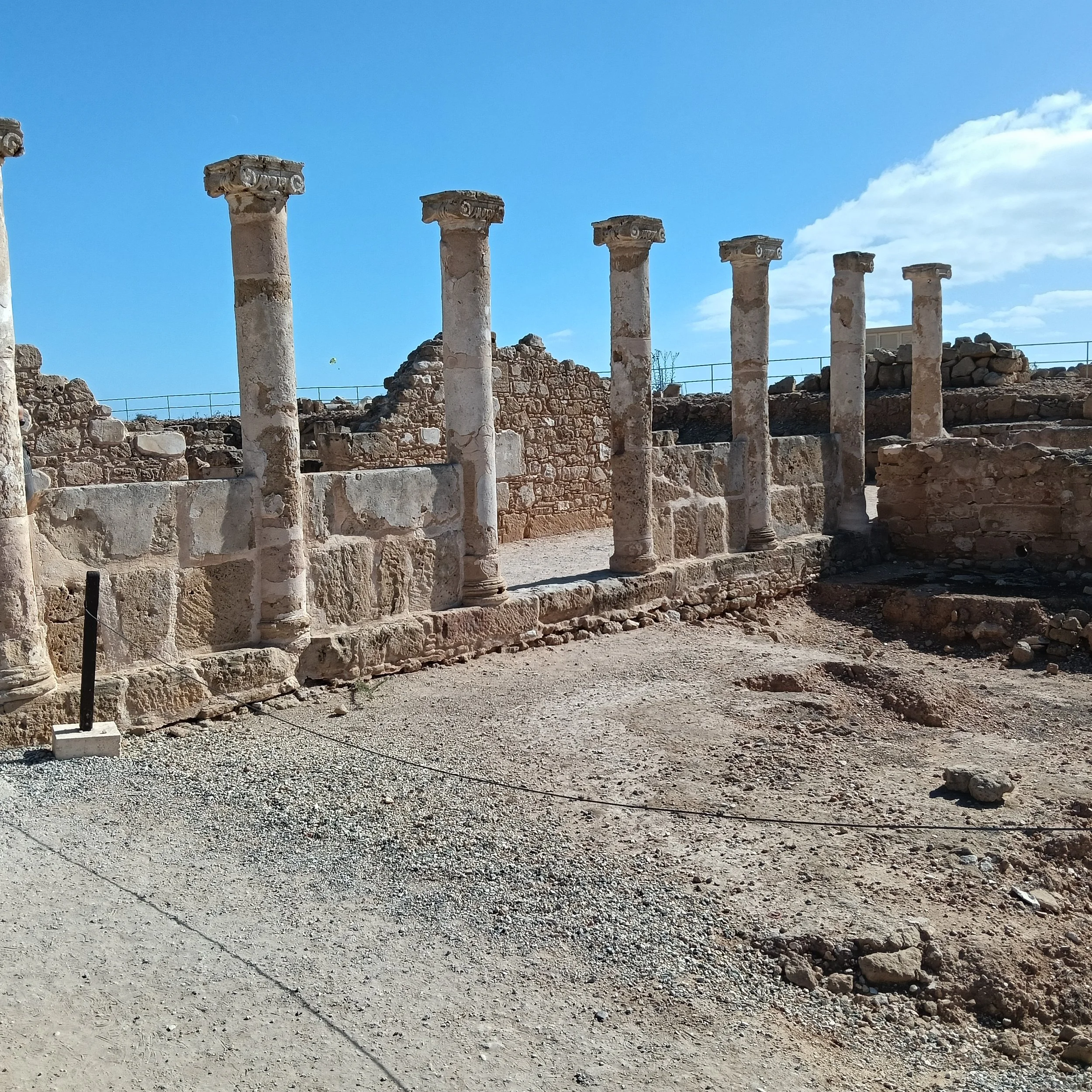
Columns that one held up the Roman world, now stand exposed under the Cypriot sky.
When Cyprus was absorbed into the Roman Republic in 58 BC, its position within the eastern Mediterranean ensured that it would become more than a peripheral territory. Paphos was selected as the administrative capital, and with that decision the city began to expand into a centre of governance, trade and influence.
The remains preserved today within the Paphos Archaeological Park reflect that transformation. Although much of the original architecture has been reduced to foundations, the layout of the city is still legible. Streets, courtyards and residential areas form a coherent structure, revealing how the city once functioned within the wider framework of Roman administration.
What survives is not simply a collection of ruins, but the footprint of a provincial capital embedded within a much larger empire.
Houses of the Roman Elite.
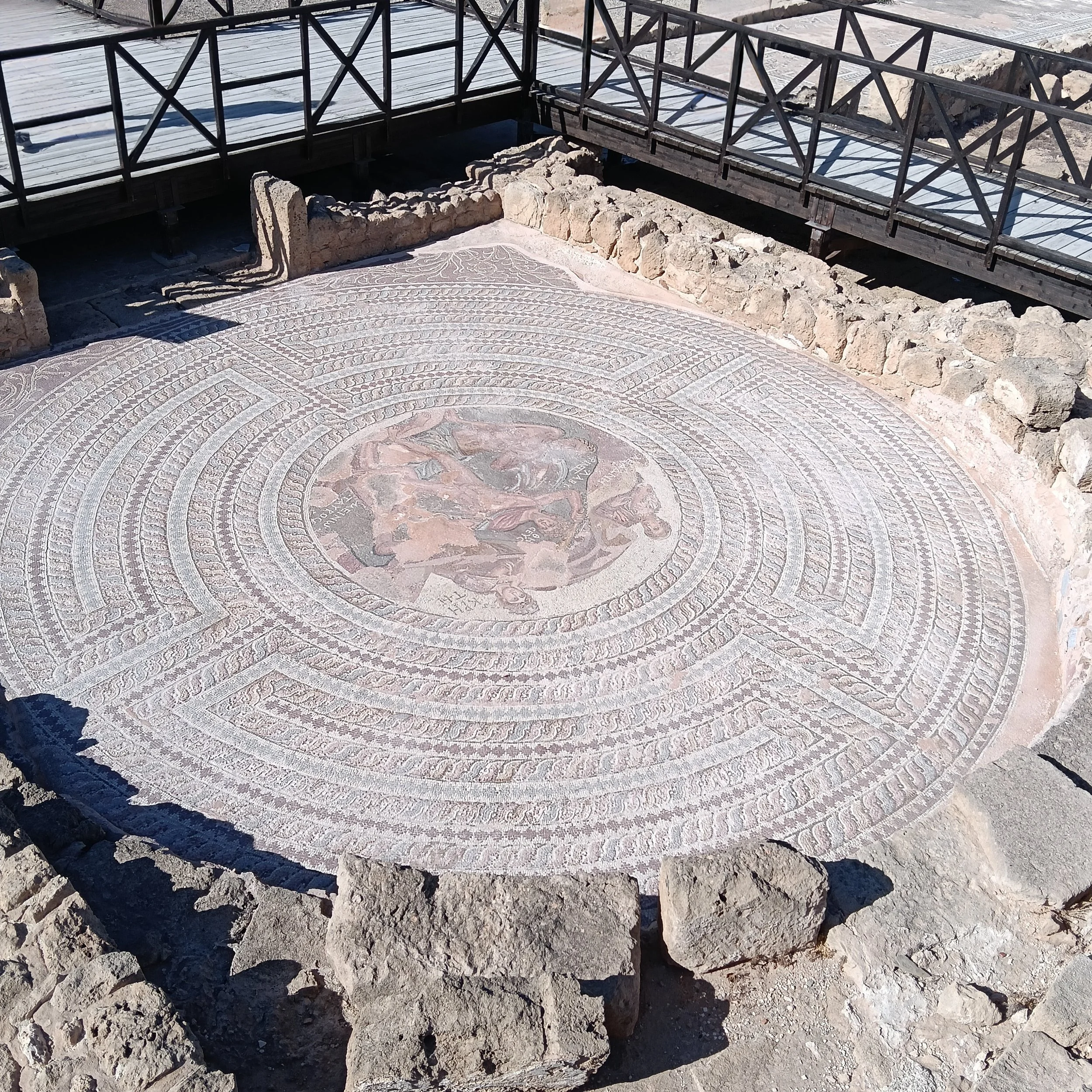
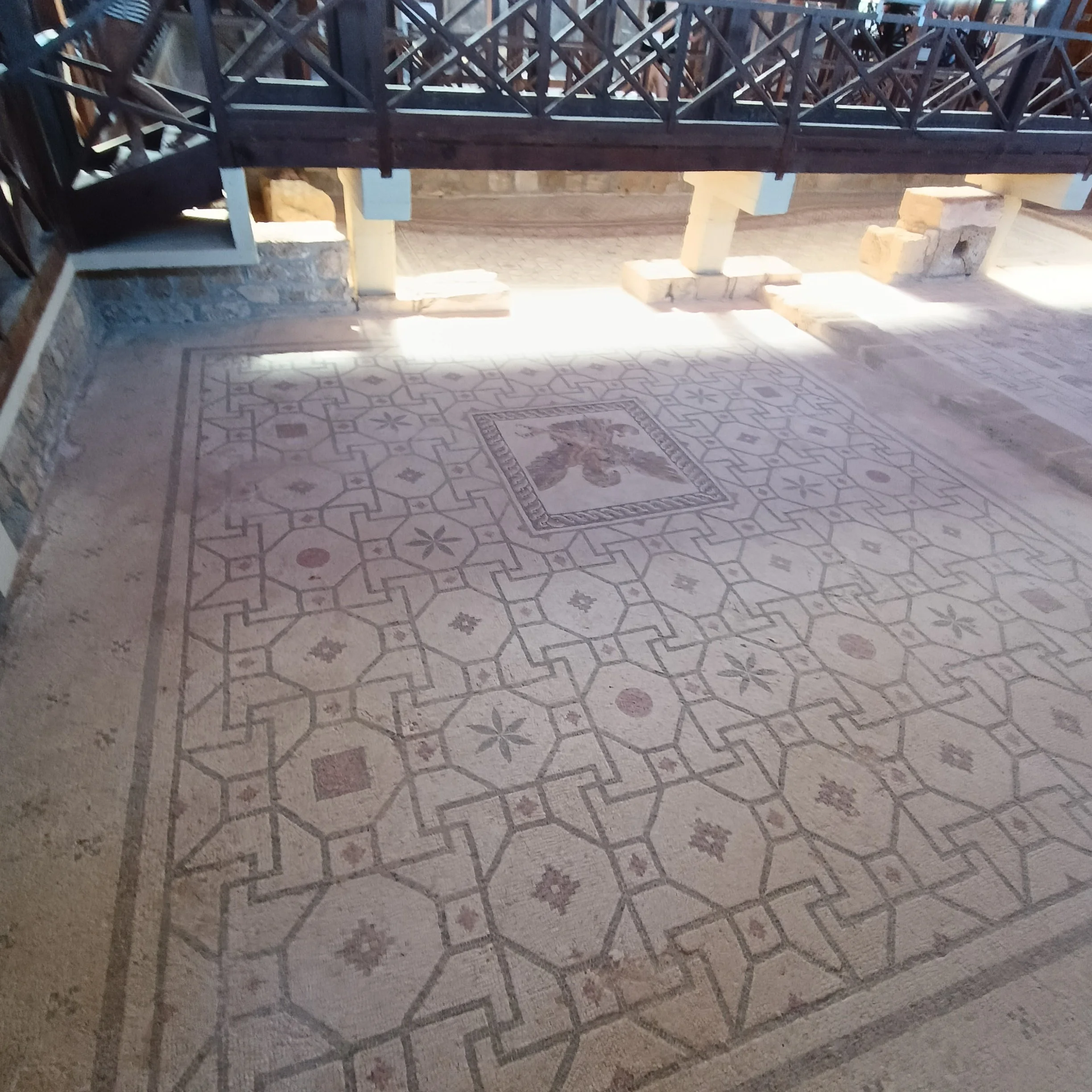
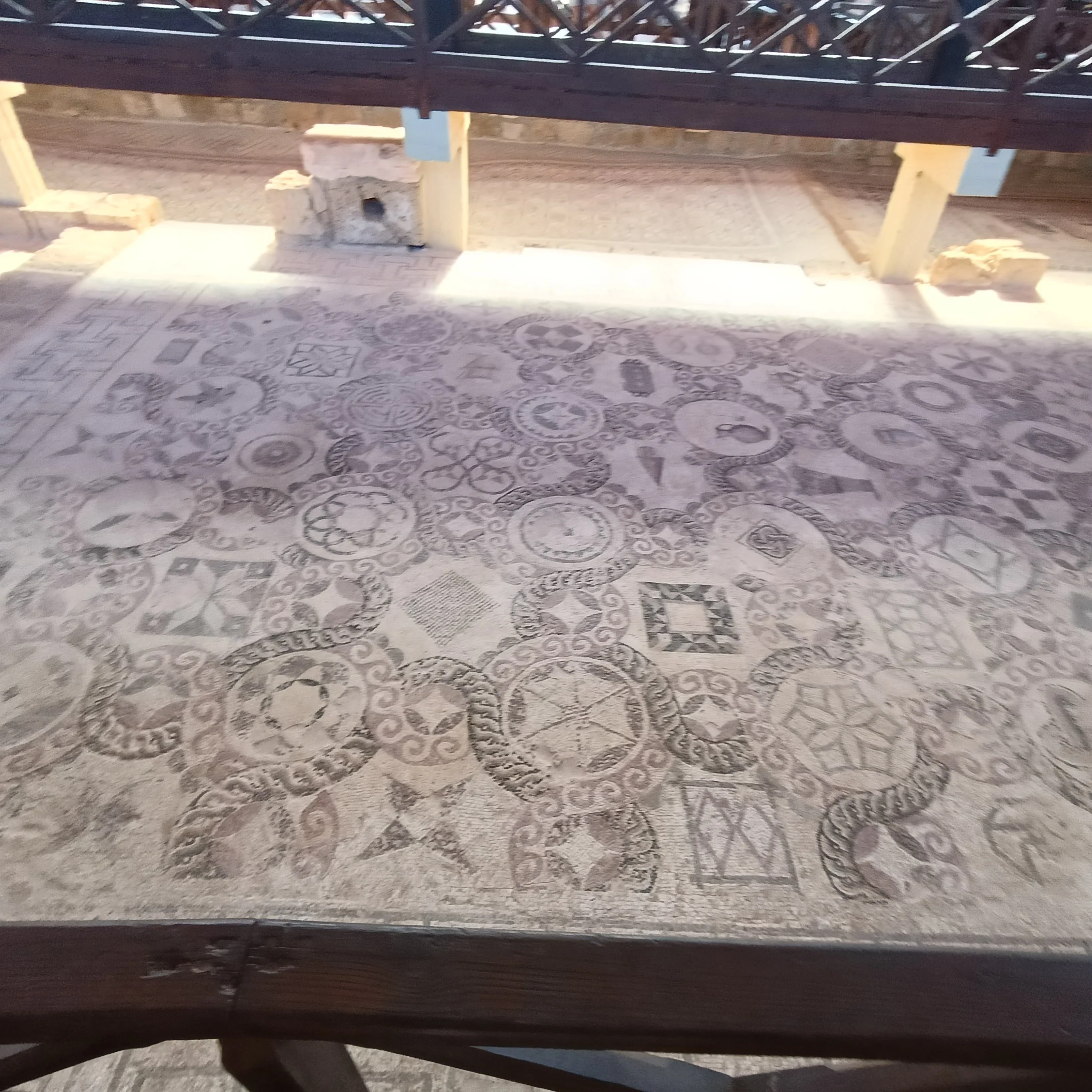
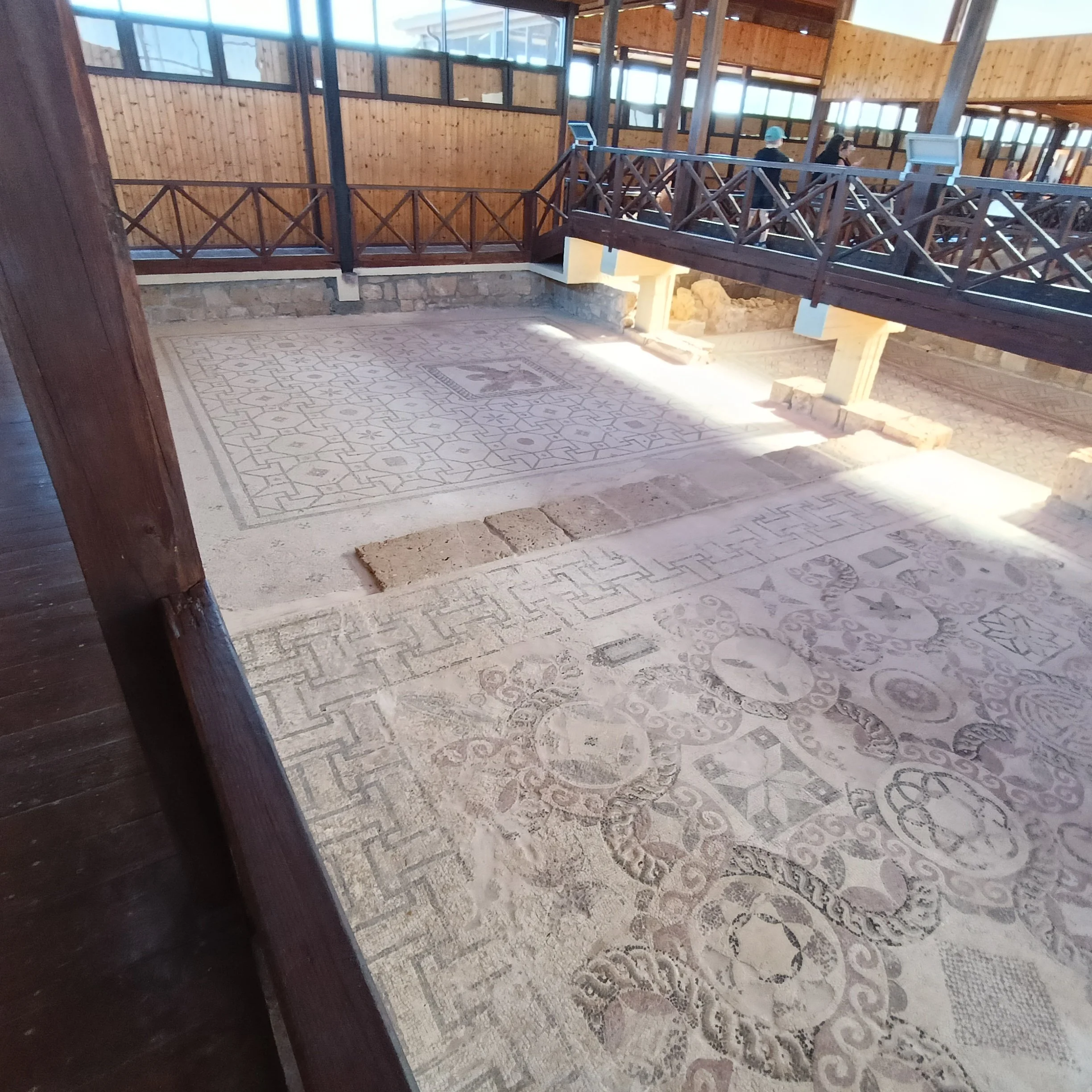
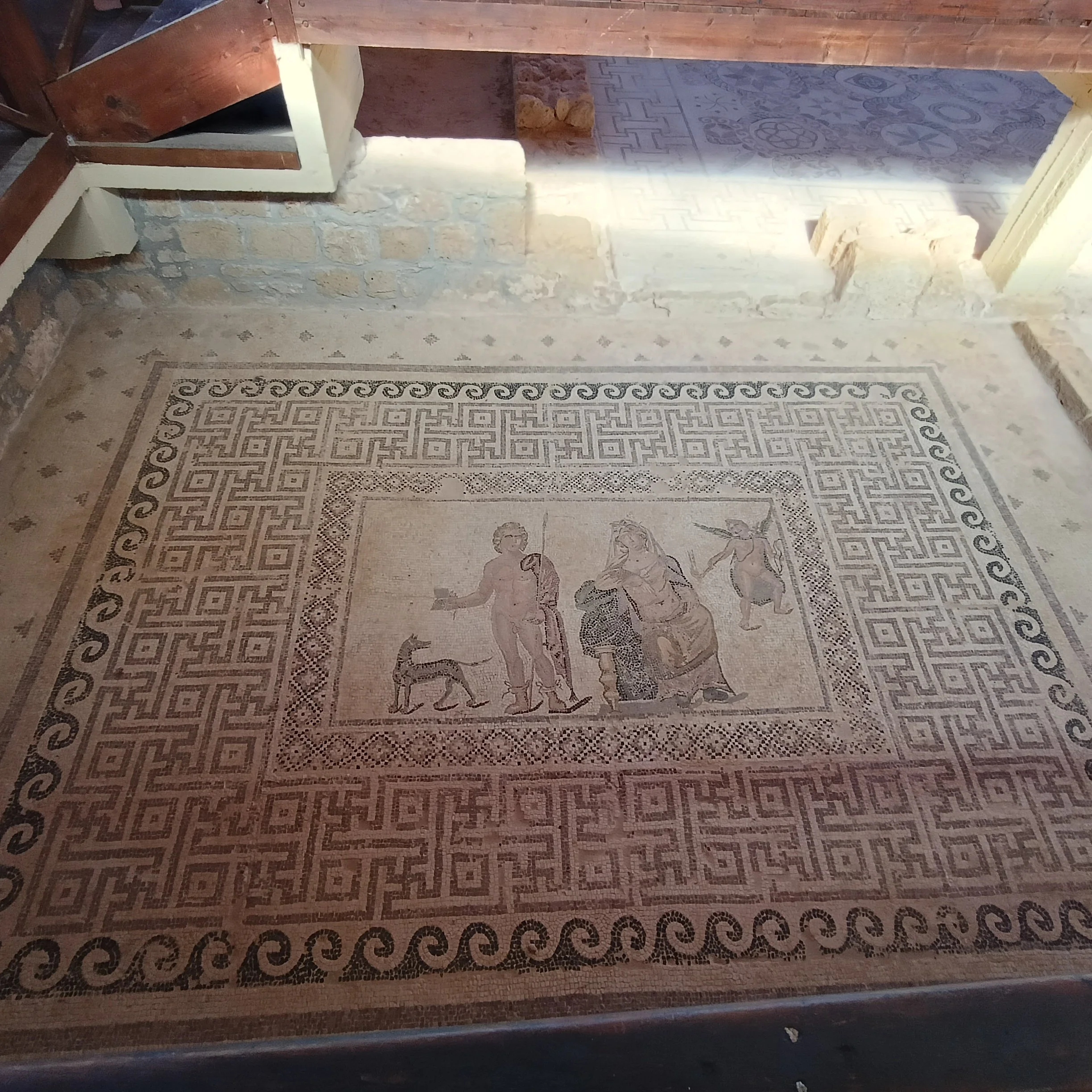
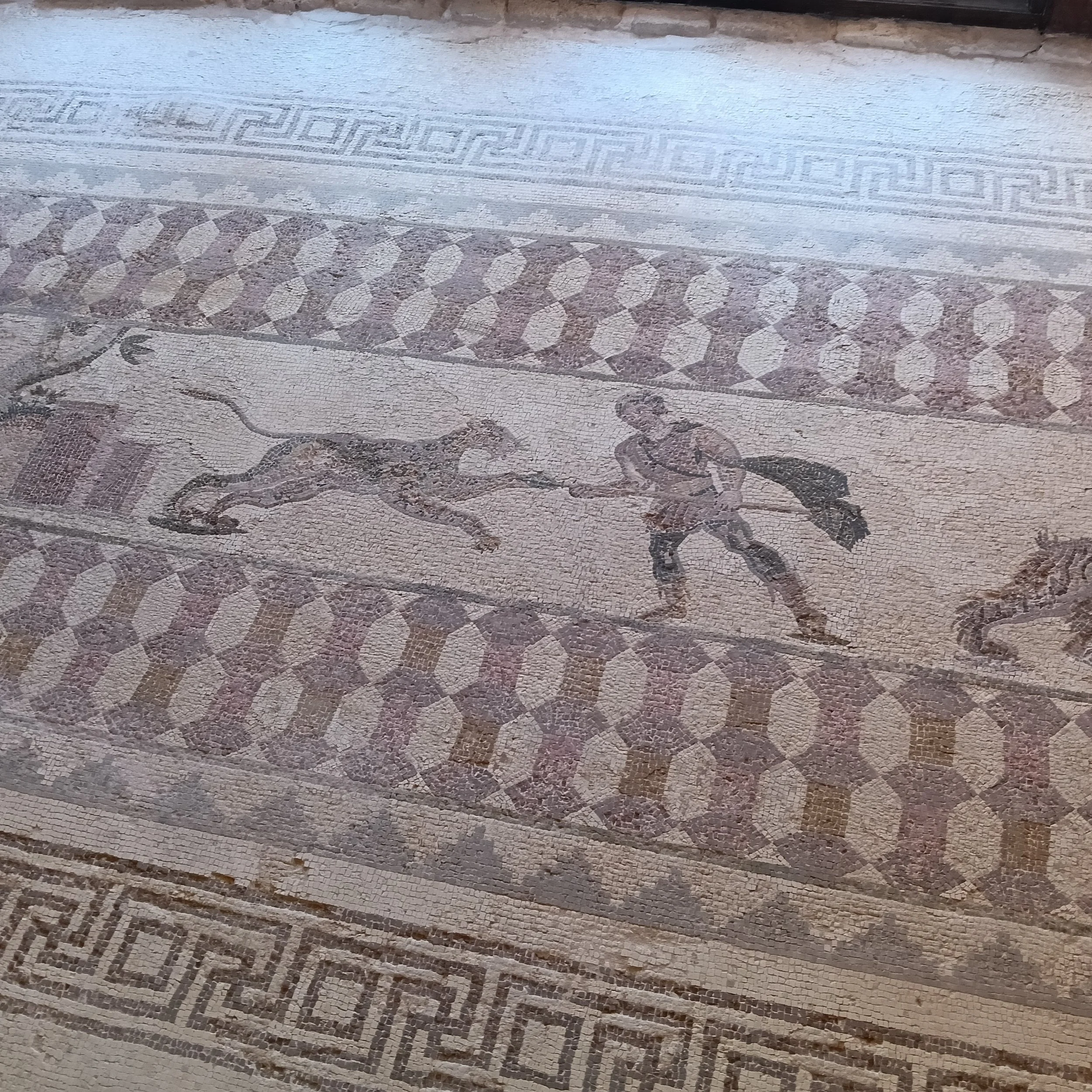
Among the most remarkable features of Paphos are the mosaics that once covered the floors of its wealthiest homes.
Constructed from thousands of small stone tesserae, these mosaics depict scenes drawn from Greek mythology, transforming domestic spaces into carefully curated displays of culture and identity. Within villas such as the House of Dionysus and the House of Theseus, entire rooms become narrative surfaces, where gods, heroes and symbolic encounters unfold beneath the feet of those who lived there.
These works were not decorative in a casual sense.
They were deliberate statements of education and status, designed to be recognised and understood by those who entered the space. The choice of subject, the quality of execution and the scale of the compositions all reflect a society in which cultural literacy was closely tied to power.
Their survival today offers a rare and detailed insight into how the Roman elite chose to represent themselves within the private sphere.
The Structure of the Ancient City.
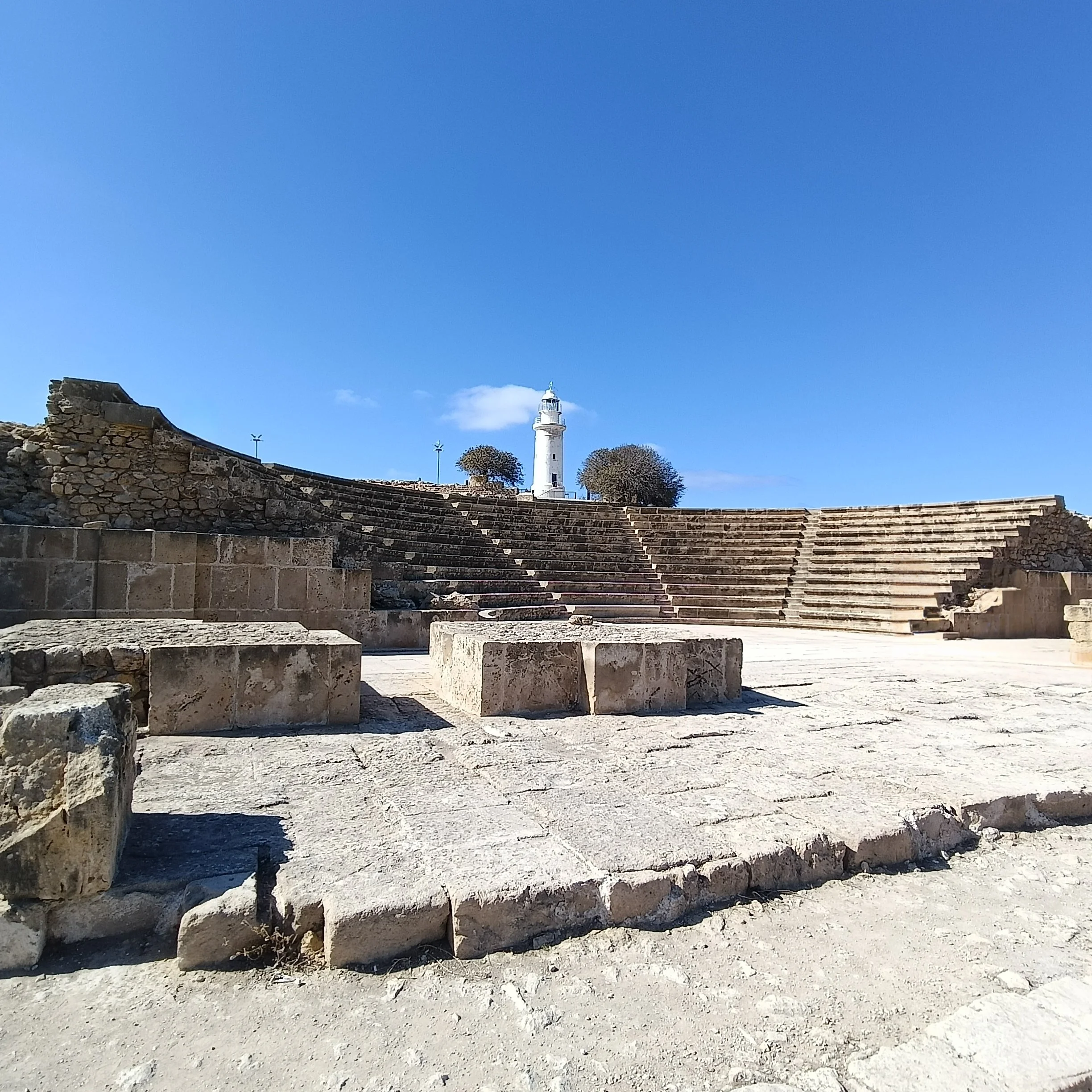
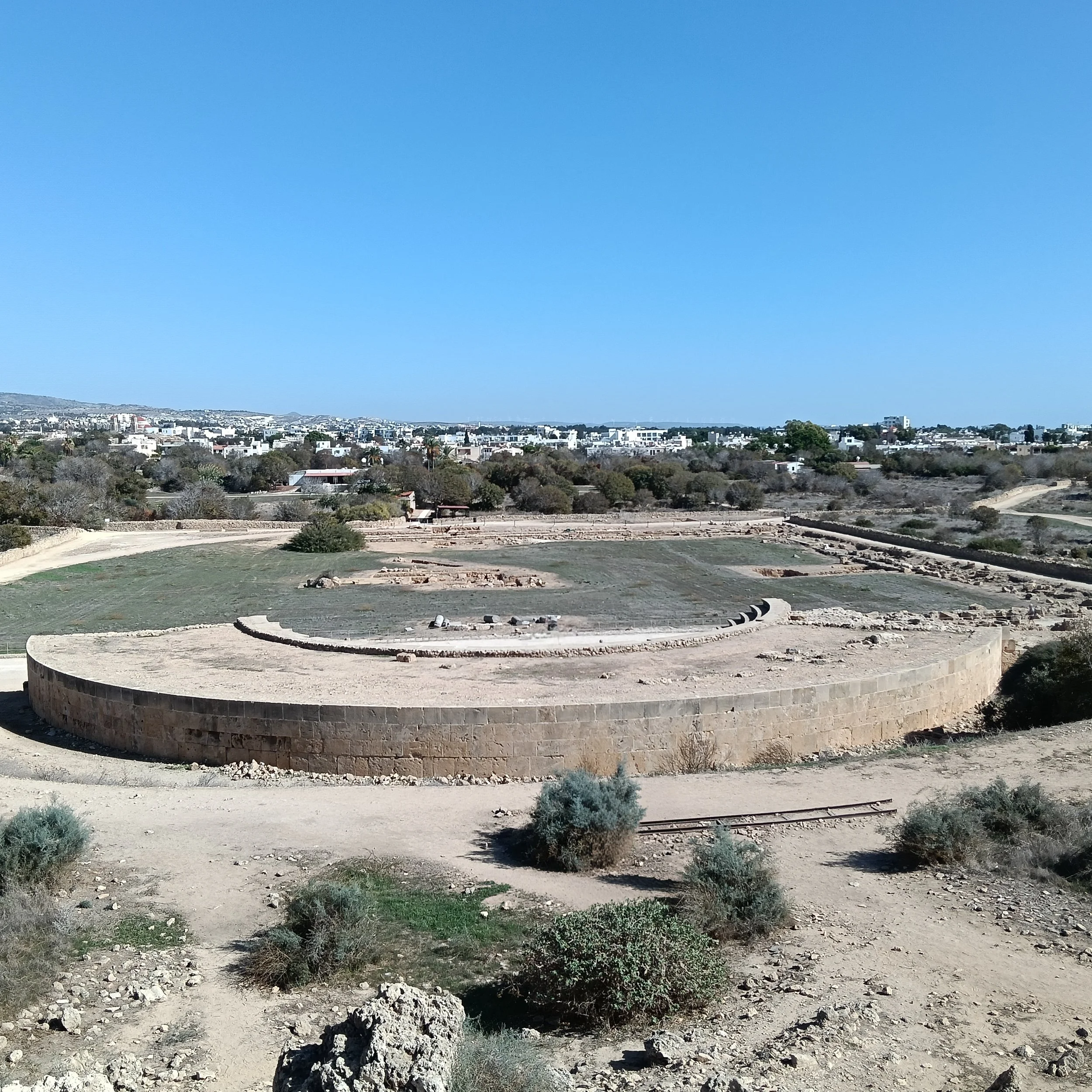
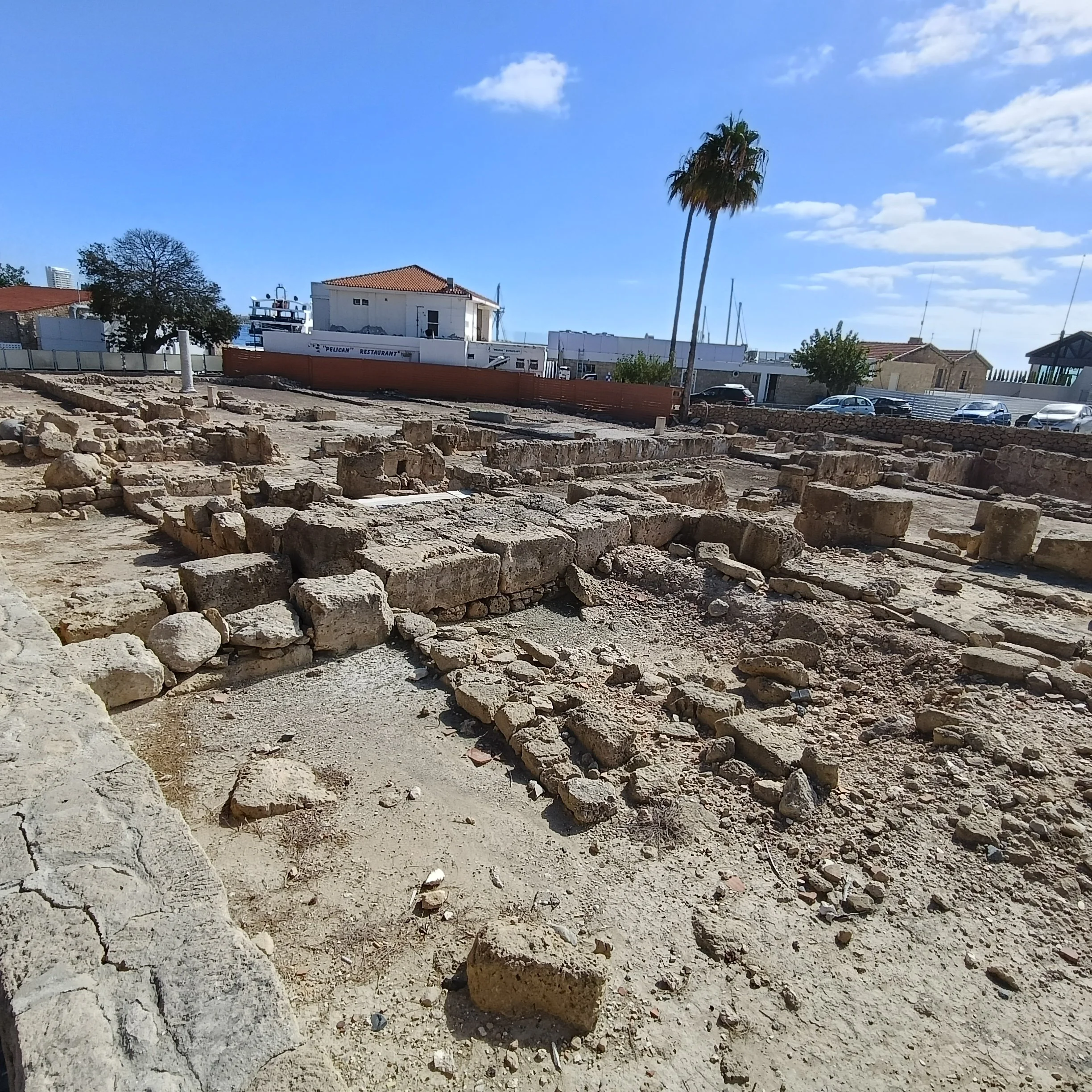
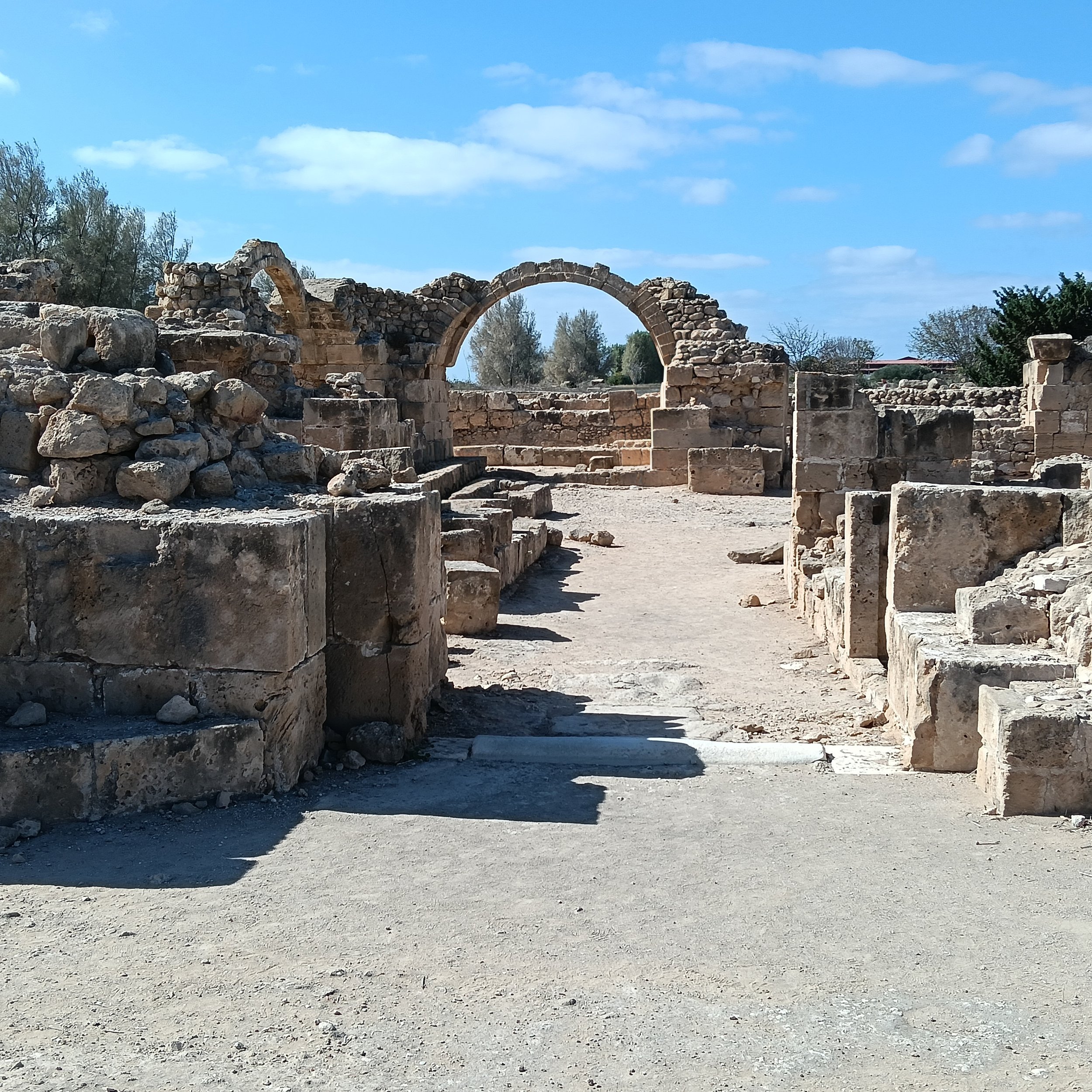
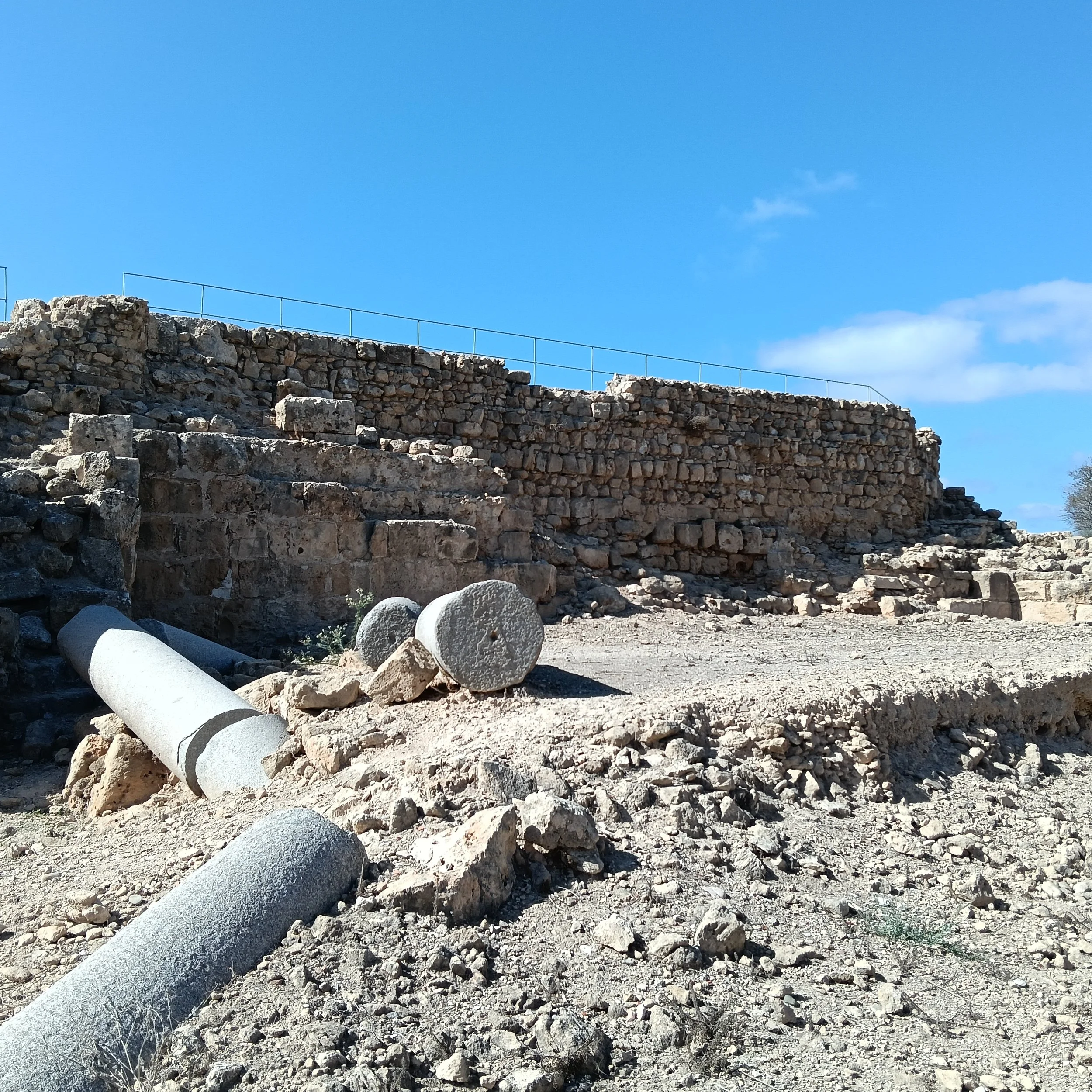
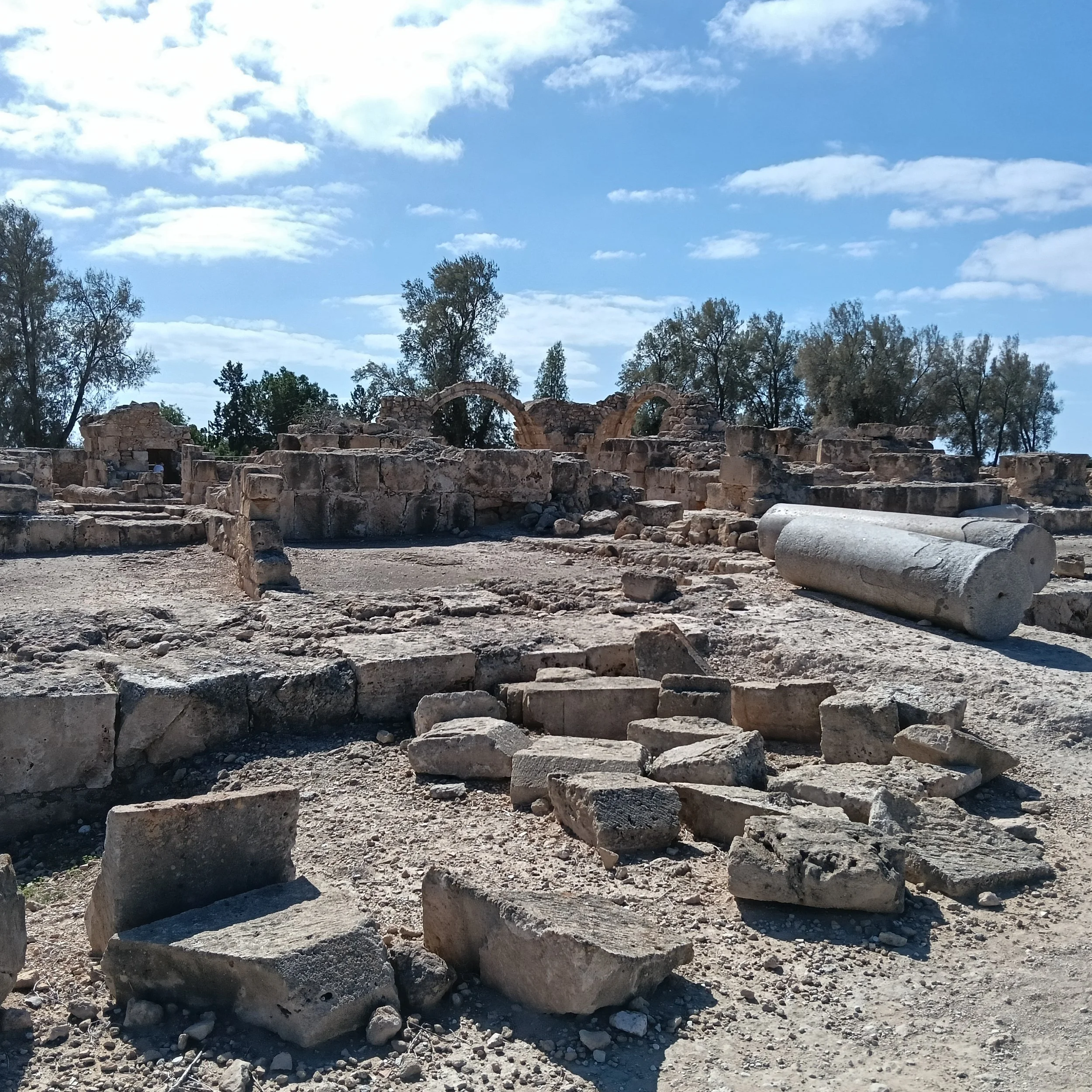
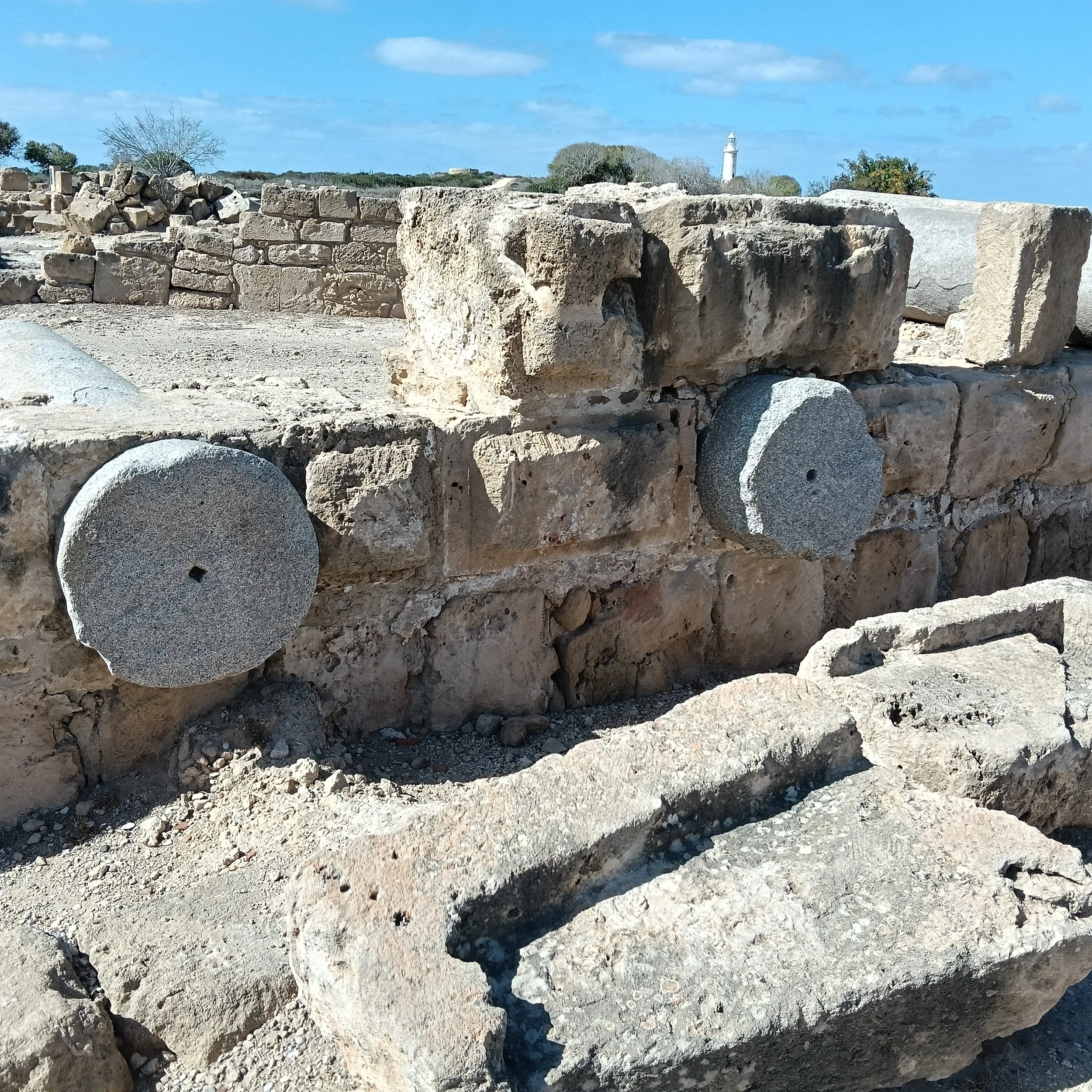
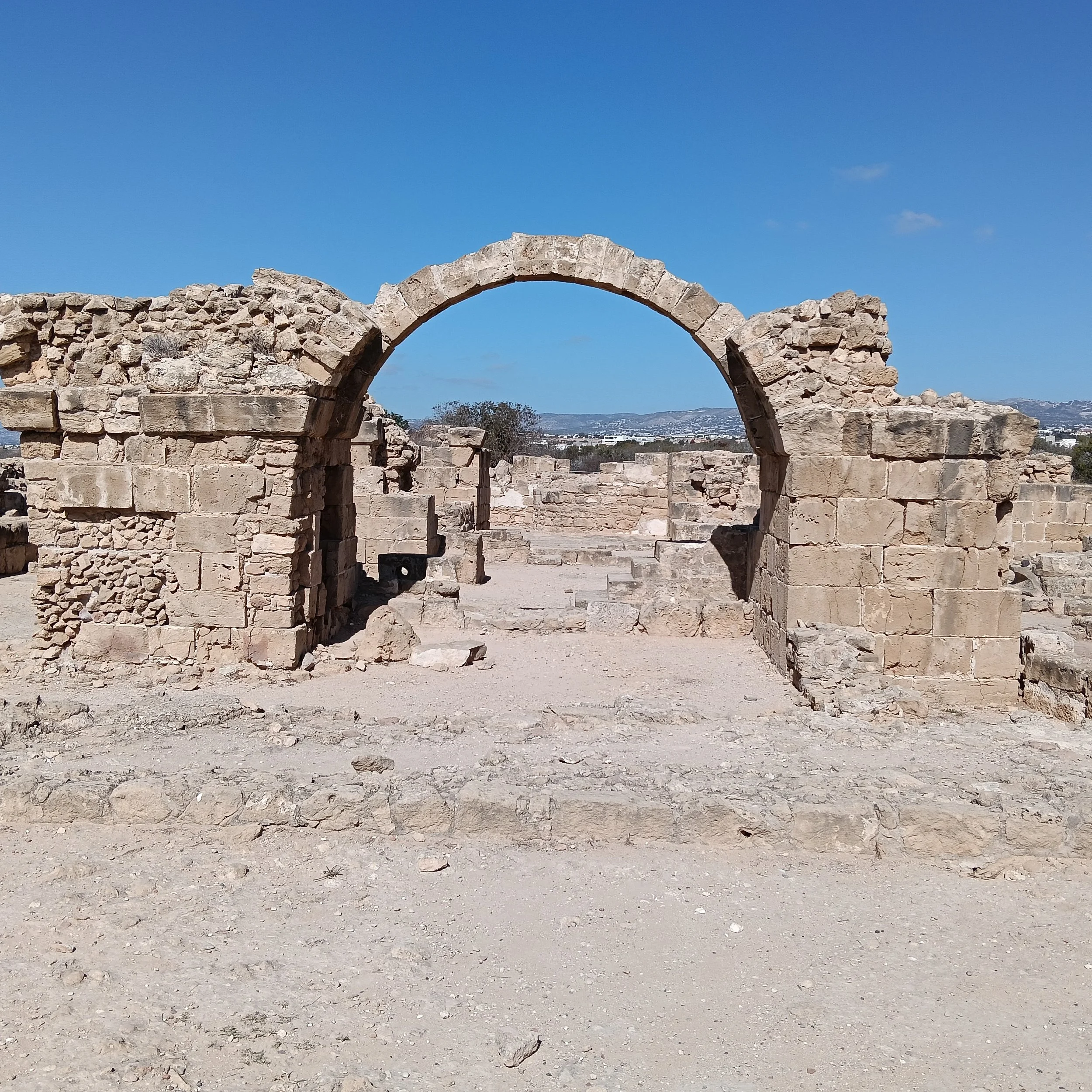
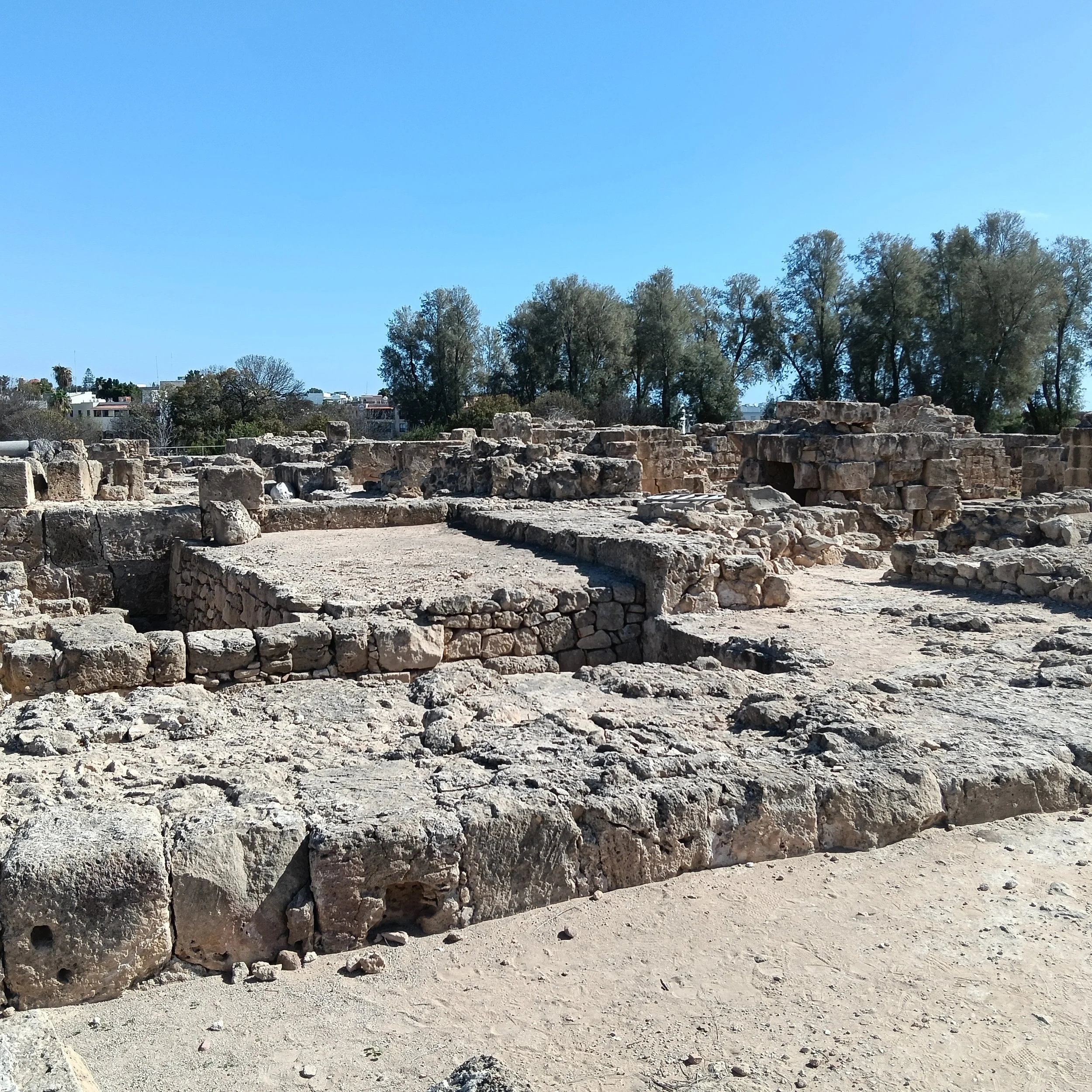
Beyond the villas, the wider organisation of Paphos becomes visible through the repetition of stone foundations and open spaces that once defined the city’s public and administrative life.
These outlines trace the positions of buildings that no longer stand, yet the logic of the city remains clear. Paphos was not a marginal settlement. It operated as a functioning urban centre, connected to trade routes that linked Cyprus to regions across the Mediterranean.
Goods, people and ideas moved through this landscape with regularity, reinforcing the city’s role within a broader imperial network.
Even in its current state, reduced to low walls and fragments, the structure of the city conveys a sense of order, purpose and connectivity.
The Arrival of Christianity.
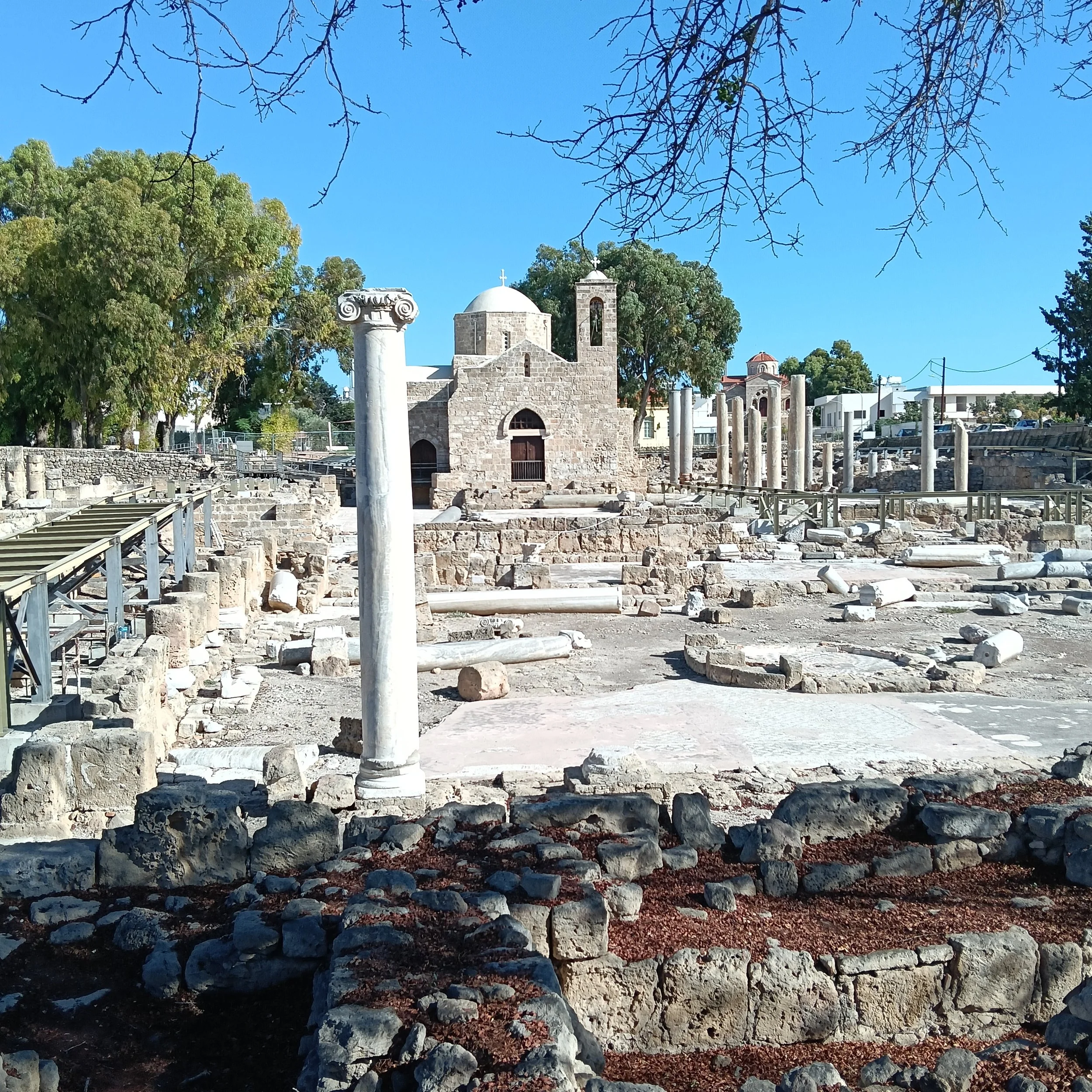
The Christian basilica of Agia Kyriaki Chrysopolitissa, a site of worship since the 4th century, where tradition links St Paul to his punishment.
In the first century AD, as Roman authority continued to shape the city, another influence began to emerge.
According to the New Testament, the apostle Paul travelled through Cyprus during his early missionary journeys, arriving in Paphos at a time when Christianity was still a marginal belief system. Here, he encountered the Roman proconsul Sergius Paulus, whose reported conversion marks one of the earliest instances of a high-ranking Roman official adopting the new faith.
Near the ruins of Agia Kyriaki Chrysopolitissa Church stands a column associated with this event, where tradition holds that Paul was tied and flogged before continuing his journey.
Whether the details are entirely historical or shaped by later retelling, the significance of the moment lies in its symbolism. Christianity, at this point, had begun to intersect directly with structures of power.
Beyond the City.
The transition away from the ruins of Roman Paphos is gradual.
The density of structures begins to thin, the outlines of buildings become less frequent, and the landscape opens out. It is only when you descend below the surface that the second half of Paphos fully reveals itself.
The Tombs of the Kings.
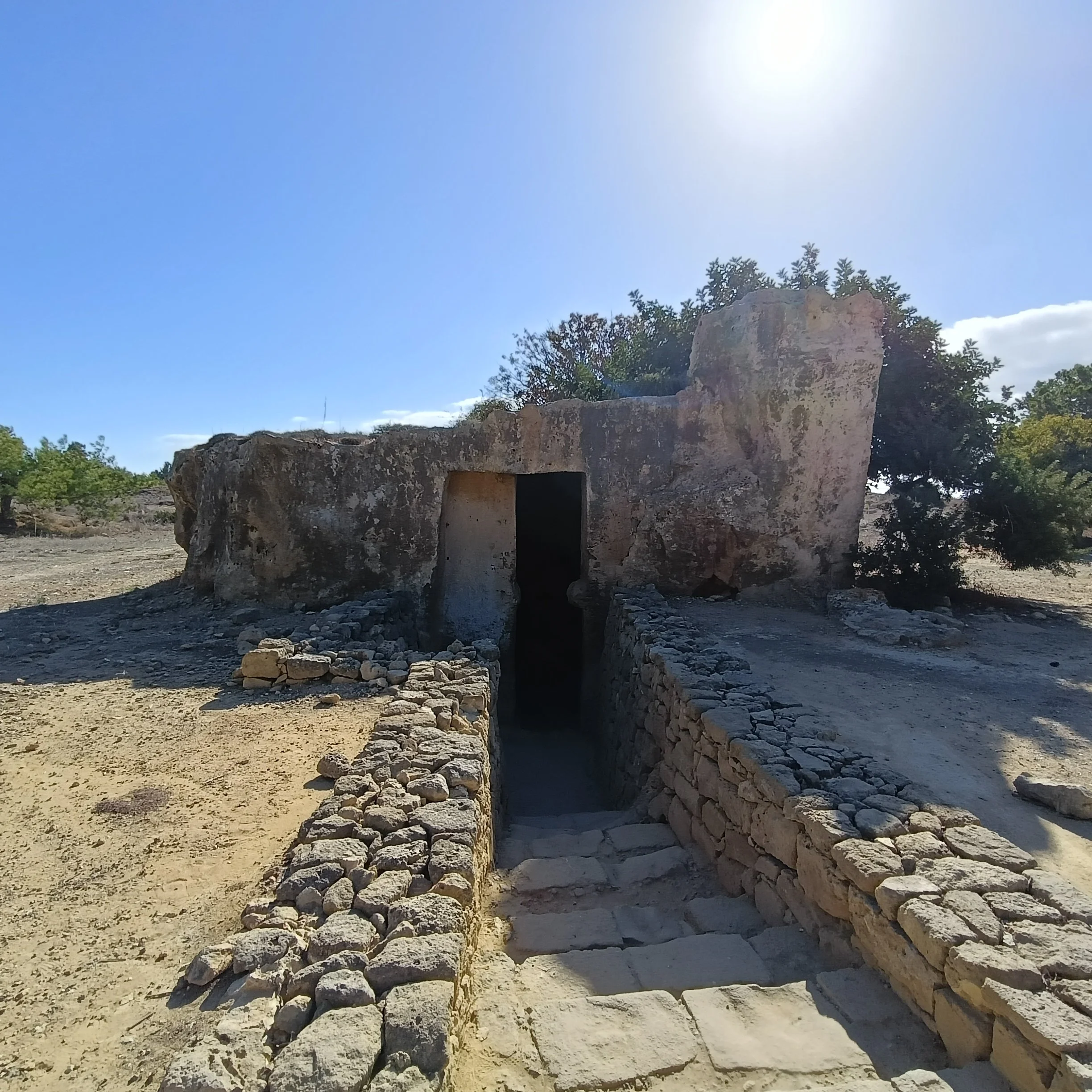
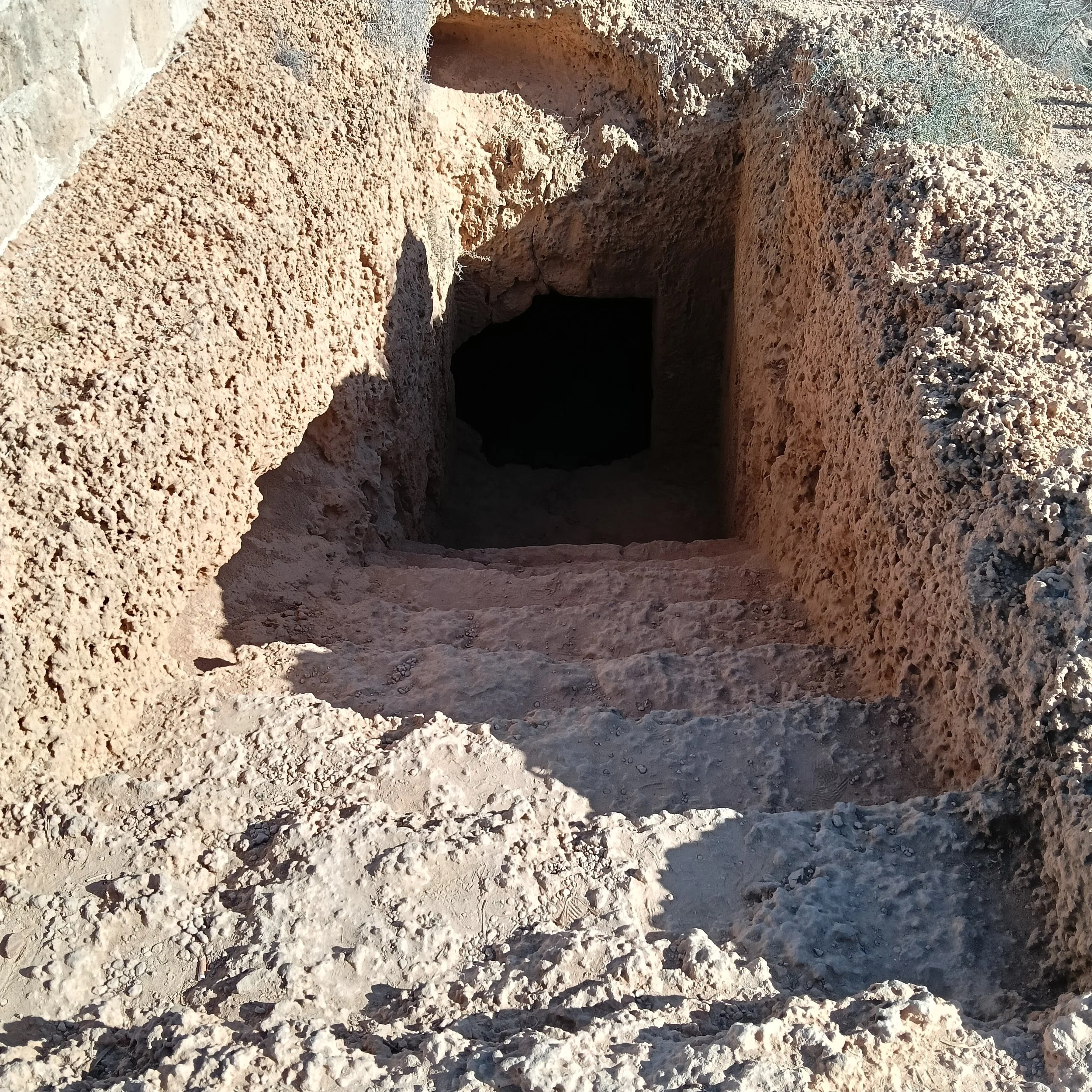
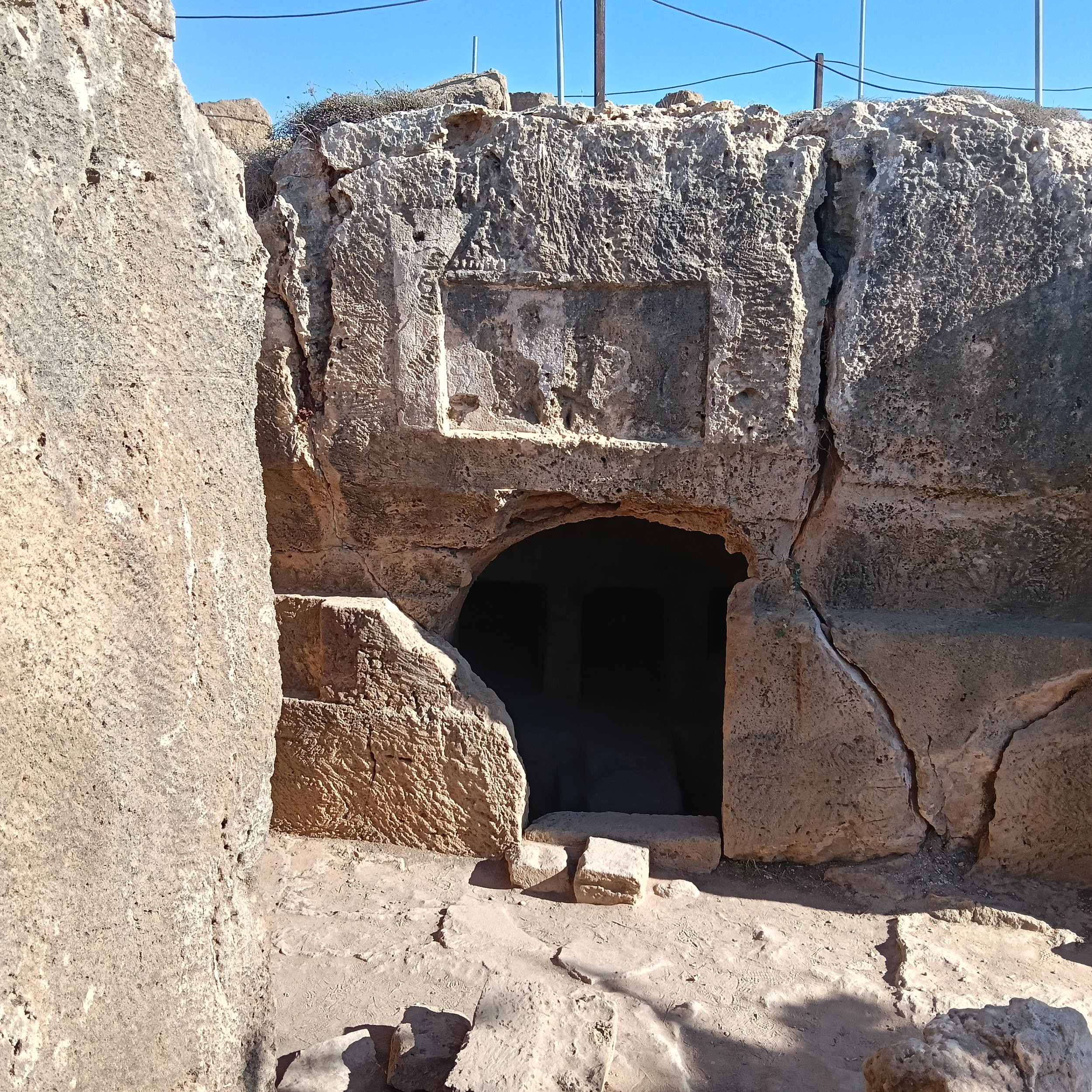
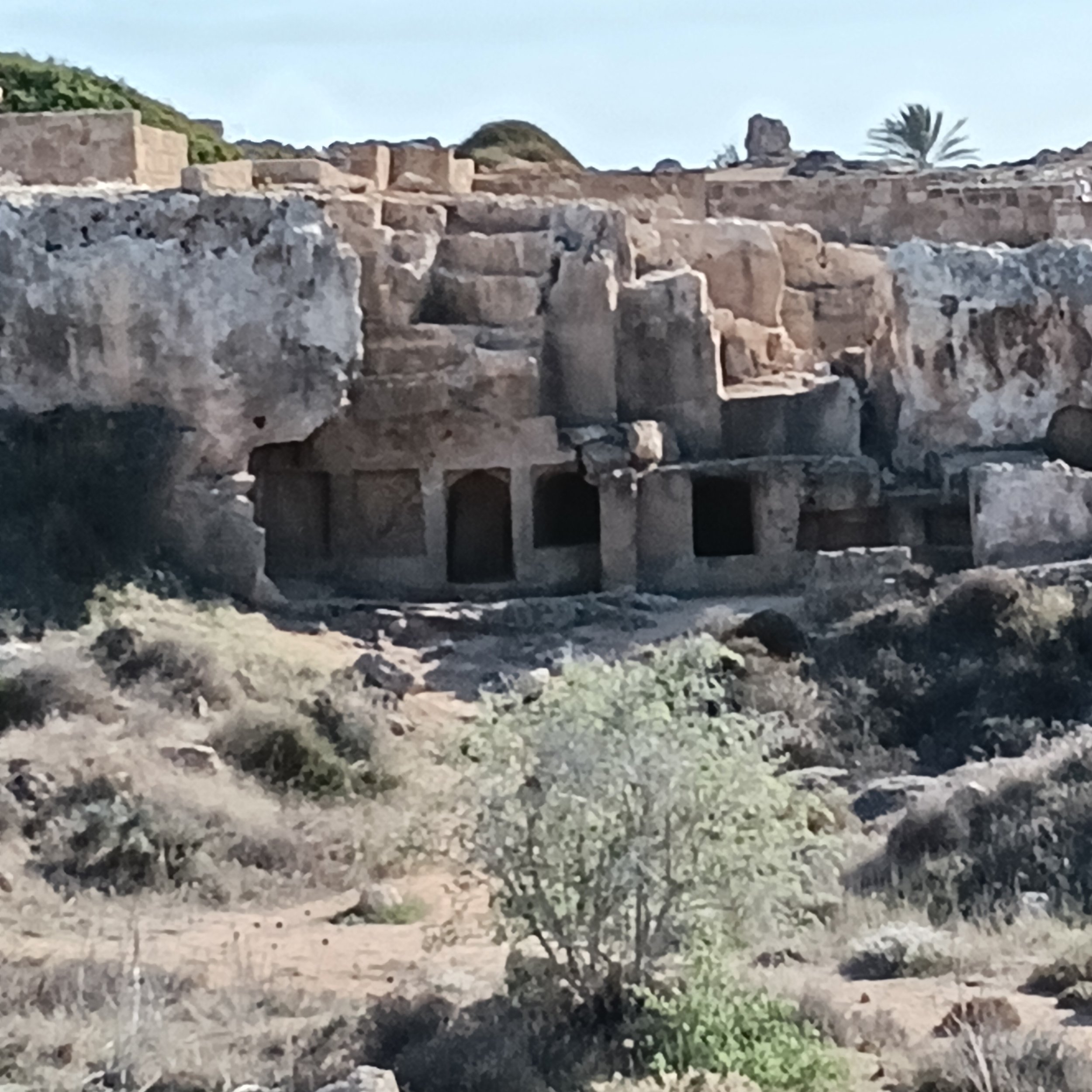
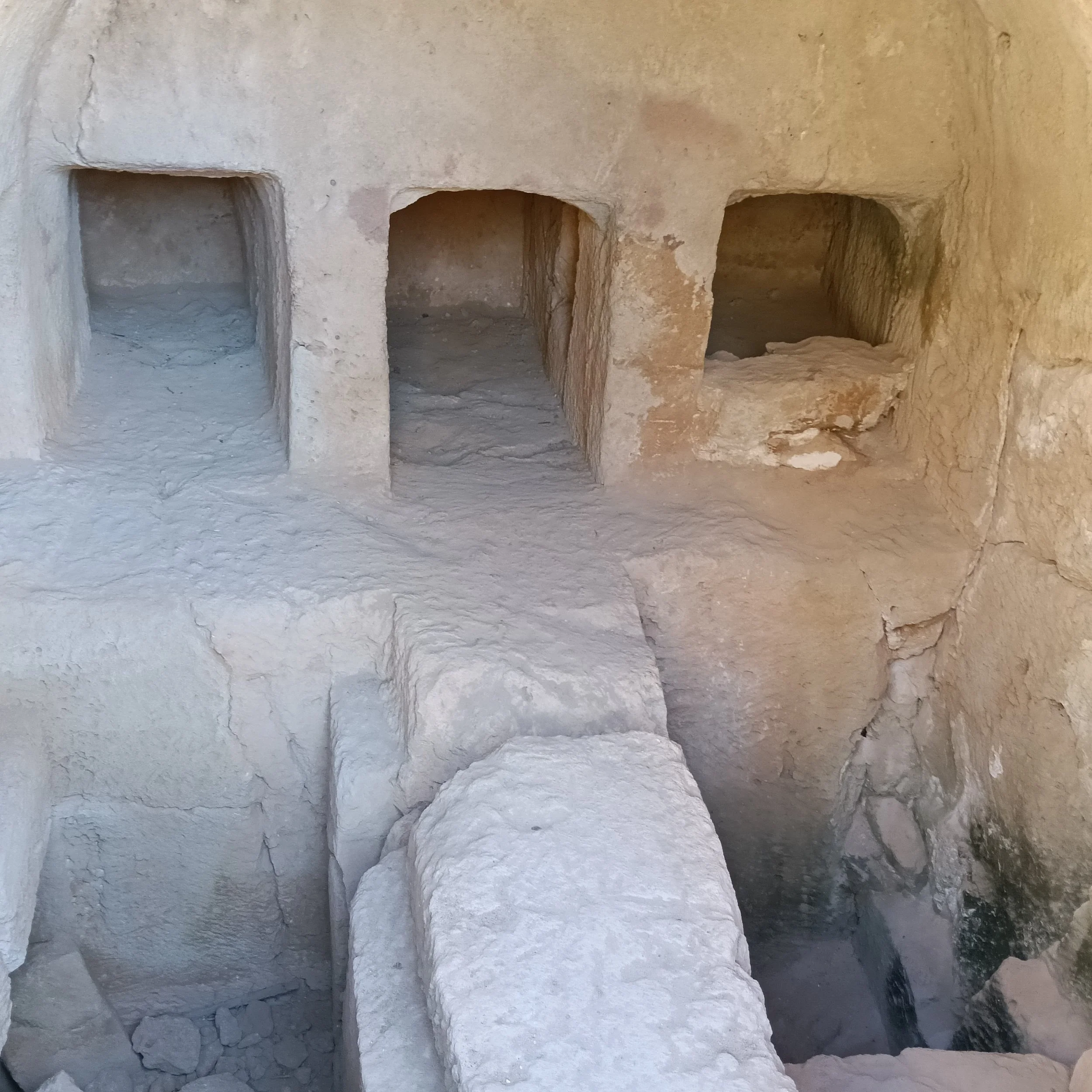
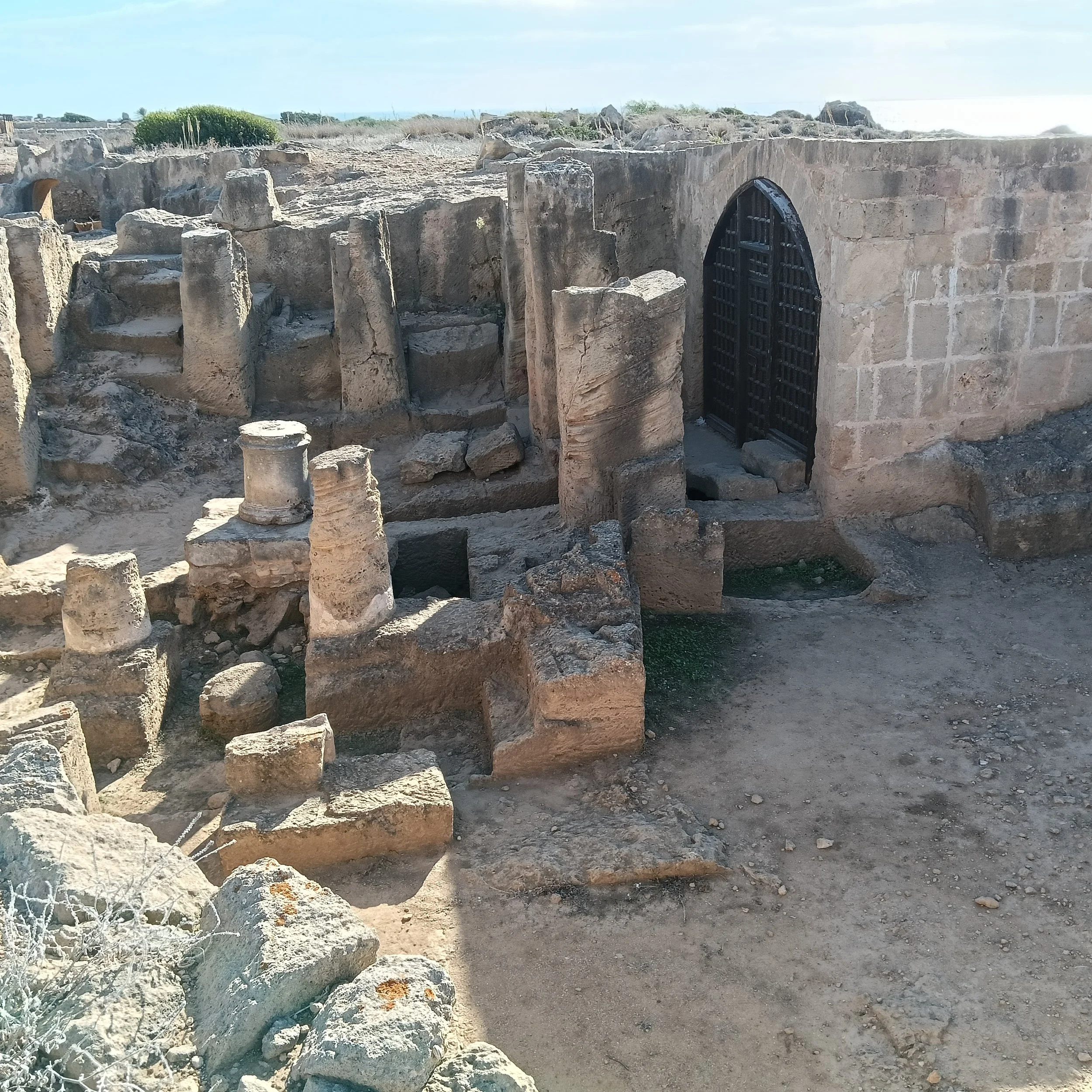
The site known as the Tombs of the Kings extends across a wide limestone plateau, its scale largely concealed from view.
Despite its name, the necropolis was not reserved for royalty, but for elites and officials whose status in life was reflected in the spaces created for their burial.
The tombs are carved directly into the bedrock, forming an extensive underground landscape that is both architectural and symbolic in nature.
Courtyards Beneath the Earth.
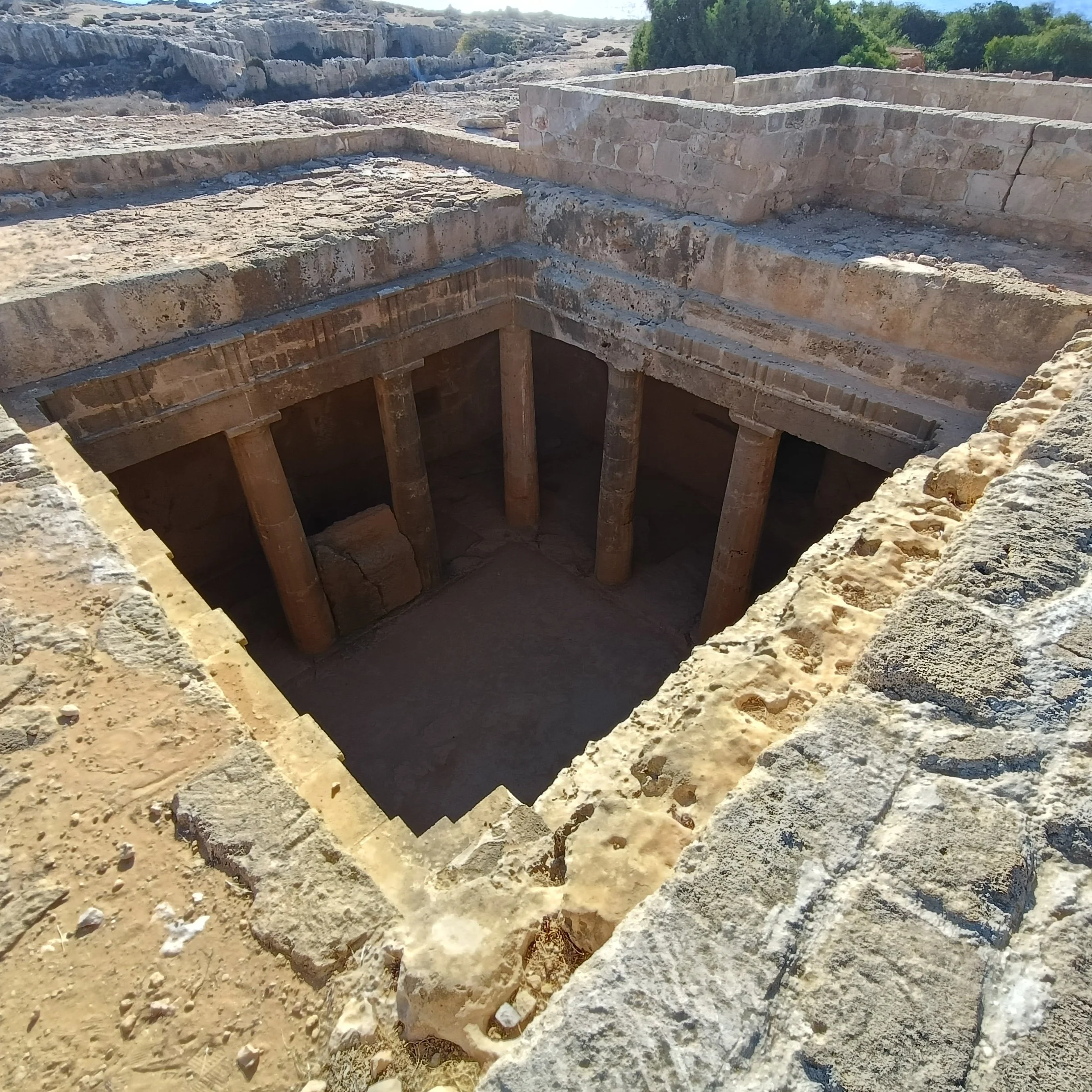
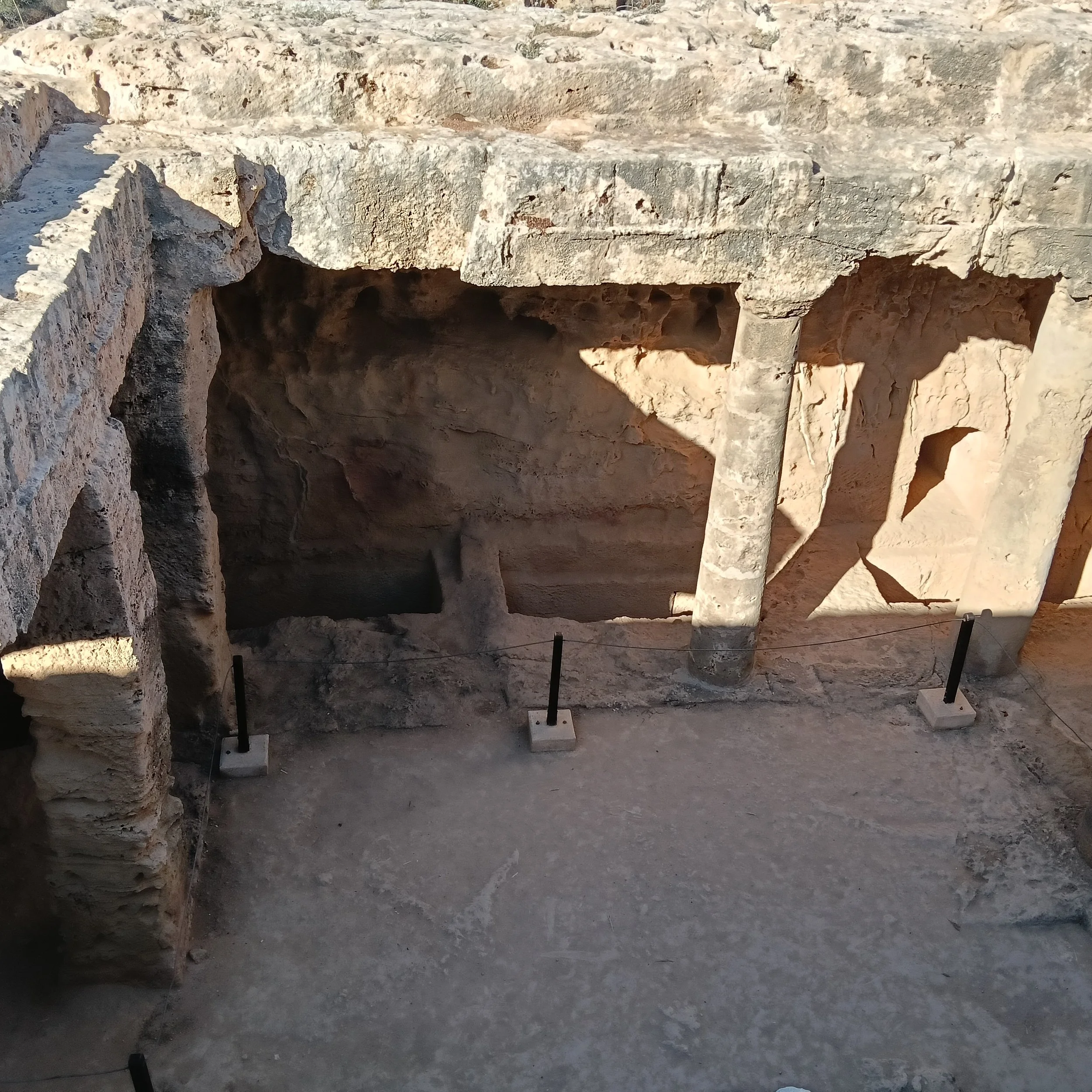
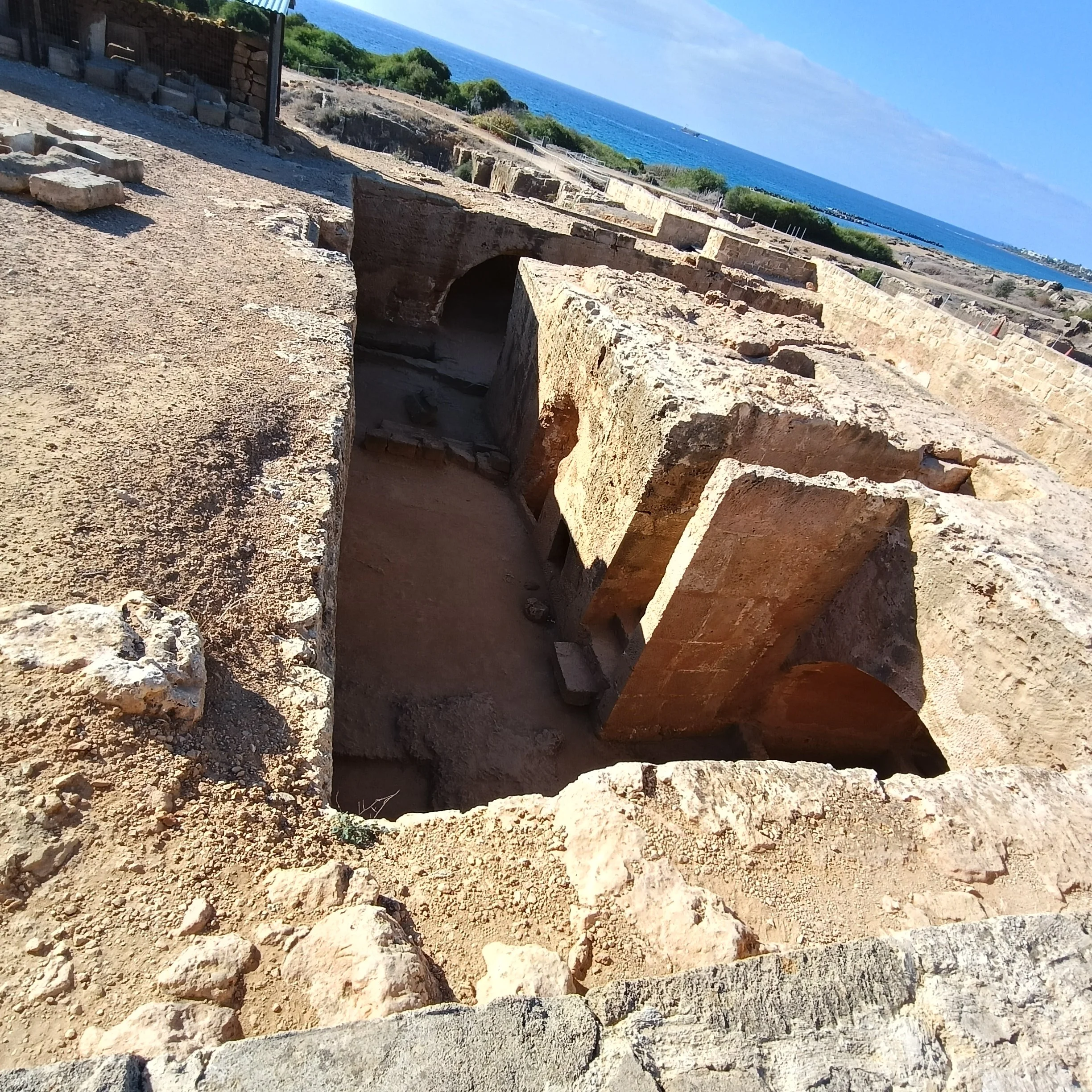
Descending into the tombs reveals large open courtyards surrounded by columns, spaces that resemble domestic or ceremonial architecture rather than conventional burial sites.
These courtyards are carefully proportioned, allowing light to enter while maintaining a sense of enclosure. From their edges, burial chambers extend into the surrounding rock, where the dead were placed within carved recesses.
The design suggests continuity rather than separation.
The architecture of life is replicated in death.
The Silent Chambers.
Within the inner chambers, the atmosphere shifts noticeably.
Light fades, sound is absorbed, and the carved surfaces of the limestone walls retain the marks of their construction. These spaces have endured with minimal alteration for over two thousand years, preserving not only their physical form but their intended effect.
They are quiet, controlled environments, designed to endure rather than to change.
To stand within them is to encounter a different expression of permanence.
Two Cities, One Landscape.
What distinguishes Paphos is the relationship between its two halves.
The coastal ruins represent a living city shaped by trade, governance and daily activity within the Roman world.
The necropolis, by contrast, represents a constructed landscape of memory, where status and identity continue beyond death.
Together, they form a complete archaeological environment, one that preserves both the structures of life and the architecture of remembrance.
For this reason, the wider site was recognised as a World Heritage Site by UNESCO in 1980.
Where Everything Meets.
Paphos begins with a myth.
A goddess emerging from the sea.
What remains, however, is something far more tangible.
Roman villas.
Early Christian tradition.
Monumental tombs carved into stone.
Each layer remains visible, not as isolated fragments, but as part of a continuous landscape.
Here, along a narrow stretch of coastline, mythology, empire and faith do not replace one another.
They accumulate.
And just beyond the living city, the dead remain, carved into the stone beneath it.
