

The Giant’s Causeway.
Geometry, Giants and the Edge of the Atlantic.
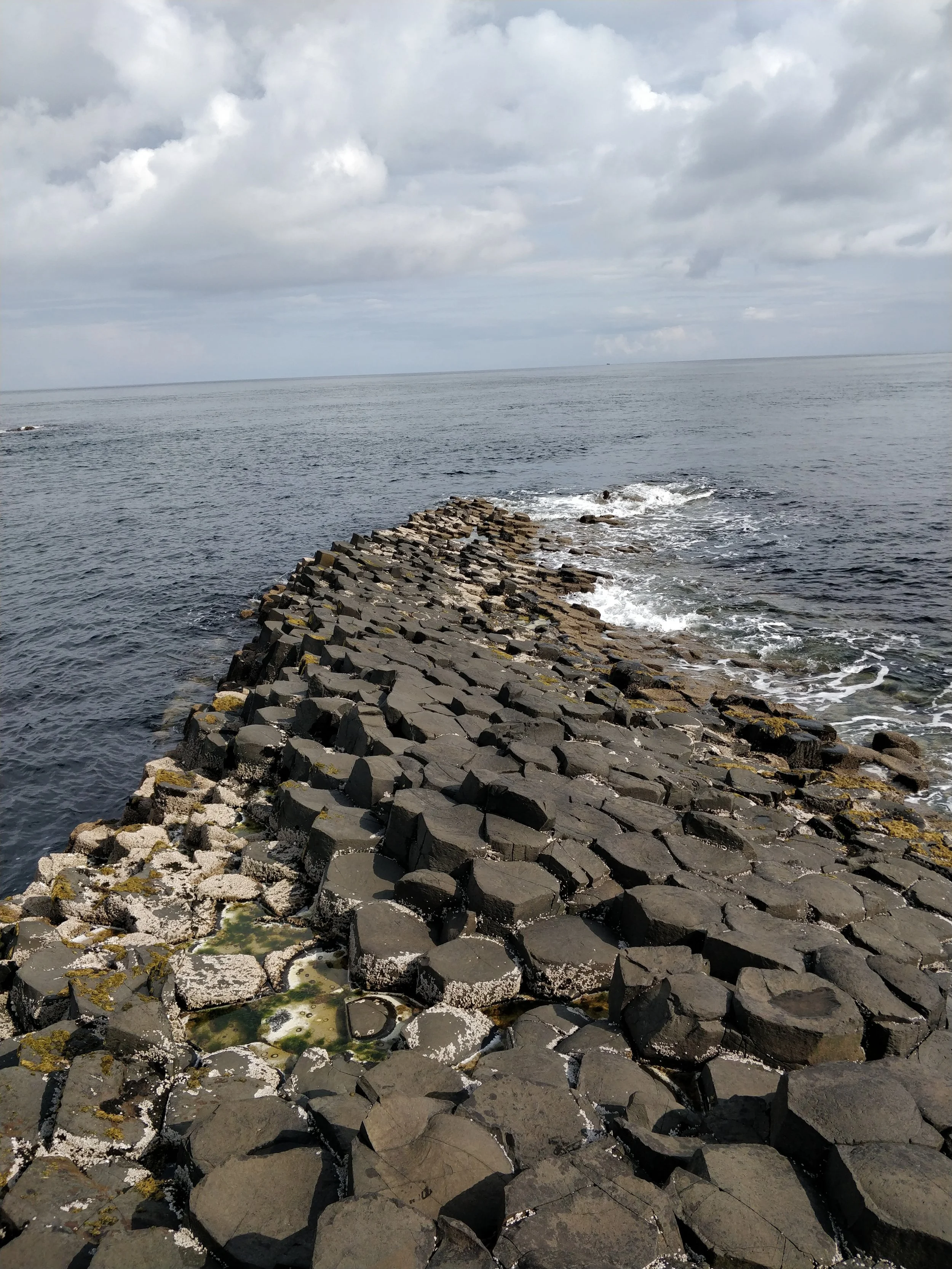
Hexagons marching into the Atlantic. Not carved. Not placed. Not designed. Just cooling lava, sixty million years ago, arranging itself into geometry so precise we had to invent a giant to explain it.
The north coast of Ireland does not ease you into itself.
It rises sharply. Cliffs cut hard against the Atlantic. Wind moves across the grass in long horizontal sweeps. The light shifts constantly, silver one moment, slate the next.
And then the ground changes.
Stone becomes pattern.
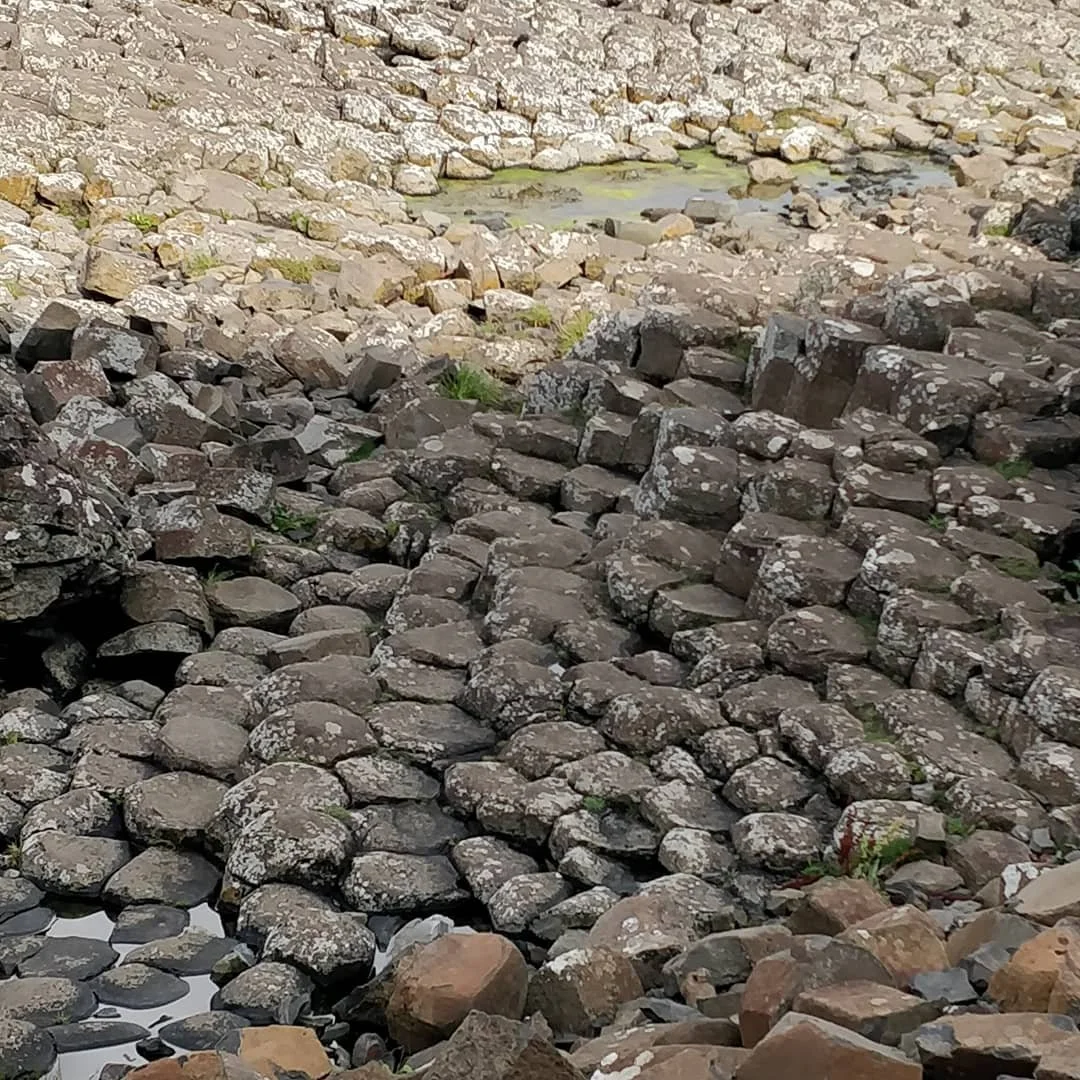
Forty thousand basalt columns rise from the shoreline in tight, interlocking formation. Most are hexagonal. Some are five-sided. A few stretch to seven. They stack, tilt, lean and descend into the sea as if a vast tiled platform has slipped toward the water.
It looks engineered.
It looks placed.
It looks like the remains of something built and abandoned.
This is the enduring power of the Giant’s Causeway. It feels intentional.
At the Edge of Deep Time.
The Causeway was formed around sixty million years ago during intense volcanic activity linked to the opening of the North Atlantic Ocean.
At that time Ireland and Scotland were not yet separated by the stretch of water we know today. The landscape was part of a vast volcanic province stretching across what is now Northern Ireland, western Scotland, Greenland and even into North America.
Lava erupted repeatedly, flooding the region in molten basalt.
When basalt cools, it contracts. When it contracts, it fractures. The fractures spread through the rock in networks, forming polygons. Over time, erosion strips away softer material and leaves the columns exposed.
The hexagon dominates because it distributes stress evenly. It is the most efficient shape for the rock to adopt as it cools.
Nature, under pressure, prefers efficiency.
The result is something that resembles deliberate design.
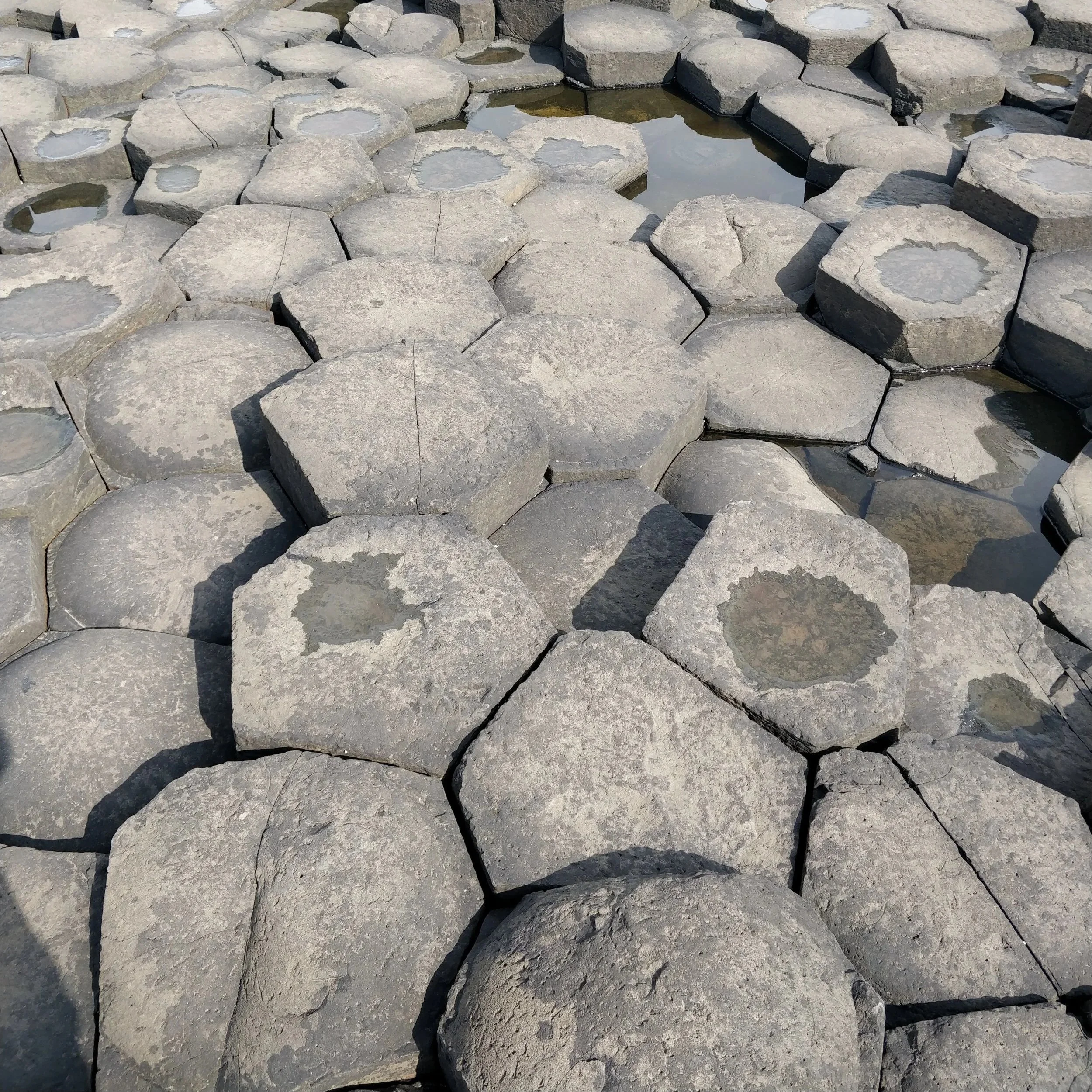
Natures blueprint. Each column fractured as molten basalt cooled and contracted, settling into hexagons because physics prefers efficiency. No architect. No tools. Just lava obeying mathematics.
Look closely at the columns and the precision becomes startling.
Edges align cleanly. Surfaces meet almost seamlessly. Some columns stretch vertically in near-perfect symmetry. Others appear slightly warped, frozen mid-formation.
There are sections that resemble organ pipes. Others resemble steps descending into the sea. Some create amphitheatres where waves roll and echo.
All of it is the memory of molten rock.
All of it is physics.
And yet it still feels like architecture.
The Story Before the Science.
Long before geology gave it context, myth gave it meaning.
According to Irish legend, the warrior Fionn mac Cumhaill (Finn McCool) built the causeway to challenge a Scottish giant named Benandonner. The stones were laid across the sea as a bridge between the two lands.
When the Scottish giant proved far larger than expected, Fionn retreated. His wife disguised him as a baby. Seeing the size of the supposed child, Benandonner imagined the father and fled in terror, tearing up the bridge behind him.
Fragments remained on both sides of the sea.
Myth is not foolishness. It is pattern recognition without physics. When confronted with something too perfect to be accidental, the human mind looks for agency.
Giants are easier to grasp than tectonics.
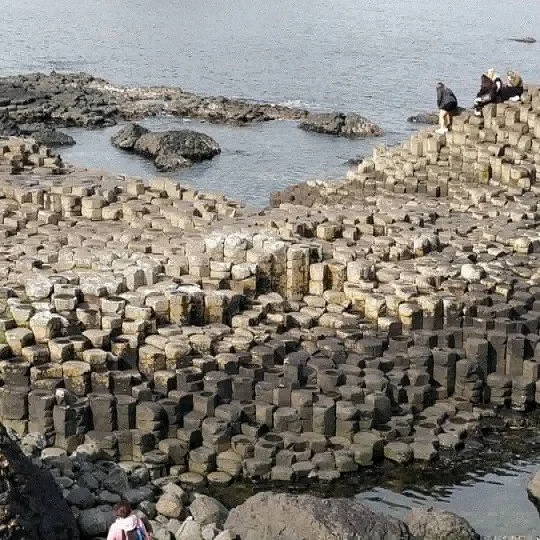
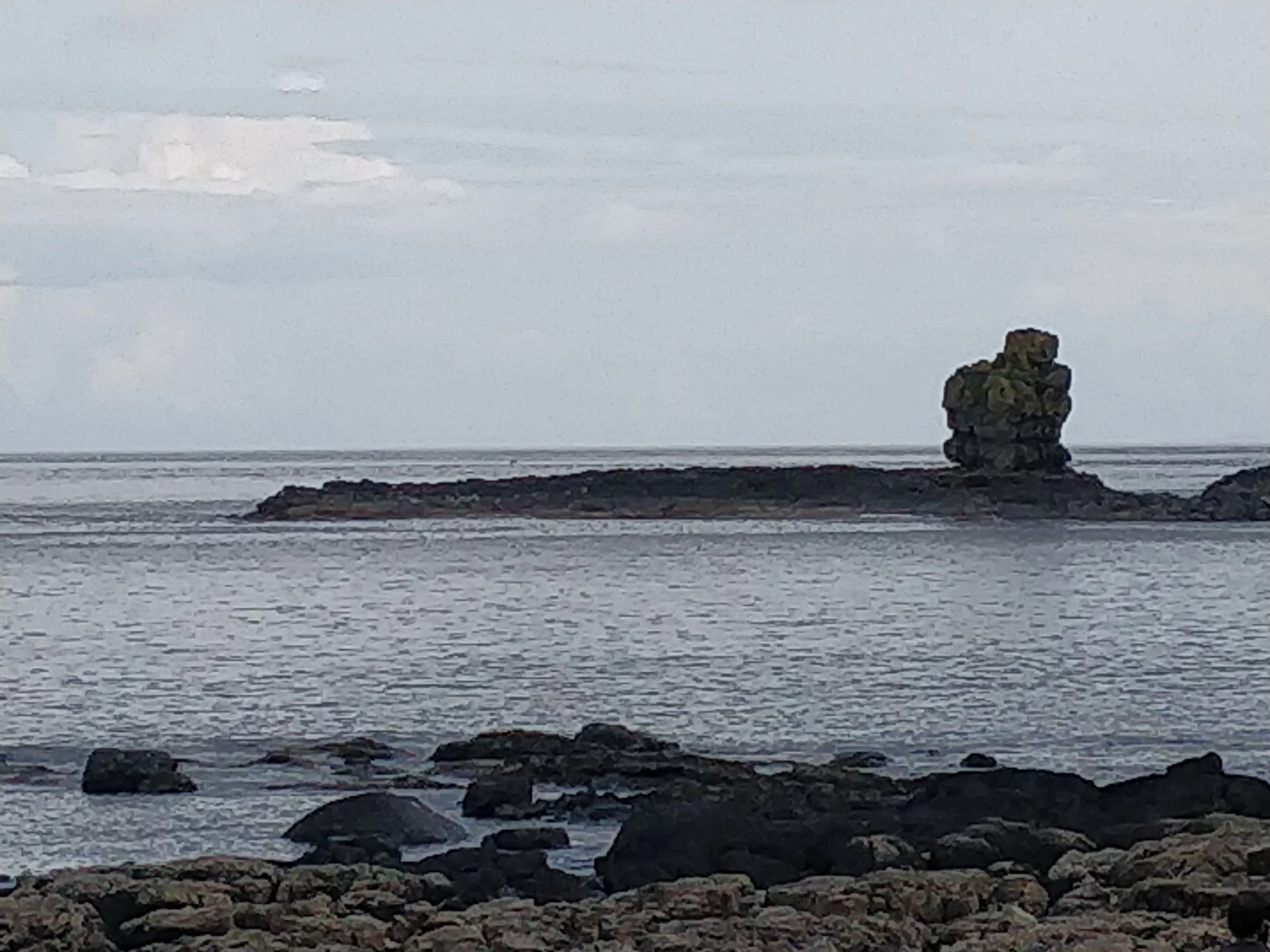
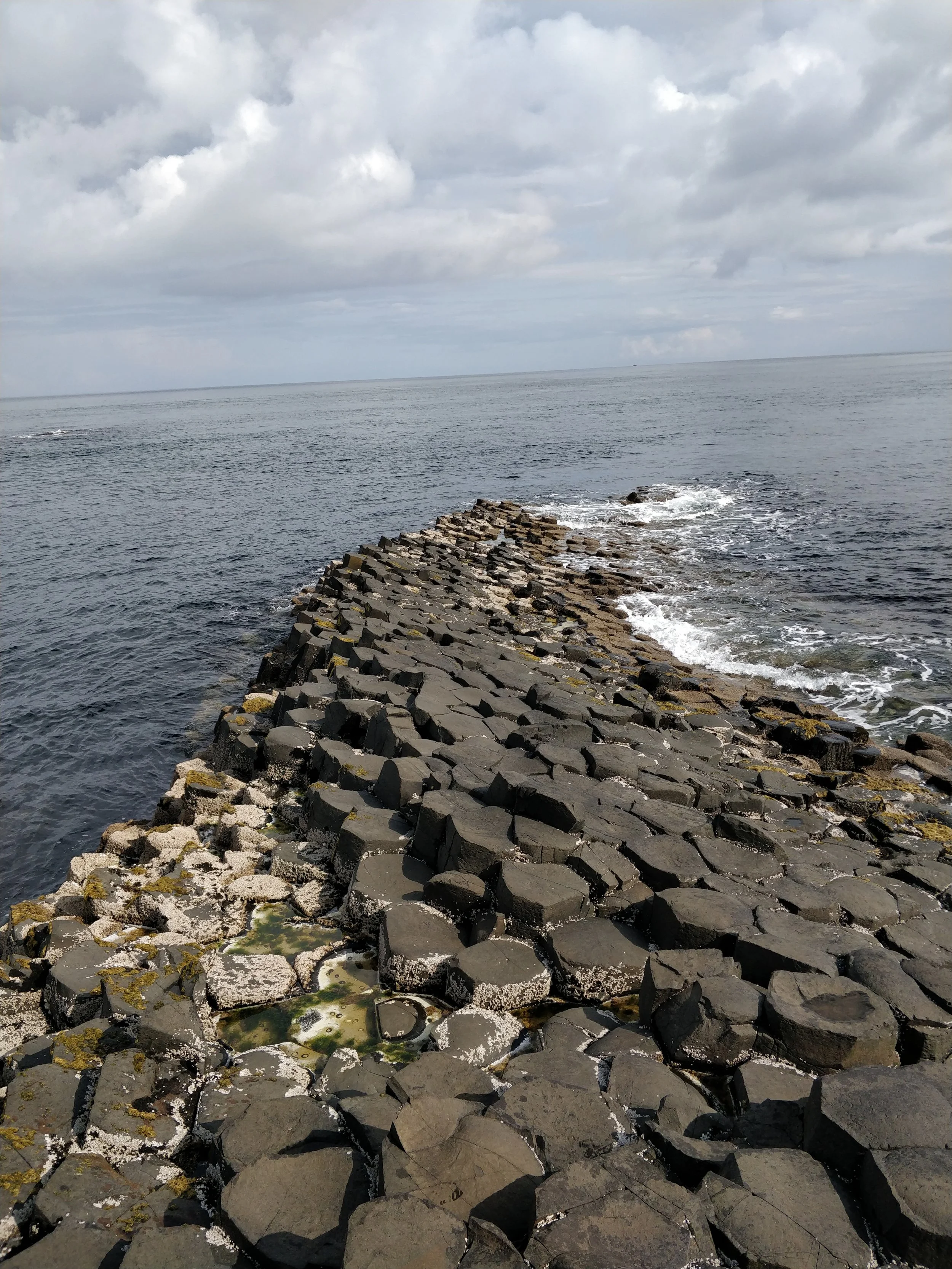
Standing on the stones, it is easy to see how the story endured.
The columns seem to march outward toward Scotland. They feel directional. Intentional. Almost purposeful.
And when the wind rises and the Atlantic pounds against the rocks, the atmosphere becomes theatrical enough to sustain any legend.
A Landscape That Shaped Debate.
The Causeway did not only inspire folklore. It also played a role in scientific argument.
In the eighteenth century, European scholars were divided over how landscapes formed. Some believed the Earth’s features were shaped primarily by water and catastrophic flood events. Others argued for volcanic fire as a driving force.
The Giant’s Causeway became a focal point in that debate.
Its geometric basalt columns provided evidence for volcanic origin theories. Visitors sketched it. Wrote about it. Carried descriptions back to London and beyond. The site became a kind of open-air laboratory at the edge of the Atlantic.
Here, at this remote coastal formation, arguments about the age and mechanisms of the Earth were sharpened.
The stones were no longer just strange. They were evidence.
Walking on Frozen Fire.
One of the most striking qualities of the Causeway is how physical it feels.
Unlike waterfalls or distant mountain peaks, this is a landscape that invites touch.
You step across sixty-million-year-old basalt as if crossing paving stones. You balance. You sit. You look down into gaps where seawater pools and foams.
There is a strange intimacy in that.
You are not observing deep time from afar. You are standing on it.
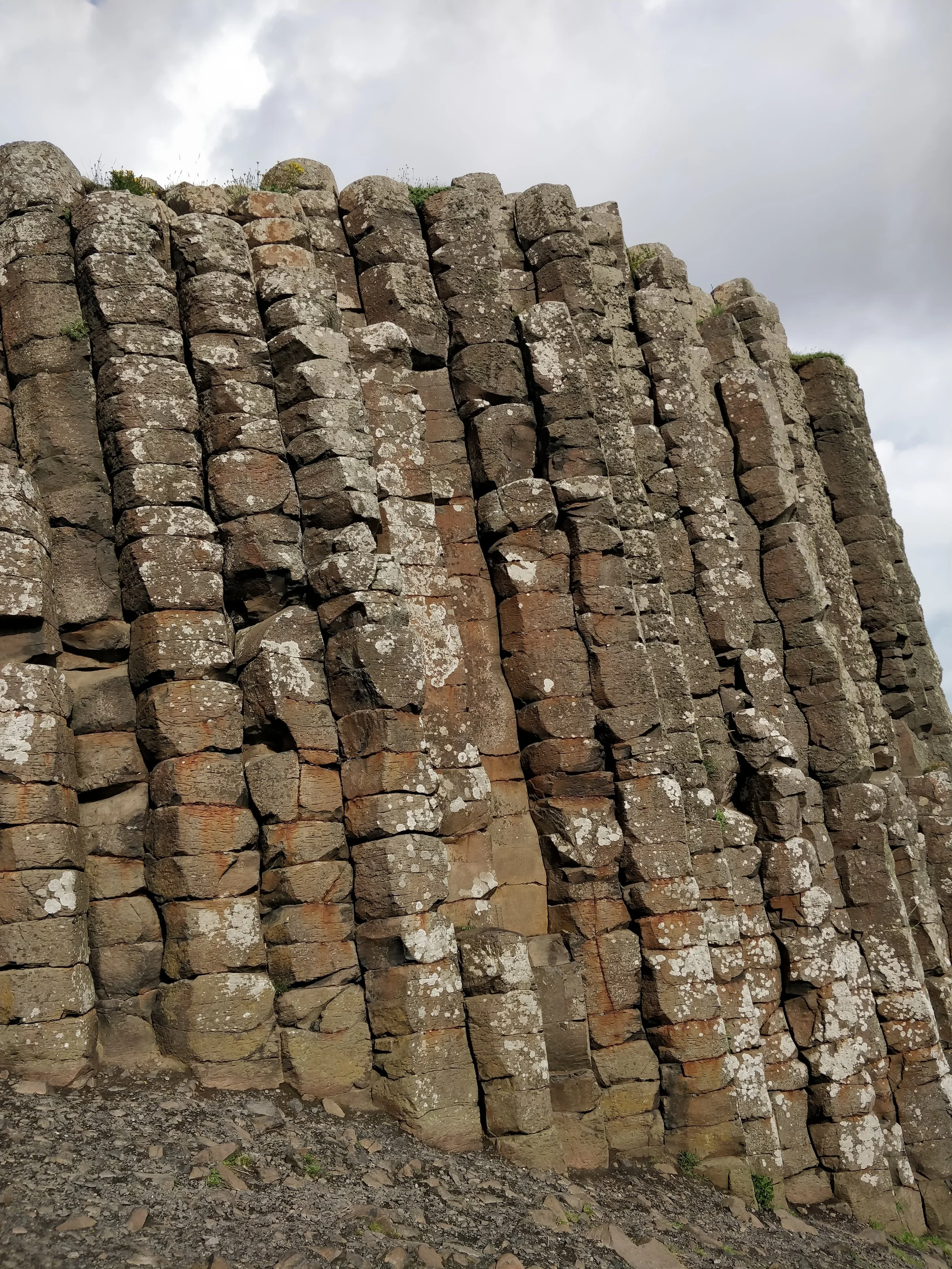
Basalt turned cathedral. Column upon column rising like organ pipes, frozen mid-eruption, sixty million years old and still standing strong against the Atlantic wind.
From certain angles, the columns rise like the pipes of a cathedral organ. Tall, aligned, almost architectural. The comparison is unavoidable.
Nature has built something that resembles sacred design without intention.
There is something humbling in that realisation.
Human architecture often strives for symmetry, repetition and order. Here those qualities emerged from molten rock and cooling stress.
The earth is capable of geometry without blueprints.
The Atlantic and Erosion.
The Causeway is not static.
Waves hammer at its edges daily. Storms shift loose fragments. Salt and wind erode surfaces slowly but persistently.
What we see today is the result of both creation and removal. Lava formed it. Water revealed it.
The interplay between fire and ocean continues to shape the coastline.
End with a wide Atlantic shot.
Stand back and the larger setting becomes clear.
Cliffs rise beyond the columns. The Atlantic stretches outward in muted blues and greys. The horizon feels open, almost endless.
The Causeway is dramatic, yes. But it is also playful.
It is rare to find a geological formation that is both scientifically significant and strangely light-hearted. There is something in the tidy hexagons, the stepping stones, the illusion of construction, that makes people smile.
It feels improbable.
And perhaps that is its greatest strength.
Some landscapes inspire awe through scale. Others through danger. The Giant’s Causeway inspires awe through pattern.
It reminds us that deep time can produce precision. That chaos can cool into order. That molten fire can freeze into geometry.
And that sometimes, when the world creates something too perfect to be accidental, we respond by inventing giants.
Not because we reject science.
But because wonder always comes first.
