

Wroxeter: The Lost Roman City Beneath the Fields.
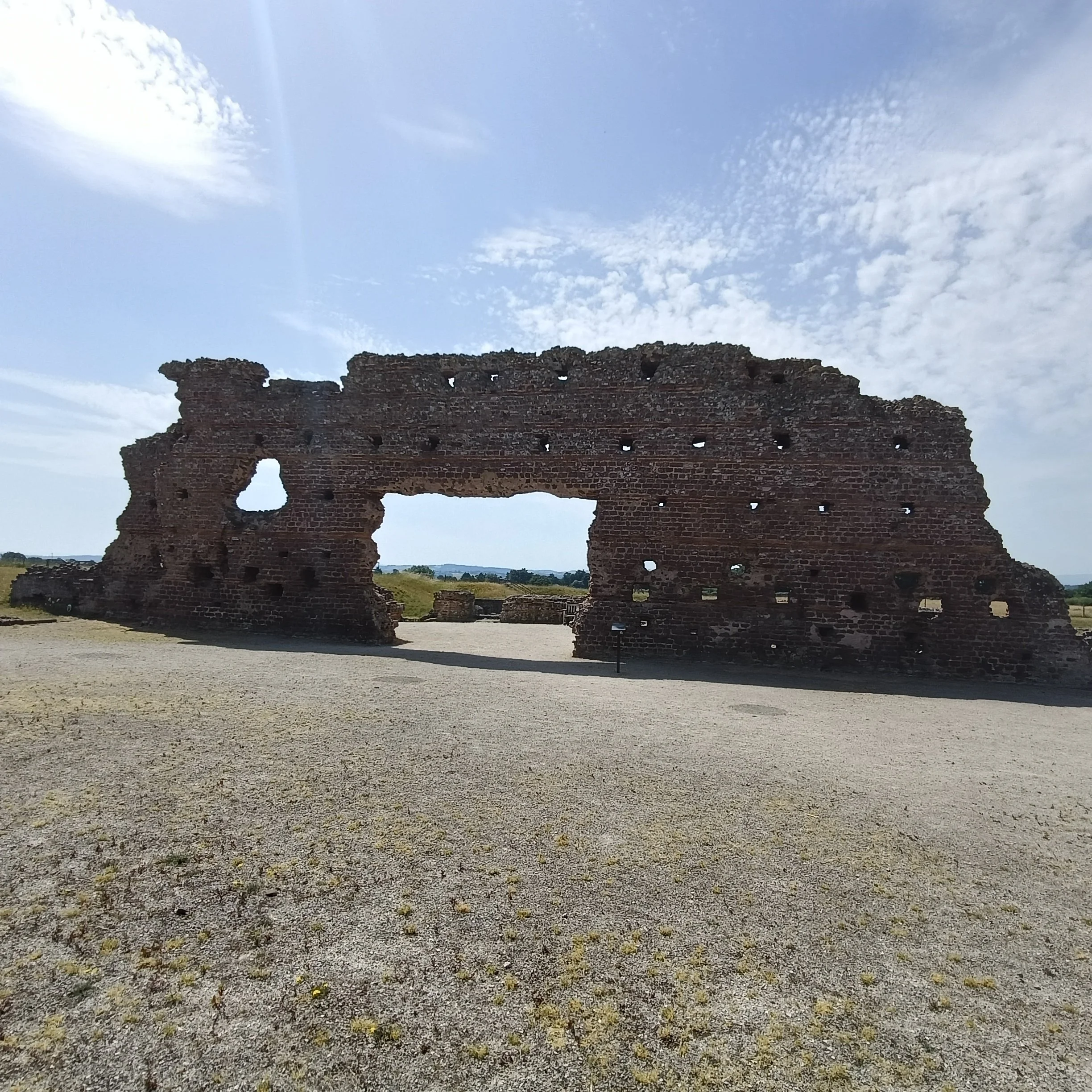
The quiet fields of Wroxeter conceal one of the largest Roman cities ever built in Britain.
There are places where history announces itself with towering castles, soaring cathedrals or dramatic mountain fortresses. Wroxeter does none of those things.
At first glance it appears almost understated. Low stone walls spread quietly across open fields, interrupted only by one immense Roman wall rising unexpectedly above the landscape. Birds circle overhead, visitors wander peacefully among ancient foundations and beyond the archaeological site the modern Shropshire countryside continues much as it has for centuries.
It would be easy to believe that little survives here.
Yet beneath these fields lies one of the greatest Roman cities ever built in Britain.
Known to the Romans as Viroconium Cornoviorum, Wroxeter grew from a military frontier settlement into a thriving provincial capital whose streets bustled with merchants, magistrates, craftsmen, soldiers, farmers and travellers arriving from every corner of the Roman Empire. At its height it covered more than 180 acres, making it the fourth largest Roman settlement in Britain, surpassed only by Londinium, Colchester and Verulamium.
Today, perhaps the most remarkable thing about Wroxeter is not what you can see, but what still remains hidden beneath your feet.
Only a small fraction of the ancient city has ever been excavated. Beneath the surrounding fields lie streets, workshops, temples, homes and public buildings that have rested undisturbed for well over fifteen centuries. Walking through Wroxeter is therefore unlike visiting many other Roman sites. Here, archaeology is not simply preserving the past. It is still discovering it.
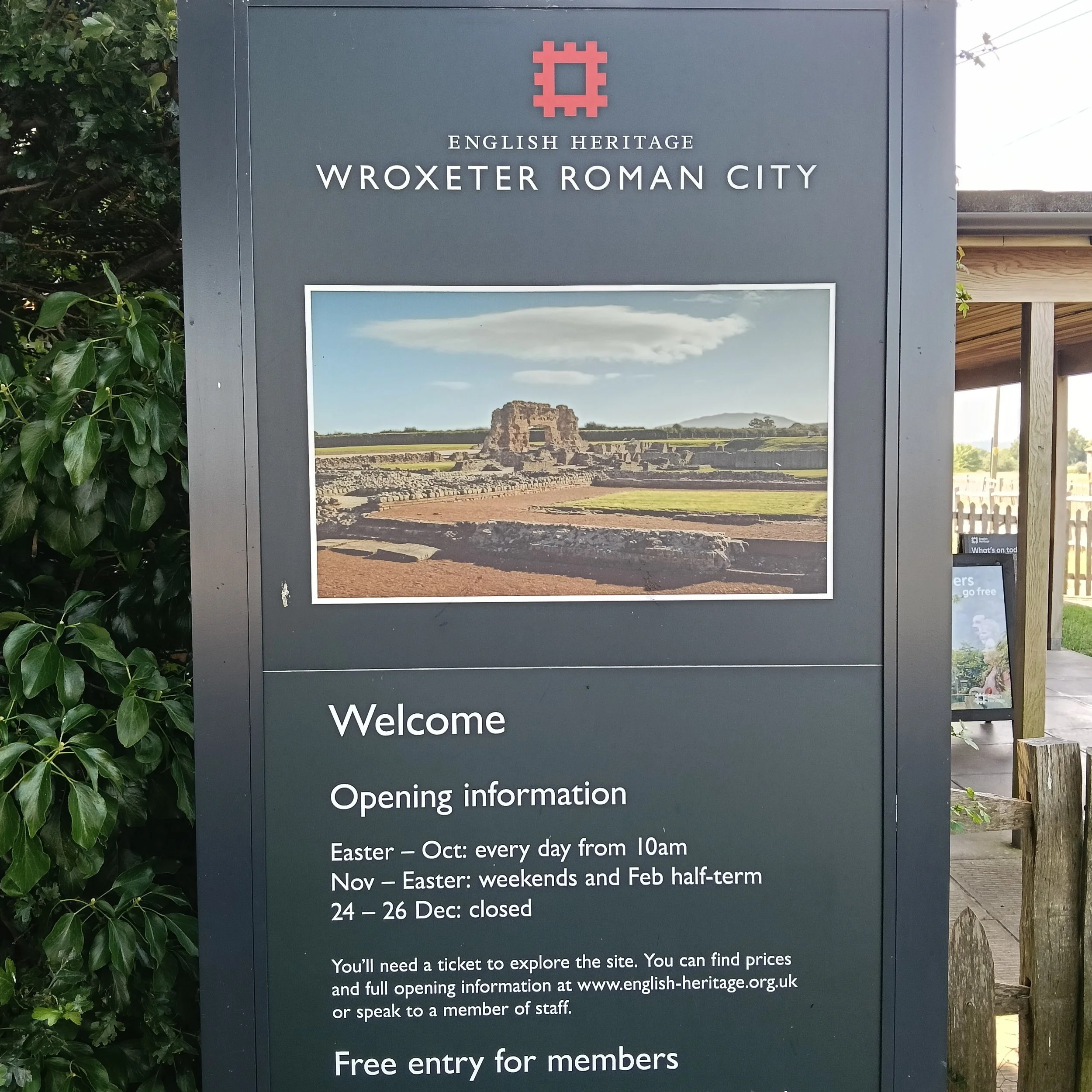
The modern entrance offers little indication of the immense Roman city waiting beyond.
Before the Romans.
Long before Roman engineers surveyed straight roads across the countryside or builders laid the first stone foundations of Viroconium, this landscape belonged to the Cornovii, one of Iron Age Britain's most significant tribes.
Their territory stretched across much of what is now Shropshire, Cheshire, Staffordshire and the Welsh borders. Rather than living within towns, the Cornovii occupied a landscape of scattered farming communities protected by impressive hillforts, the greatest of which was The Wrekin, whose distinctive silhouette still dominates the horizon only a few miles from Wroxeter.
Although little is known about the tribe's political structure, archaeology paints a picture of prosperous agricultural communities connected through trade with neighbouring peoples long before Rome arrived. They worked iron, farmed fertile river valleys and maintained links that extended well beyond their own territory.
Unlike some tribes encountered elsewhere in Britain, there is little evidence that the Cornovii mounted prolonged military resistance against Rome. Whether through diplomacy, pragmatism or simple circumstance, they became incorporated into the expanding Roman province relatively quickly.
That decision, voluntary or otherwise, would transform this quiet bend in the River Severn into one of the most important urban centres in Roman Britain.
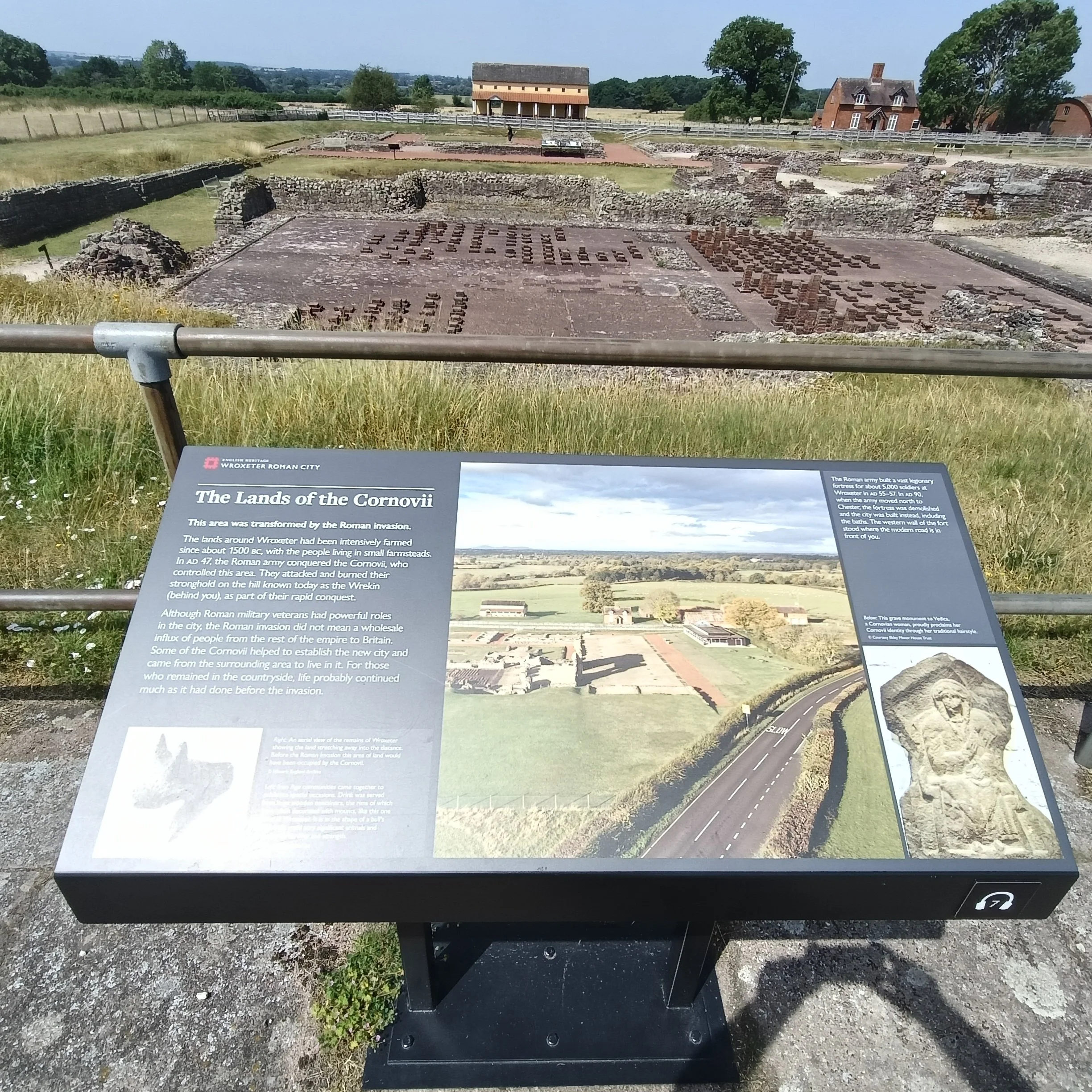
The story of Wroxeter begins not with Rome, but with the Cornovii people who called this landscape home.
Why Here?
Roman cities were never built by accident.
Every major settlement reflected careful planning, military necessity and economic opportunity.
Wroxeter occupied an exceptional position. The River Severn provided transport and communication deep into western Britain, while the surrounding countryside offered fertile farmland capable of supporting thousands of people. Roads radiated from the site towards Wales, Chester, London and the Midlands, making it an ideal administrative hub for the newly conquered region.
Perhaps most importantly, this was the gateway to Wales.
Throughout the first century AD, Roman campaigns pushed westwards against tribes occupying the mountains beyond the Severn Valley. A permanent military presence was essential if Rome hoped to secure its new frontier.
Around AD 58, that presence arrived in force.
The Roman army established a large legionary fortress here capable of housing thousands of soldiers. Barrack blocks, workshops, granaries, headquarters buildings and defensive earthworks rapidly transformed the landscape.
Where Cornovii farmers had once cultivated fields, disciplined ranks of legionaries now drilled beneath the standards of Rome.
Yet the fortress itself would prove only the beginning.
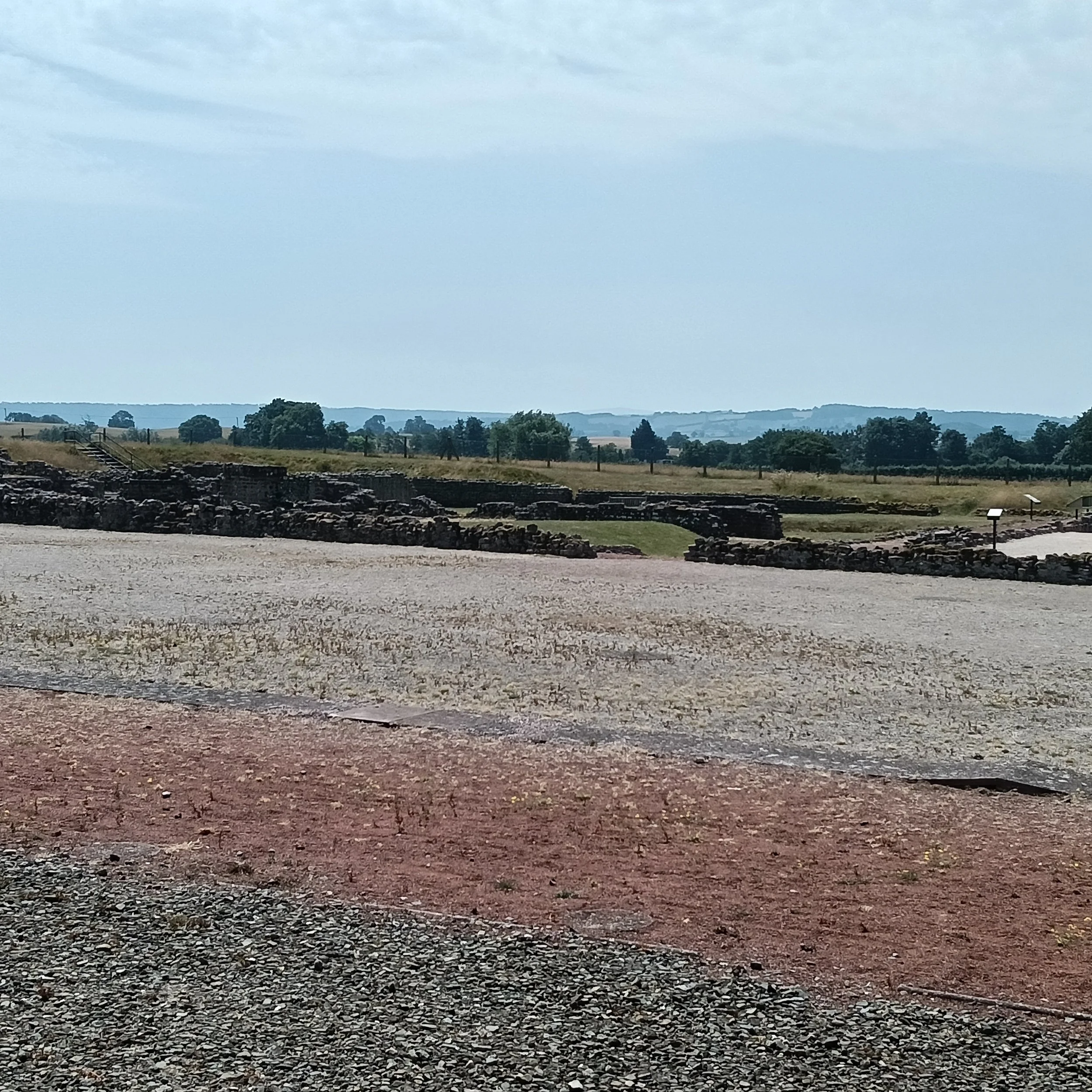
The visible ruins represent only a small portion of the ancient city.
From Fortress to Flourishing City.
Military camps often disappeared once Rome's frontiers moved elsewhere.
Wroxeter followed a very different path.
As campaigning shifted further west into Wales, the legion departed, leaving behind roads, infrastructure and substantial public buildings. Rather than abandoning the site, Roman administrators recognised its enormous potential as a civilian settlement.
Veterans settled nearby after completing their military service.
Merchants arrived hoping to profit from the growing population.
Craftsmen established workshops.
Farmers supplied grain, livestock and vegetables.
Local Britons increasingly adopted Roman fashions, architecture and customs while continuing to preserve aspects of their own identity.
Within only a few decades, Viroconium Cornoviorum had become one of the largest and wealthiest towns in Roman Britain.
It was no frontier outpost.
It was a city.
Visitors approaching its gates would have encountered paved streets stretching in orderly grids between stone buildings roofed with red ceramic tiles. Public fountains supplied fresh water, while temples, markets, workshops and elegant town houses demonstrated both Roman engineering and imperial confidence.
For anyone arriving from the surrounding countryside, the city must have appeared astonishing.
This was urban civilisation on a scale that Britain had rarely witnessed before Rome.
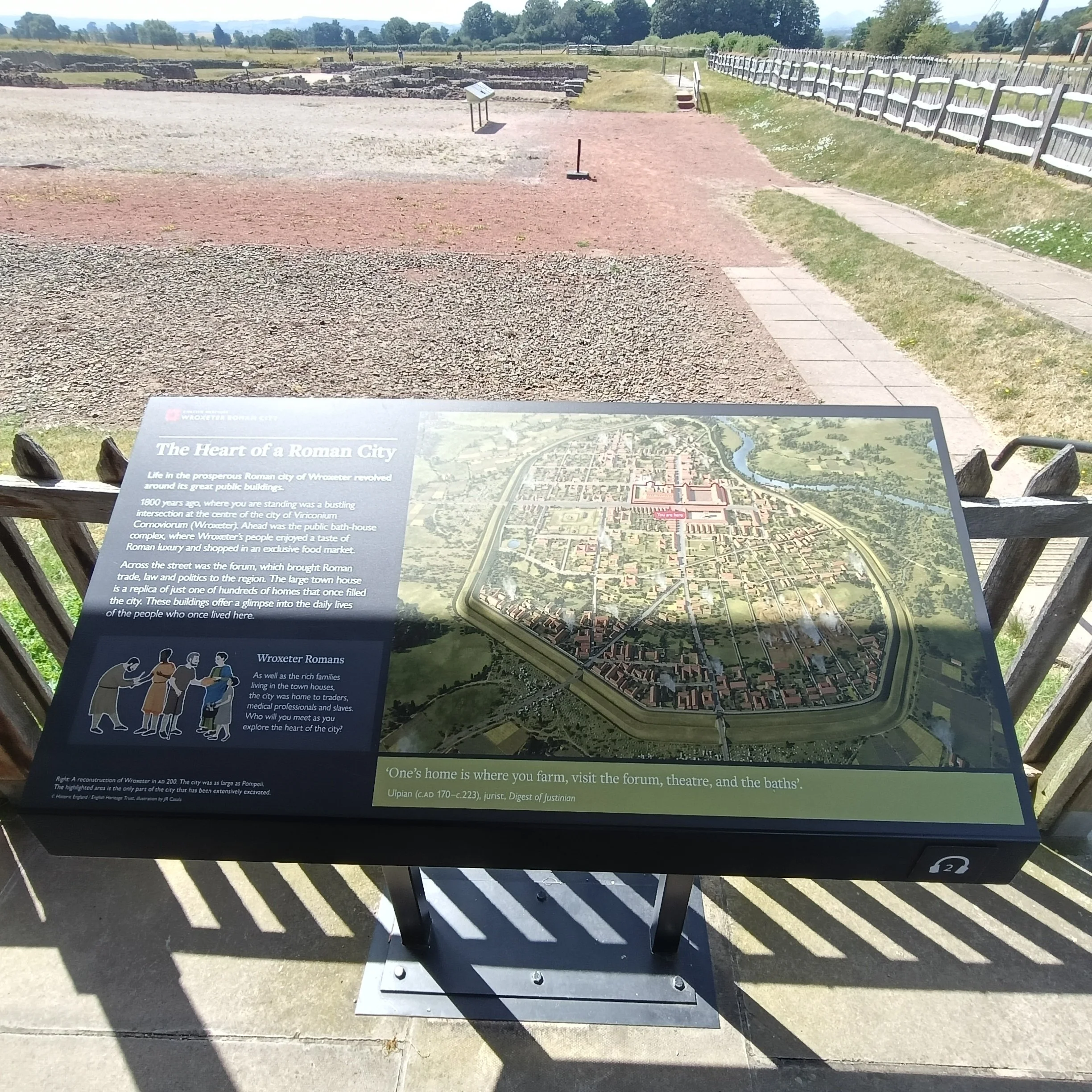
Artist reconstructions reveal the remarkable scale of Roman Viroconium.
Building an Imperial City.
Roman towns were carefully choreographed expressions of power.
Nothing was random.
Wide streets encouraged movement while also providing impressive sightlines towards major public buildings. Drainage channels ran beneath the roads. Shops occupied valuable frontage along busy thoroughfares. Wealthier homes spread behind enclosed courtyards where noise from the streets faded into private domestic life.
At the heart of everything stood the forum.
Every Roman city possessed one.
It served as political centre, marketplace, meeting place and civic stage where imperial authority became visible in everyday life.
Here taxes were collected.
Legal disputes were heard.
Official announcements were proclaimed.
Merchants negotiated contracts.
Travellers exchanged news from distant provinces.
Religion, commerce and government overlapped in ways that made the forum the beating heart of urban life.
Standing among today's low foundations requires imagination, yet the interpretation panels scattered throughout the site provide an invaluable bridge between archaeology and reconstruction.
They reveal a city whose public architecture rivalled settlements anywhere else in Roman Britain.
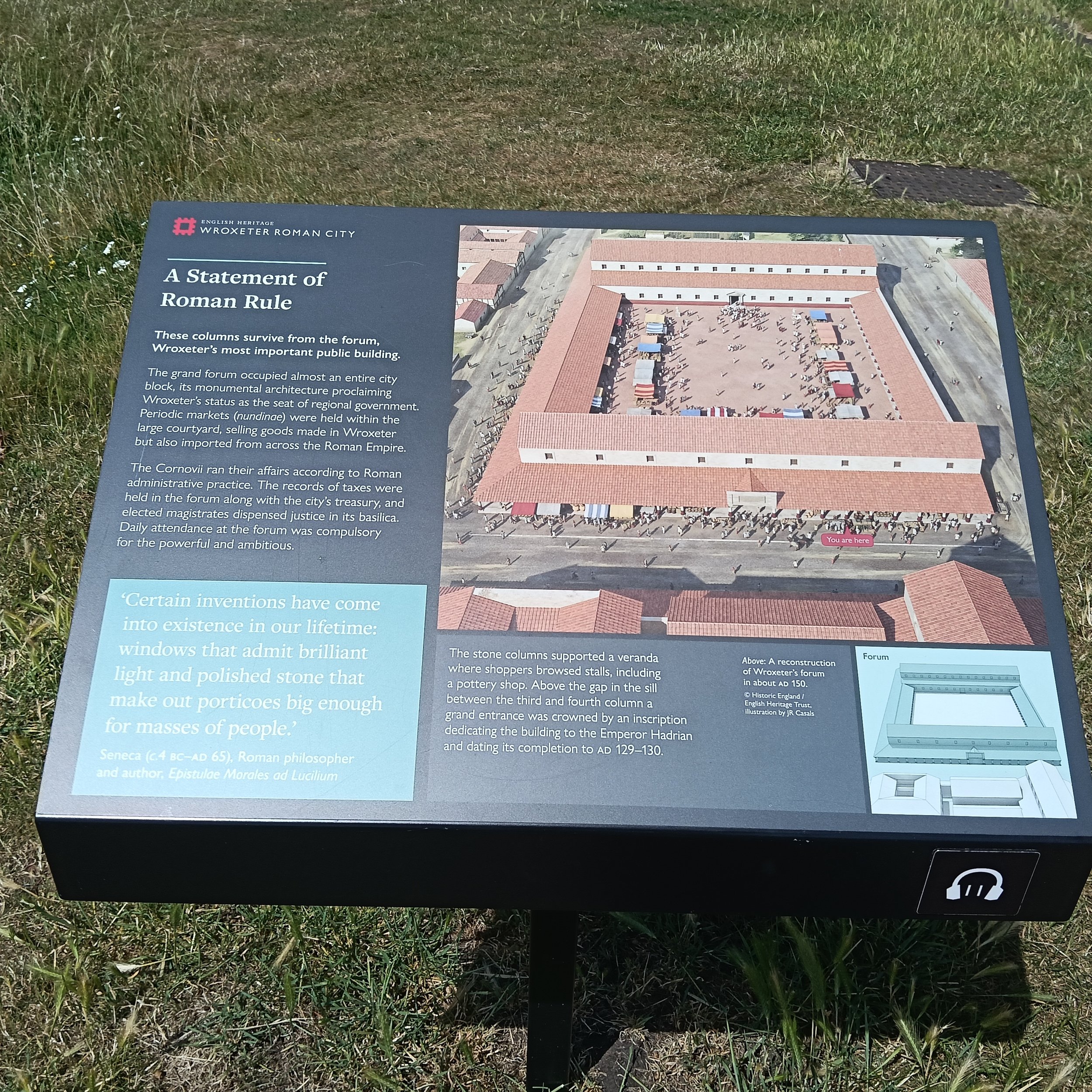
The forum formed the political, commercial and administrative heart of Roman Wroxeter.
The Forum.
The forum at Wroxeter covered an enormous area, roughly equivalent to two modern football pitches.
Surrounded by covered colonnades, visitors could walk beneath shelter while moving between official buildings, market stalls and administrative offices. Stone columns framed the central square, creating a space designed as much to impress as to function.
Roman architecture always carried a message.
It proclaimed order.
Permanence.
Authority.
Every visitor entering the forum understood immediately who governed this city.
Today, only the lowest courses of masonry survive, but there is something strangely powerful about these foundations. Unlike reconstructed monuments elsewhere, they invite the imagination to complete the picture.
Children once ran across these paving stones.
Merchants argued over prices.
Officials issued legal judgements.
Citizens gathered to hear news from the wider Empire.
The stones remain silent, but they still occupy exactly the places where Roman life unfolded nearly two thousand years ago.
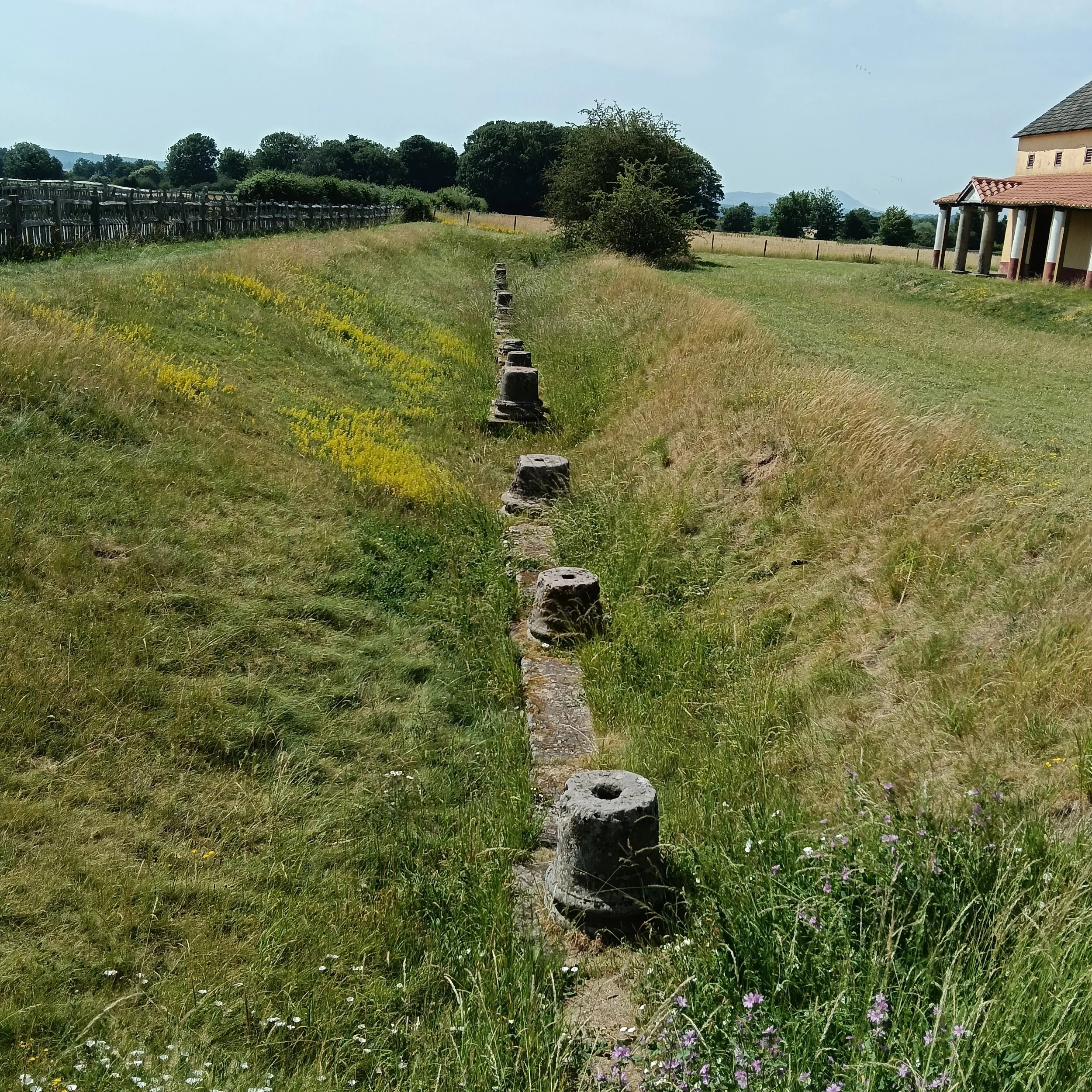
The surviving foundations hint at one of Roman Britain's largest civic space.
The Basilica: The Seat of Roman Authority.
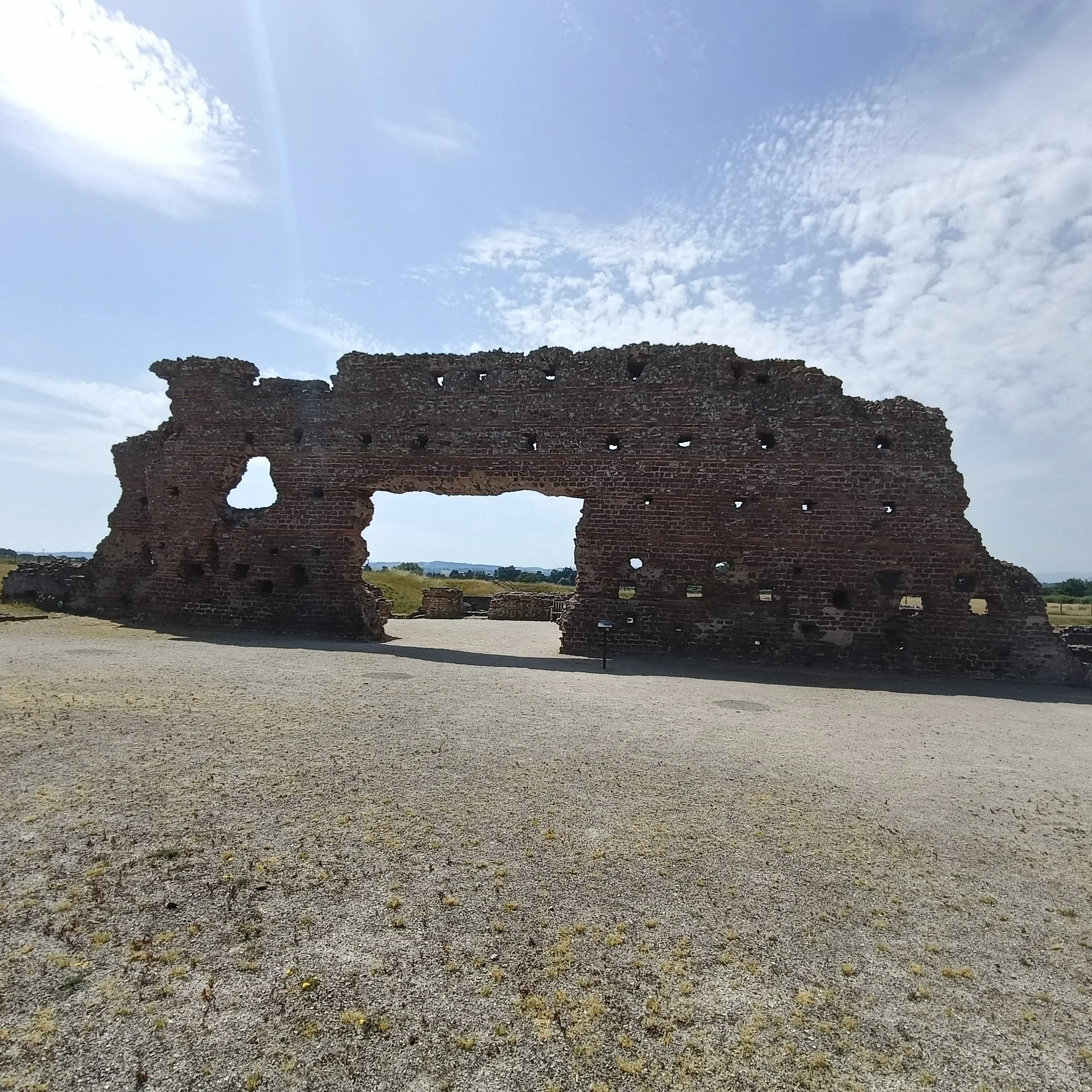
The Old Work once formed part of the vast basilica that dominated the forum.
Standing at one end of the forum is the feature that defines Wroxeter more than any other. Rising over seven metres into the Shropshire sky, the structure known simply as the Old Work has watched almost two thousand years of British history unfold around it.
Today it appears almost isolated, disconnected from the surrounding ruins, yet this immense wall once formed part of the basilica, the largest public building in the city and the centre of Roman administration.
To modern ears the word basilica often suggests a church. In the Roman world it meant something very different. A basilica functioned as a vast civic hall where legal cases were heard, commercial transactions completed and government business conducted. It was the place where magistrates exercised authority, where contracts became legally binding and where citizens encountered Roman justice.
The scale of the building reflected the importance of the city itself. Visitors entering the basilica would have walked beneath an enormous timber roof supported by rows of columns. Sunlight poured through high windows onto polished stone floors while the constant murmur of conversation echoed around the hall.
It was designed to impress.
Everything about Roman architecture communicated confidence. The Empire intended these buildings to demonstrate permanence, stability and civilisation. Standing inside such a hall in the second century would have left little doubt that Roman authority had come to stay.
History, however, had other plans.
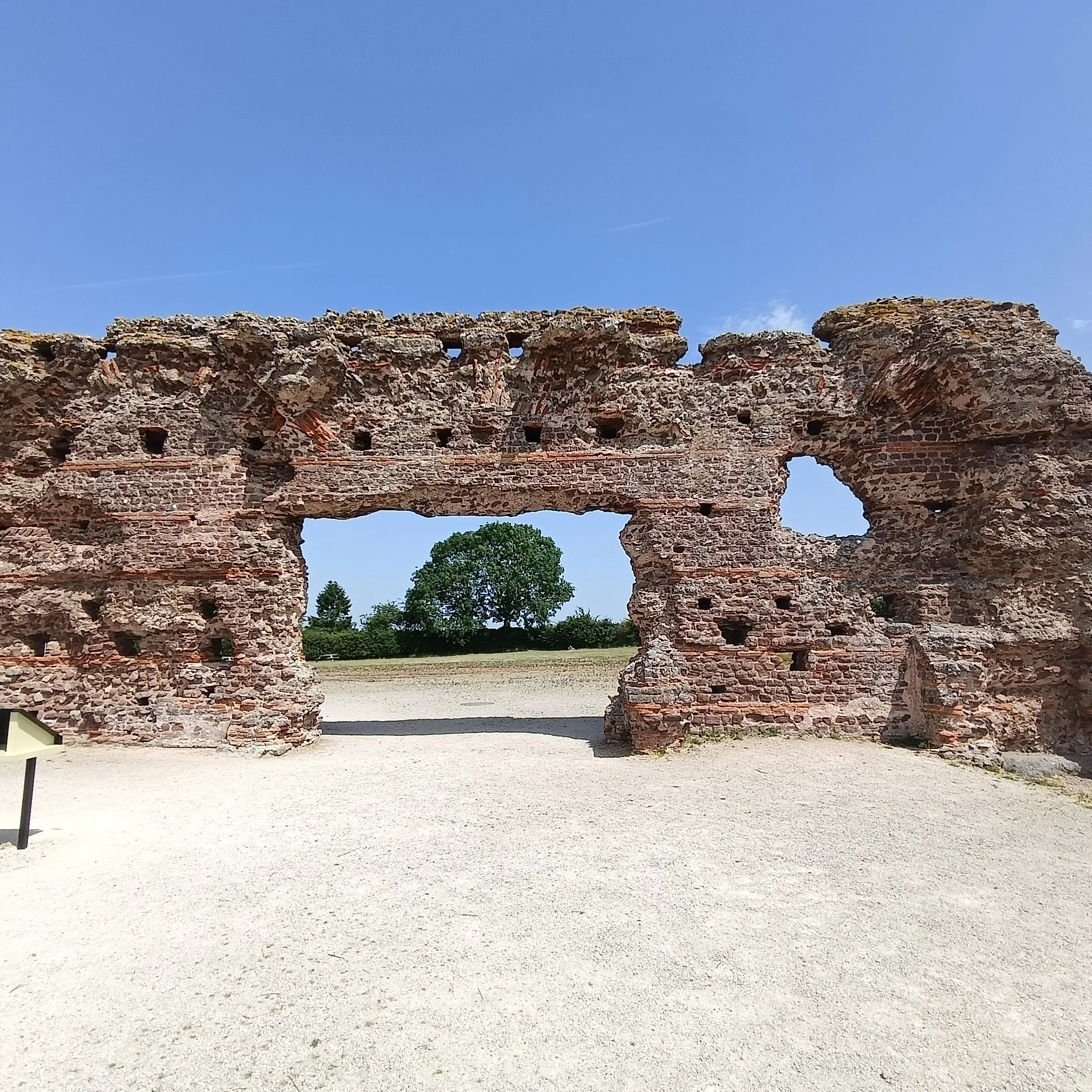
Nearly two thousand years later, the Old Work remains one of the tallest standing Roman walls in Britain.
A Wall That Refused to Fall.
Few Roman buildings in Britain survive above foundation level.
The Old Work is the great exception.
Constructed during the second century AD, it has remained standing through the collapse of Roman rule, the emergence of Anglo-Saxon kingdoms, Viking raids, Norman conquest, medieval farming, the Civil War, the Industrial Revolution and two World Wars.
That longevity alone is remarkable.
For centuries local people had little idea what the structure actually represented. Before archaeology provided answers, stories naturally filled the gaps. Some believed it belonged to an ancient castle, while others imagined it had been raised by giants or some forgotten civilisation.
In reality, the explanation is no less extraordinary.
The wall survives because of Roman engineering.
Alternating bands of carefully laid sandstone and thin courses of Roman brick distribute weight evenly throughout the structure, increasing both strength and flexibility. The precision of the workmanship remains obvious today, while the rectangular holes visible across the face of the wall once supported the wooden scaffolding used during construction.
Standing beside it, you are not simply looking at Roman architecture.
You are looking directly at the craftsmanship of builders who lived nearly eighteen centuries before the Norman Conquest.
There are remarkably few places in Britain where that connection feels quite so immediate.
Engineering an Empire.
The survival of the Old Work offers a glimpse into one of Rome's greatest strengths.
Military conquest undoubtedly built the Empire, but engineering sustained it.
Roman surveyors could map landscapes with astonishing precision. Builders standardised construction techniques across thousands of miles. Roads crossed mountains, bridges spanned rivers and aqueducts carried water across entire valleys.
Every province benefited from this shared knowledge.
Britain, often portrayed as a remote frontier, received exactly the same architectural expertise found elsewhere in the Empire. Skilled engineers, architects and craftsmen travelled where they were needed, bringing with them construction methods refined over generations.
The result was a city whose public buildings rivalled those found much closer to Rome itself.
Wroxeter may have stood on the edge of the Empire geographically, but architecturally it belonged firmly within it.
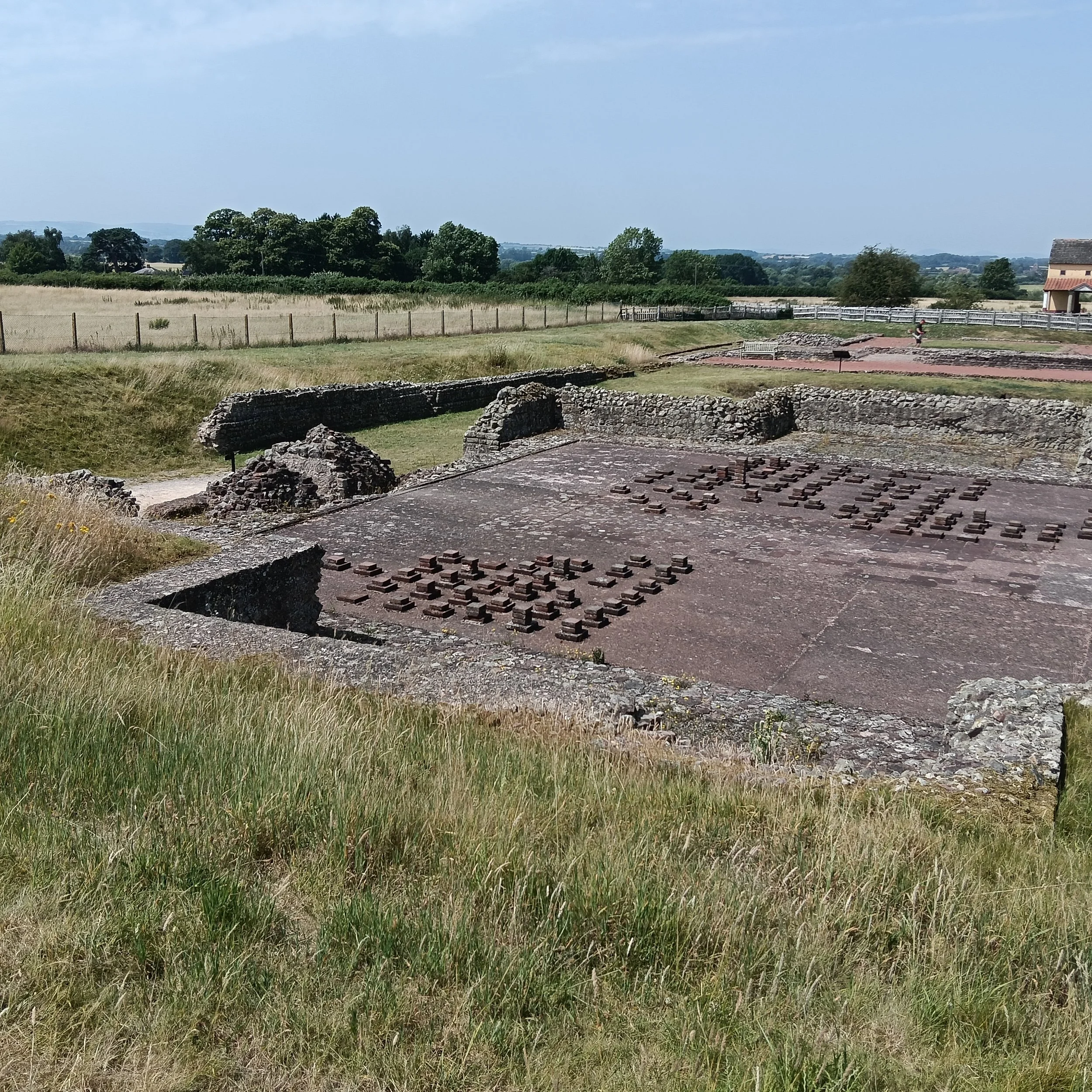
The bath complex dominated the western side of the city centre.
More Than Somewhere to Wash.
If the forum represented the political heart of Viroconium, the baths formed its social heart.
To modern visitors it can seem astonishing that one of the largest public buildings in the city existed for bathing. Yet cleanliness was only one small part of its purpose.
The Roman baths functioned as community centres, sports clubs, libraries, restaurants, business venues and meeting places all at once.
A visitor might begin by exercising in the palaestra before changing clothes and passing through a carefully planned sequence of heated rooms. Friends discussed politics while merchants negotiated contracts. Lawyers met clients. Travellers exchanged news gathered from distant provinces. Massage, reading, conversation and relaxation formed just as much a part of the experience as washing.
For wealthy citizens, an afternoon at the baths was woven into the rhythm of everyday life.
Roman civilisation placed enormous importance on communal space, and nowhere embodied that philosophy better than the public baths.
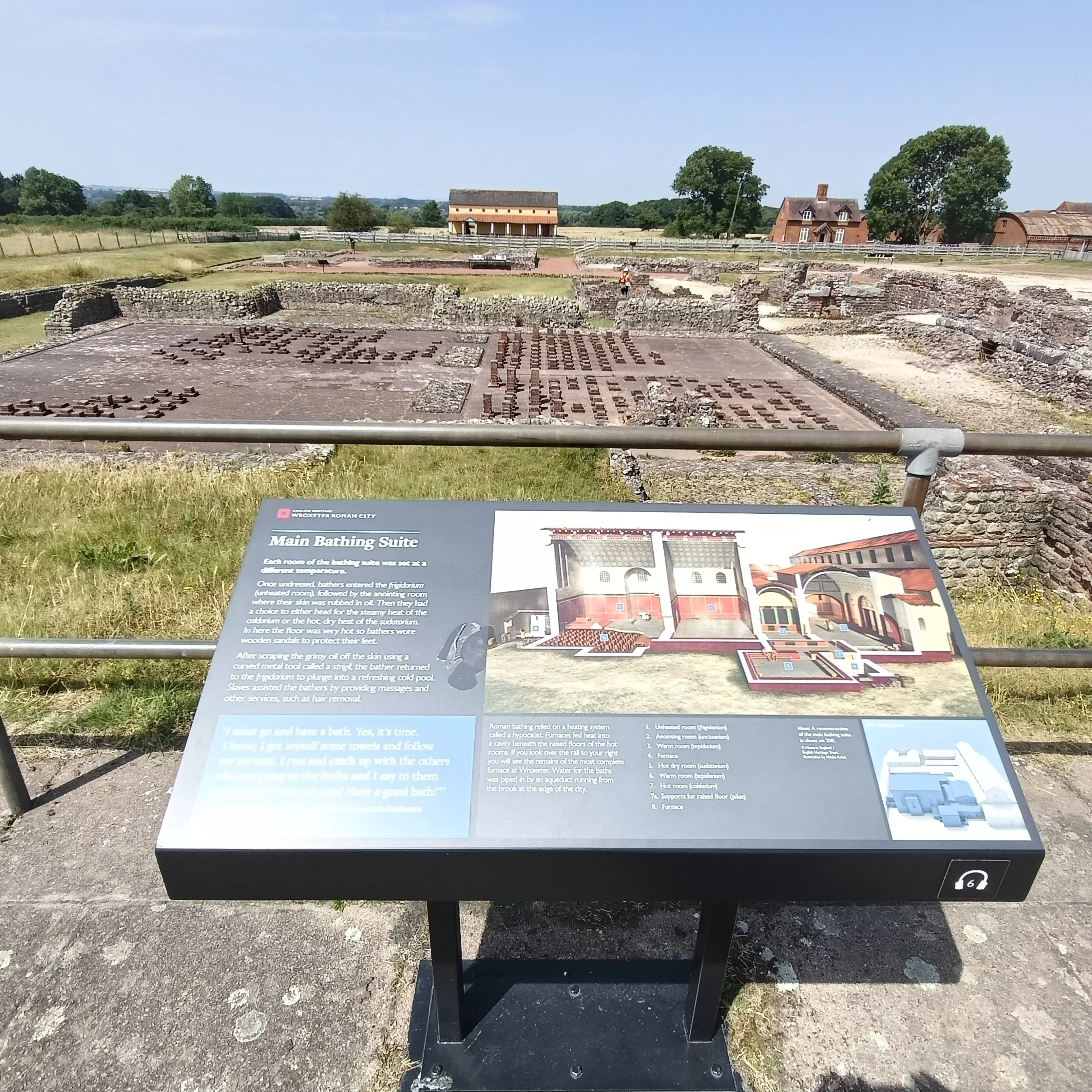
The reconstruction reveals one of the most sophisticated bath complexes in Roman Britain.
Heating an Entire Building.
The baths were also remarkable feats of engineering.
Hidden beneath the floors lay one of Rome's greatest technological achievements, the hypocaust.
Brick pillars supported suspended floors, creating empty spaces beneath the rooms. Large furnaces burned continuously at one end of the building, forcing hot air beneath the floors before it travelled upwards through hollow clay tiles built into the walls.
The result was an efficient central heating system capable of warming enormous buildings.
Visitors moved gradually through rooms of increasing temperature.
The tepidarium provided gentle warmth.
The caldarium offered intense heat and steam.
Finally, bathers plunged into the cold waters of the frigidarium, completing the ritual before returning to changing rooms or continuing into nearby social spaces.
Even today the engineering feels remarkably modern.
It serves as another reminder that Roman Britain was far more technologically advanced than many people imagine.
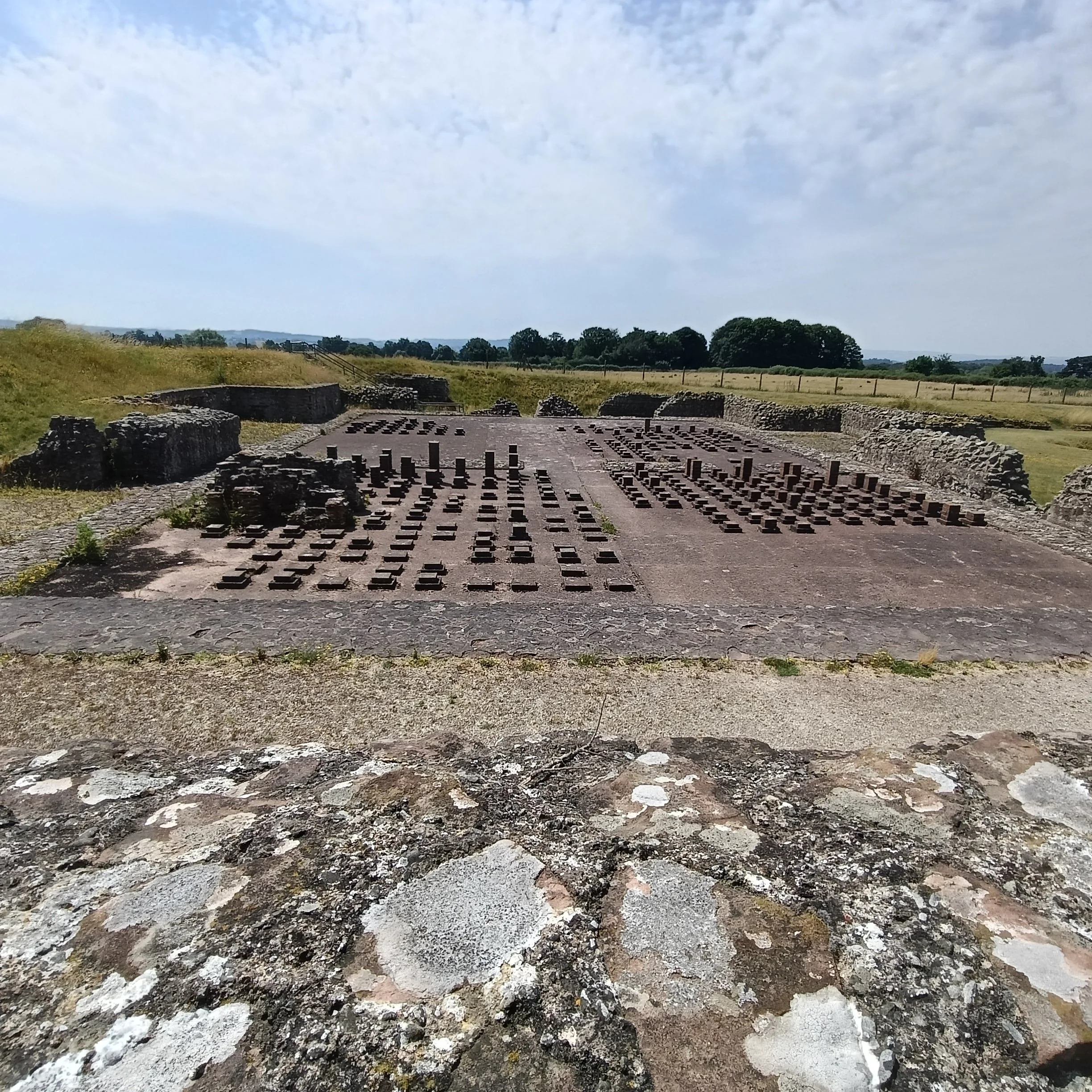
The surviving foundations hint at a building that once echoed with conversation, steam and daily life.
The Palaestra.
Immediately adjoining the baths lay the palaestra, an open exercise courtyard that completed the bathing experience.
Here visitors wrestled, boxed, trained with weights and exercised before entering the heated rooms. Physical fitness formed an important part of Roman culture, particularly among wealthier citizens who viewed athletic exercise as a mark of discipline and education.
Yet the palaestra was also another social space.
Spectators gathered to watch competitions while friends met before continuing into the baths themselves.
What appears today as open foundations once formed a lively public square filled with movement, conversation and noise.
The archaeology is silent.
The imagination restores the voices.
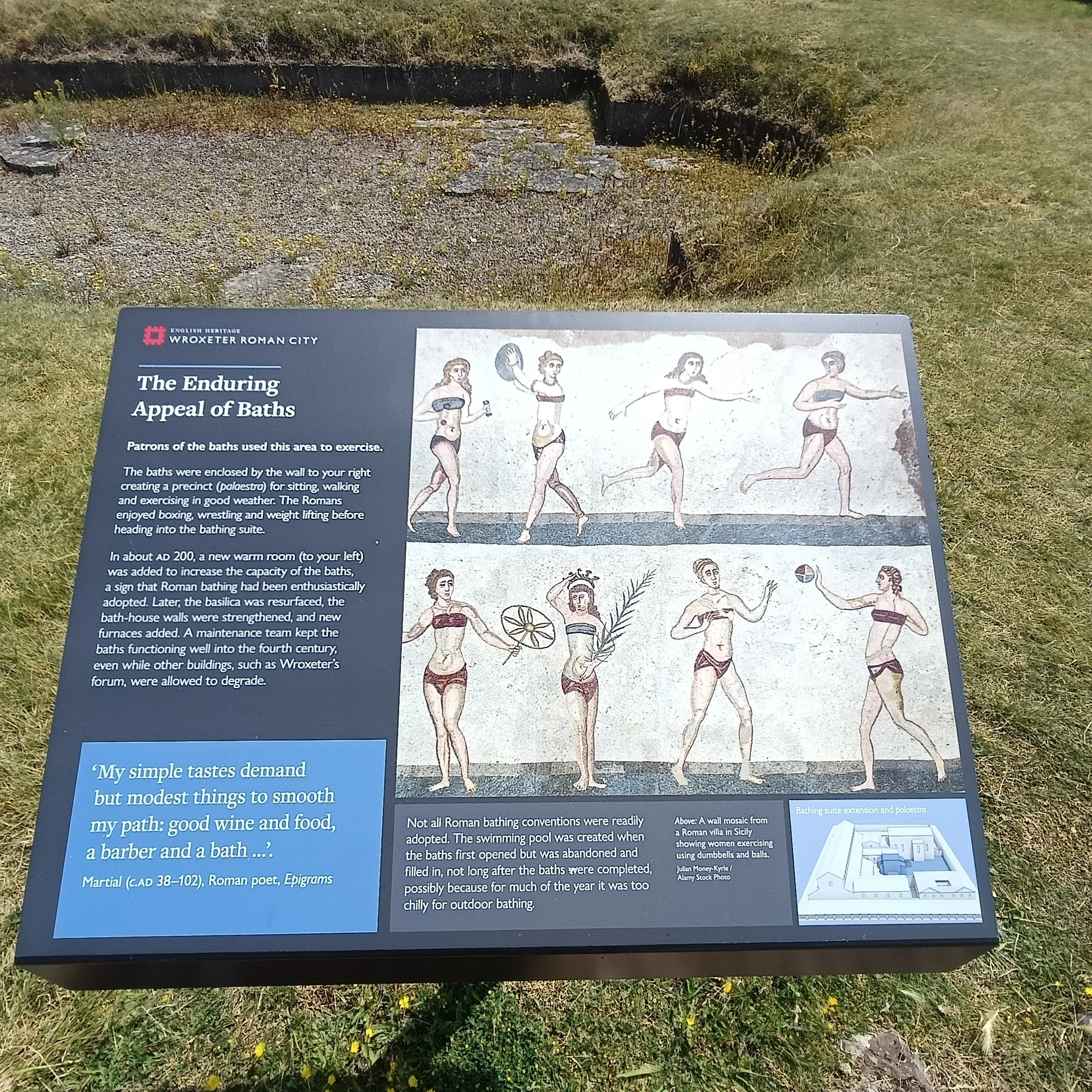
Exercise, conversation and relaxation formed part of a single Roman experience.
The City That Never Really Disappeared.
One of Wroxeter's greatest mysteries begins after the Romans left Britain.
Many Roman towns entered rapid decline during the fifth century.
Public buildings collapsed.
Trade networks fragmented.
Urban life gradually faded.
Wroxeter appears to have followed a rather different path.
Excavations have revealed evidence suggesting continued occupation long after imperial government disappeared. Timber halls were constructed within abandoned Roman buildings, while sections of the city appear to have remained inhabited well into the post-Roman period.
Exactly who lived here remains the subject of lively academic debate.
Some historians believe Wroxeter may even have become an important centre for the surviving British kingdoms that emerged following Rome's withdrawal, preserving elements of Roman administration for generations after the Empire itself had vanished from Britain.
Whether that interpretation ultimately proves correct or not, it demonstrates that Wroxeter's story did not simply end with the departure of the legions.
It entered a new and equally fascinating chapter.
Stepping Inside a Roman Home.
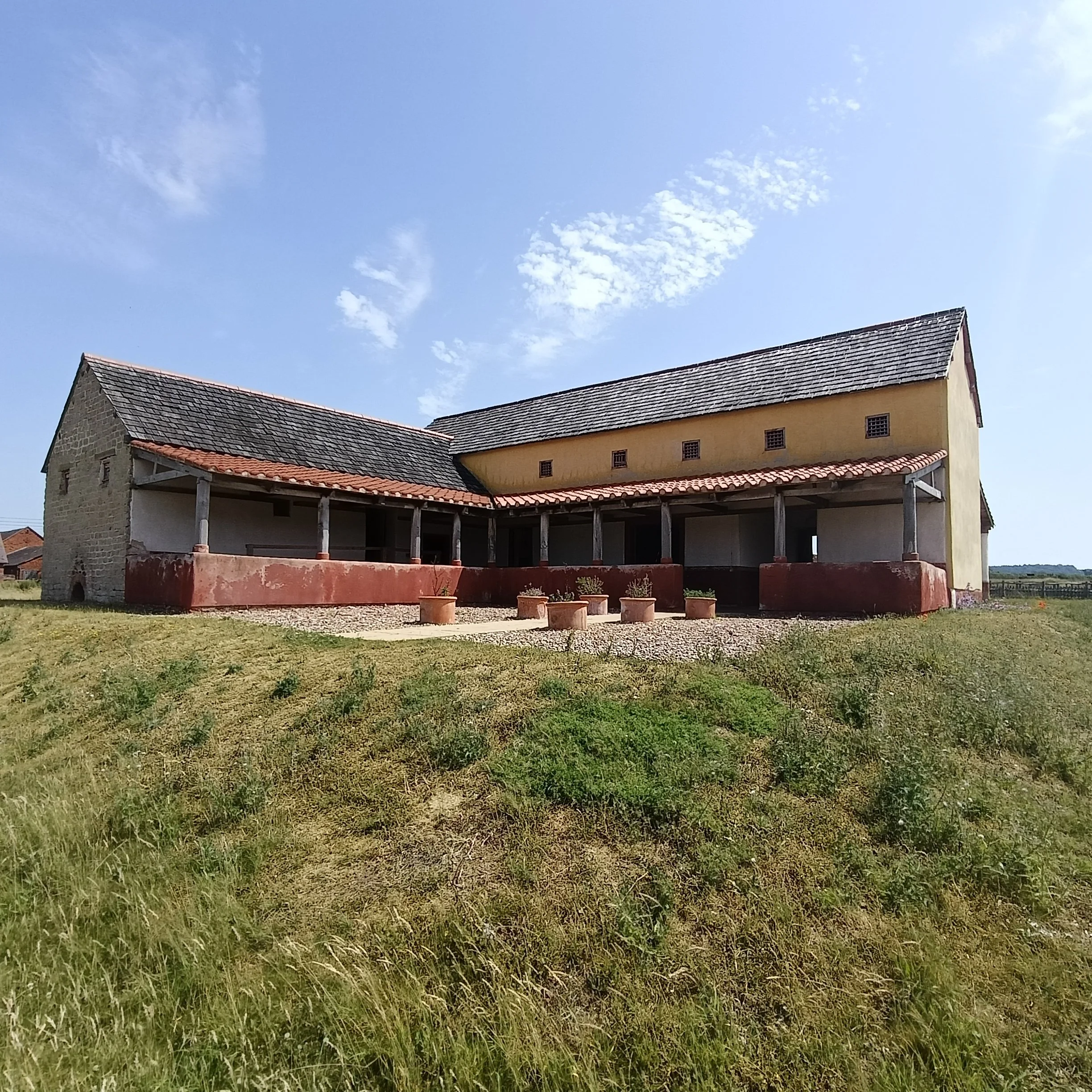
The reconstructed townhouse is based entirely on archaeological evidence uncovered at Wroxeter
One of archaeology's greatest frustrations is that it rarely preserves complete buildings. Walls collapse, roofs rot away and timber disappears long before modern archaeologists arrive. Foundations can tell us where a room once stood, but they cannot easily show us how that room felt to the people who lived there.
That is what makes Wroxeter so unusual.
Alongside the excavated remains stands a full-size reconstructed Roman townhouse, built using evidence gathered during decades of archaeological investigation. Rather than relying on imagination alone, archaeologists combined excavated foundations with evidence from Roman Britain and the wider Empire to recreate the appearance of a prosperous urban home during the fourth century.
Stepping inside transforms the archaeological site outside.
Suddenly the stone foundations scattered across the fields become recognisable buildings rather than abstract ruins.
Visitors move through reception rooms, private chambers and domestic spaces that reveal how wealthy Romano-British families organised their homes. Painted walls replace bare stone. Wooden furniture returns to empty rooms. Light filters through windows, while carefully reconstructed decoration reminds us that Roman Britain was far more colourful than many people expect.
The townhouse does something remarkably difficult.
It makes Roman Britain feel lived in.
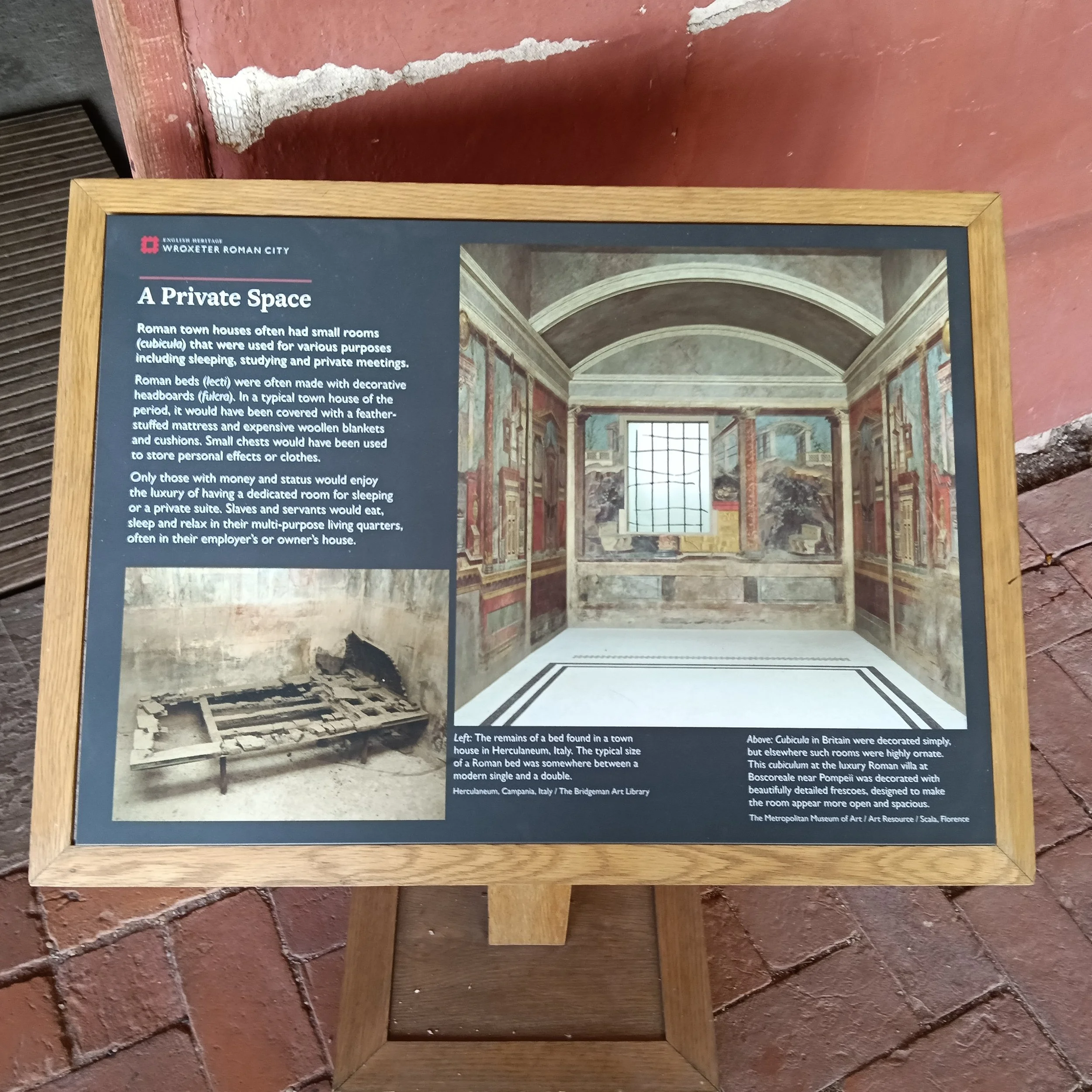
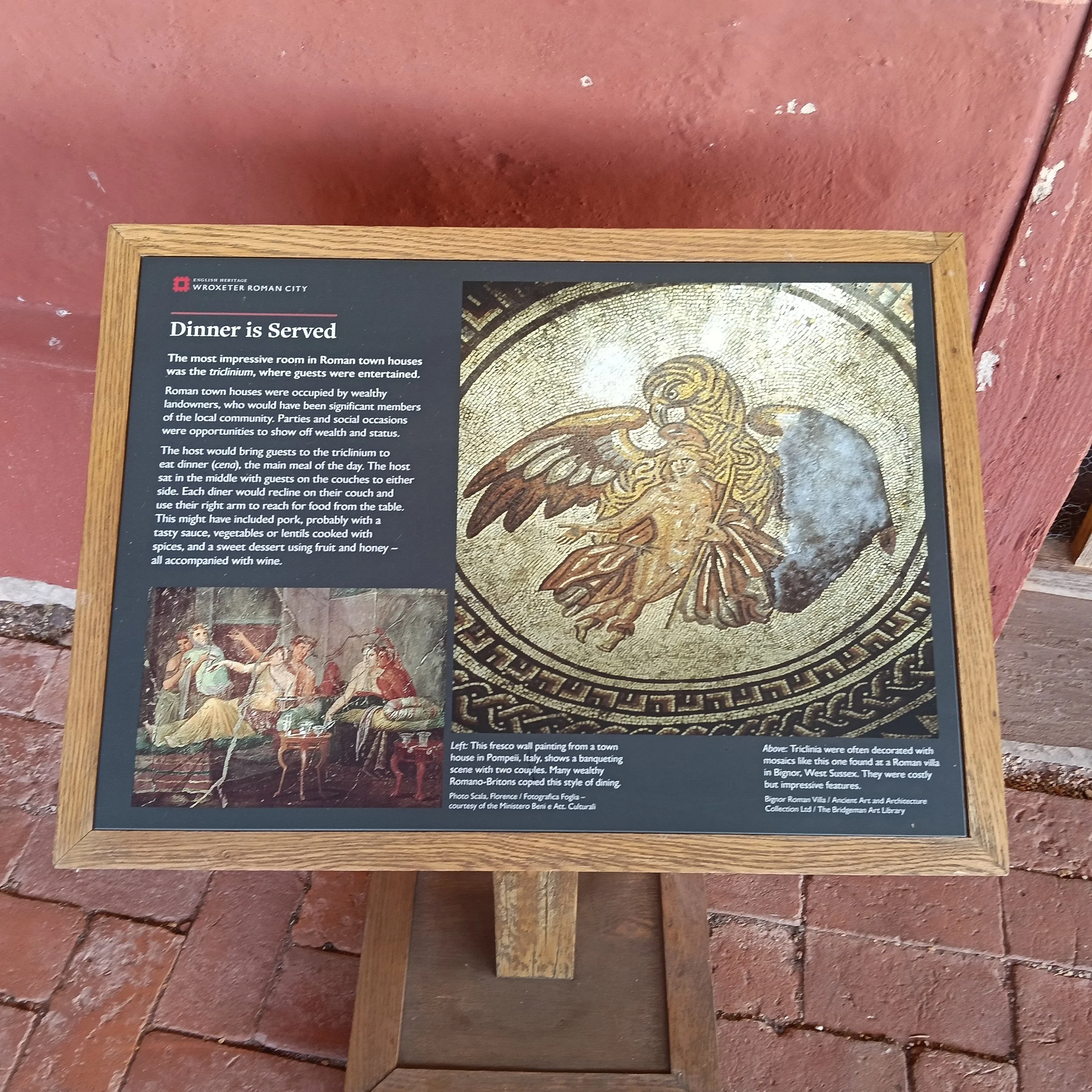
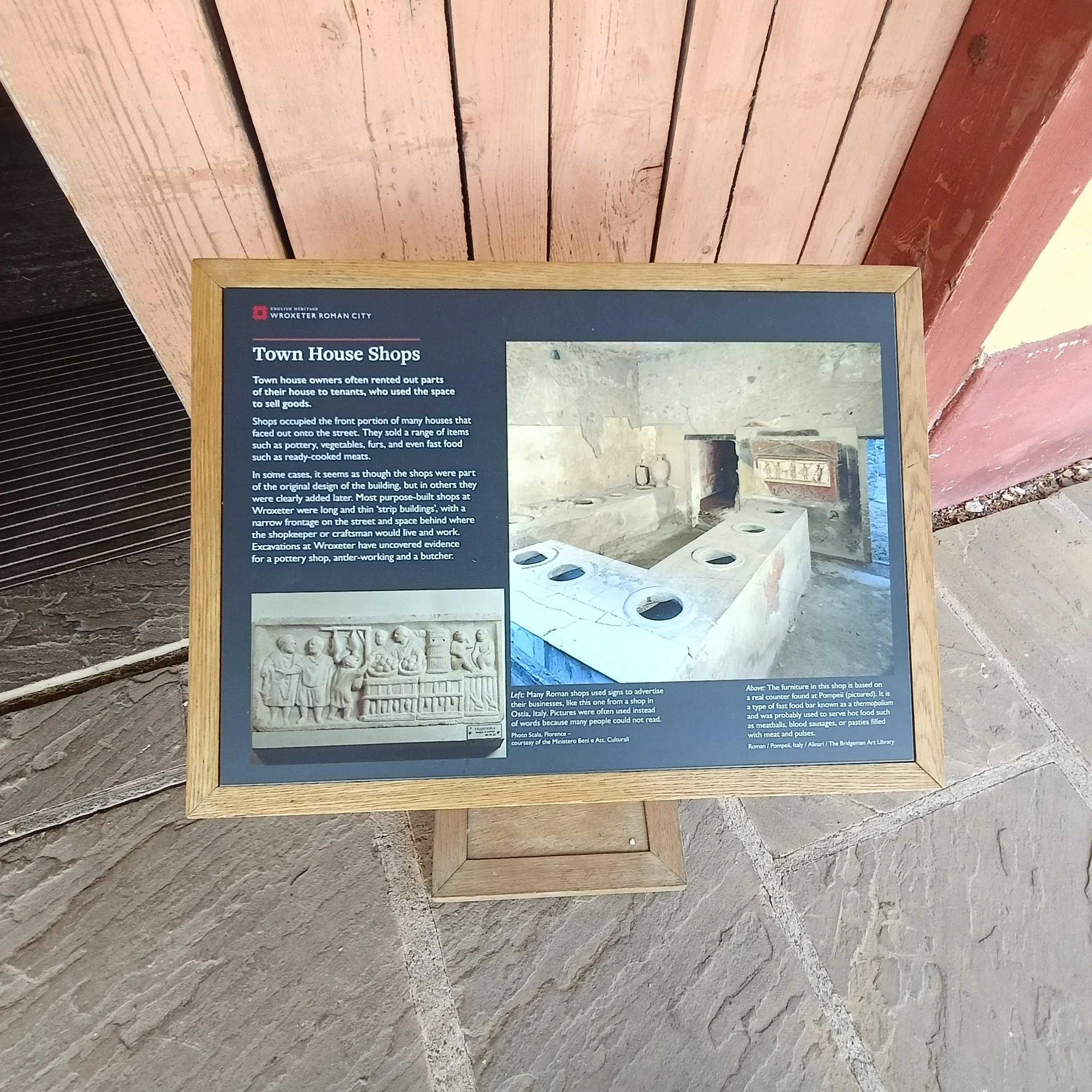
Homes such as these were more than places to sleep.
Business was conducted from the front rooms.
Guests were entertained over elaborate meals.
Children were raised within these walls.
Family shrines honoured household gods.
Servants carried out countless daily tasks that rarely appear in the historical record.
The ordinary moments of life unfolded here just as surely as they do in modern homes.
It is often said that archaeology is about objects.
In reality, archaeology is about people.
The reconstructed townhouse reminds us that behind every excavated wall stood individuals whose hopes, ambitions, fears and routines were often remarkably similar to our own.
Small Objects, Big Stories.
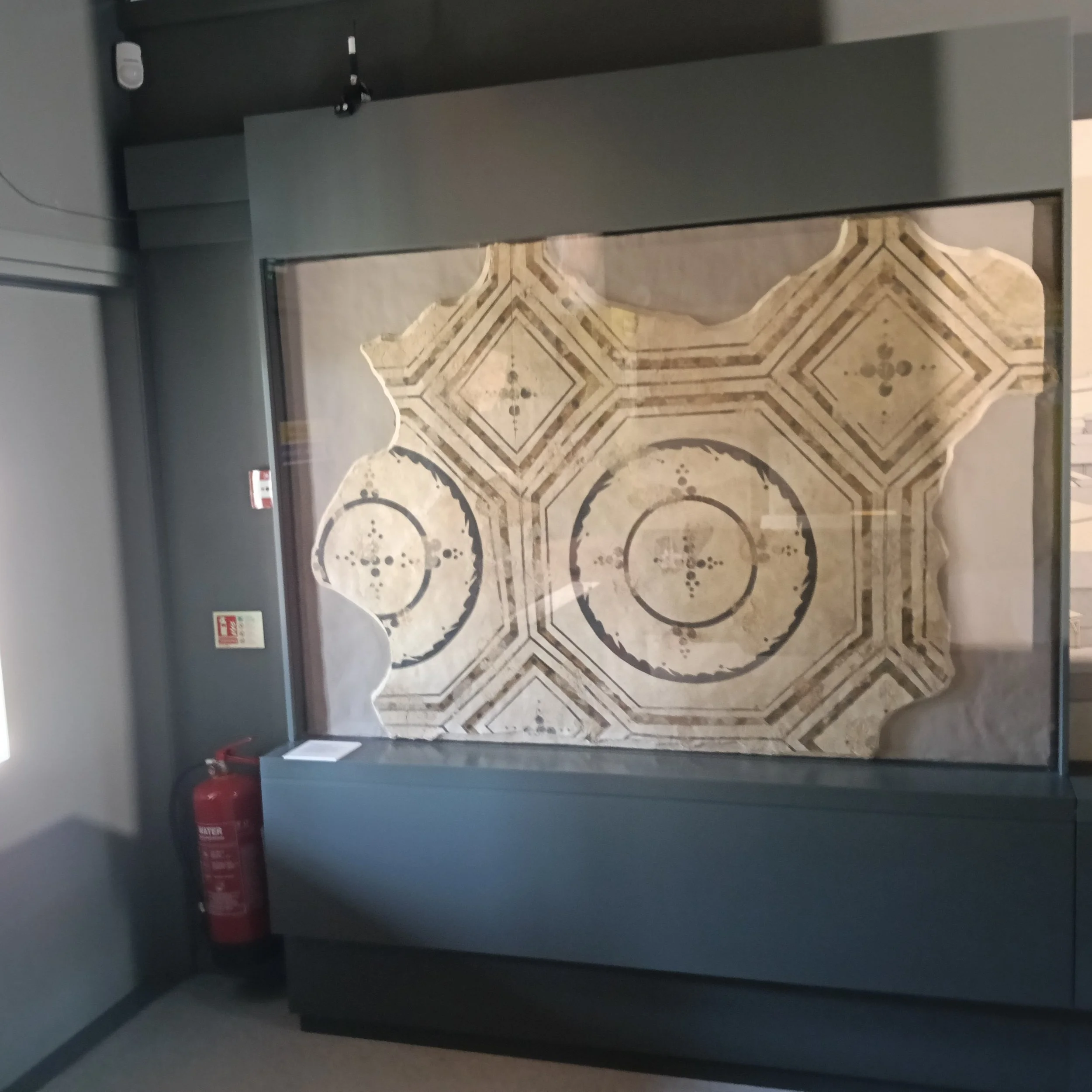
The surviving mosaic hints at the elegance enjoyed by some of Wroxeter's wealthier residents.
Museums have an extraordinary ability to compress centuries into a single display case.
A knife.
A brooch.
A fragment of coloured glass.
A cooking pot.
Individually they may appear insignificant.
Together they reconstruct an entire civilisation.
Walking through the museum at Wroxeter, it quickly becomes apparent that this was not a remote military outpost surviving on the edge of the Roman world. It was a prosperous provincial city connected to trade routes stretching across Europe and the Mediterranean.
The mosaic displayed within the museum speaks of wealth and skilled craftsmanship. Every tiny tessera was carefully placed by hand to create geometric patterns that would have decorated the floors of prosperous homes. These were not merely practical surfaces. They were statements of taste, education and social standing.
Nearby, fragments of painted plaster and carved architectural stone remind us that Roman buildings were anything but plain. Public spaces and private homes alike were decorated with bright colours, intricate carvings and polished finishes that have largely vanished with time.
The grey ruins visible today are only the bare skeleton of what was once a remarkably colourful city.
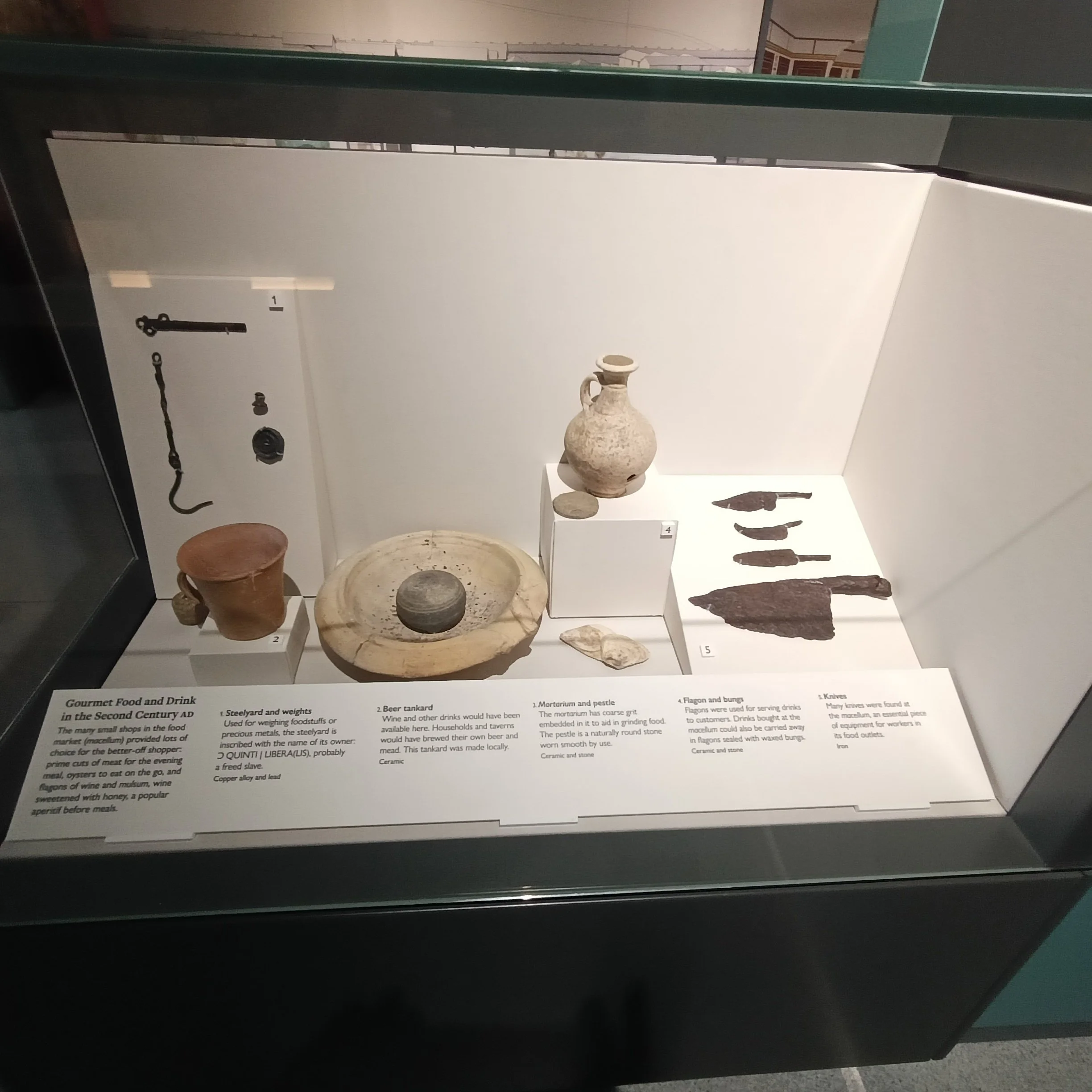
Everyday artefacts reveal the routines of ordinary Roman life.
The smallest finds are often the most revealing.
Cooking pots speak of meals prepared for families after long days of work.
Iron knives suggest butchers supplying the market.
Weights and measures reveal busy commercial activity.
Glass vessels hint at luxury imported from distant provinces.
Jewellery reflects personal identity rather than imperial politics.
None of these objects changed history.
Collectively, however, they made history possible.
It is easy to remember emperors.
Much harder to remember the carpenter repairing a doorway, the merchant weighing grain, the child dropping a toy or the cook preparing supper.
Archaeology allows those forgotten people to speak again.
Rediscovering Viroconium.
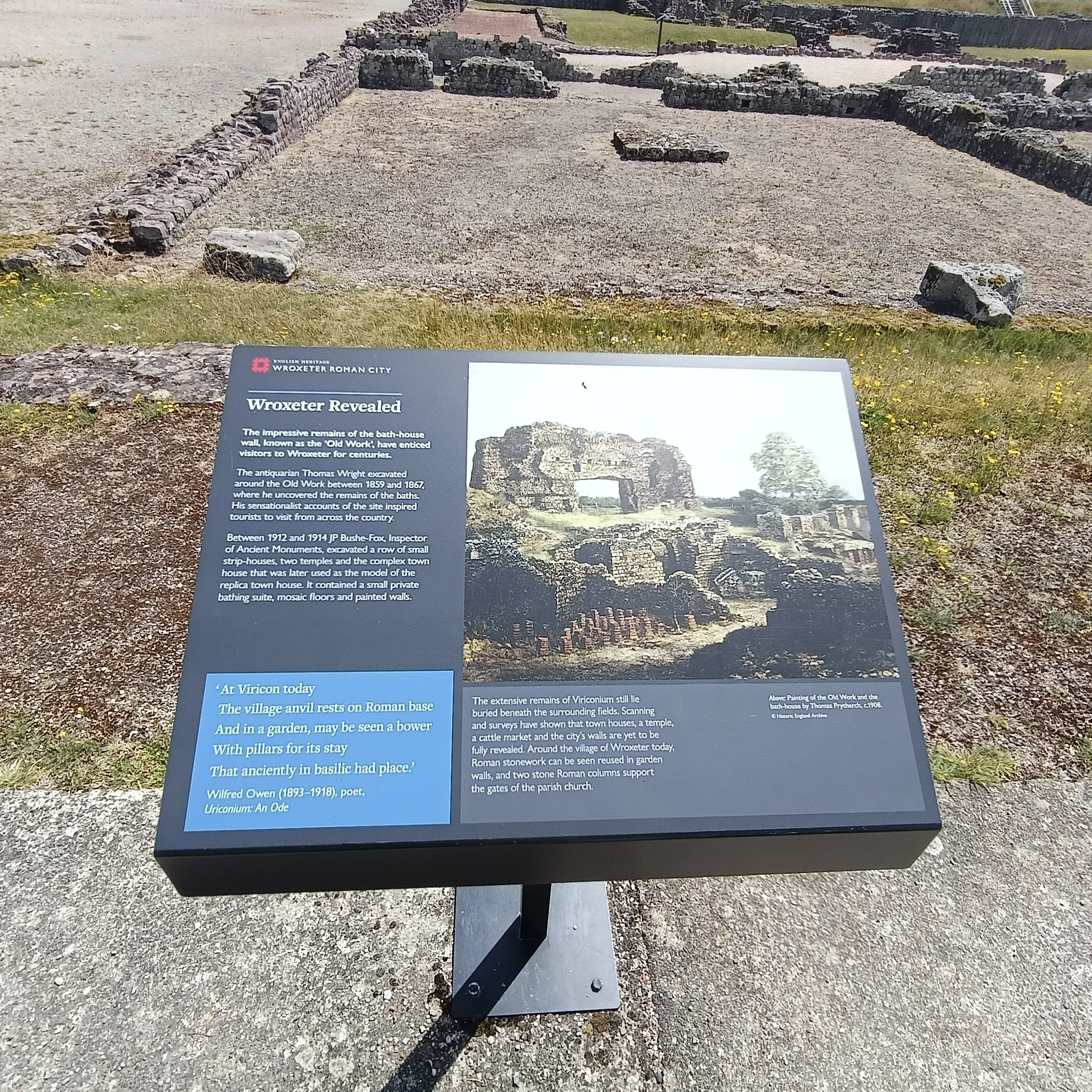
Modern archaeology continues to reshape our understanding of Roman Wroxeter.
Although local people had long known that Roman remains lay beneath the fields, serious archaeological investigation only began during the nineteenth century.
Among the pioneers was Thomas Wright, whose excavations transformed understanding of Roman Britain. For the first time, substantial sections of the baths, forum and surrounding buildings emerged from centuries of burial beneath farmland.
Each excavation added another piece to the puzzle.
Roads appeared.
Walls emerged.
Coins, pottery and inscriptions provided dates and names.
What had once been little more than local legend gradually became one of Britain's most important archaeological sites.
Excavation, however, is a destructive process.
Once something has been uncovered, it can never again remain untouched.
Modern archaeologists therefore work with great care, recognising that future generations may possess techniques capable of revealing far more than those available today.
The City Still Beneath the Fields.
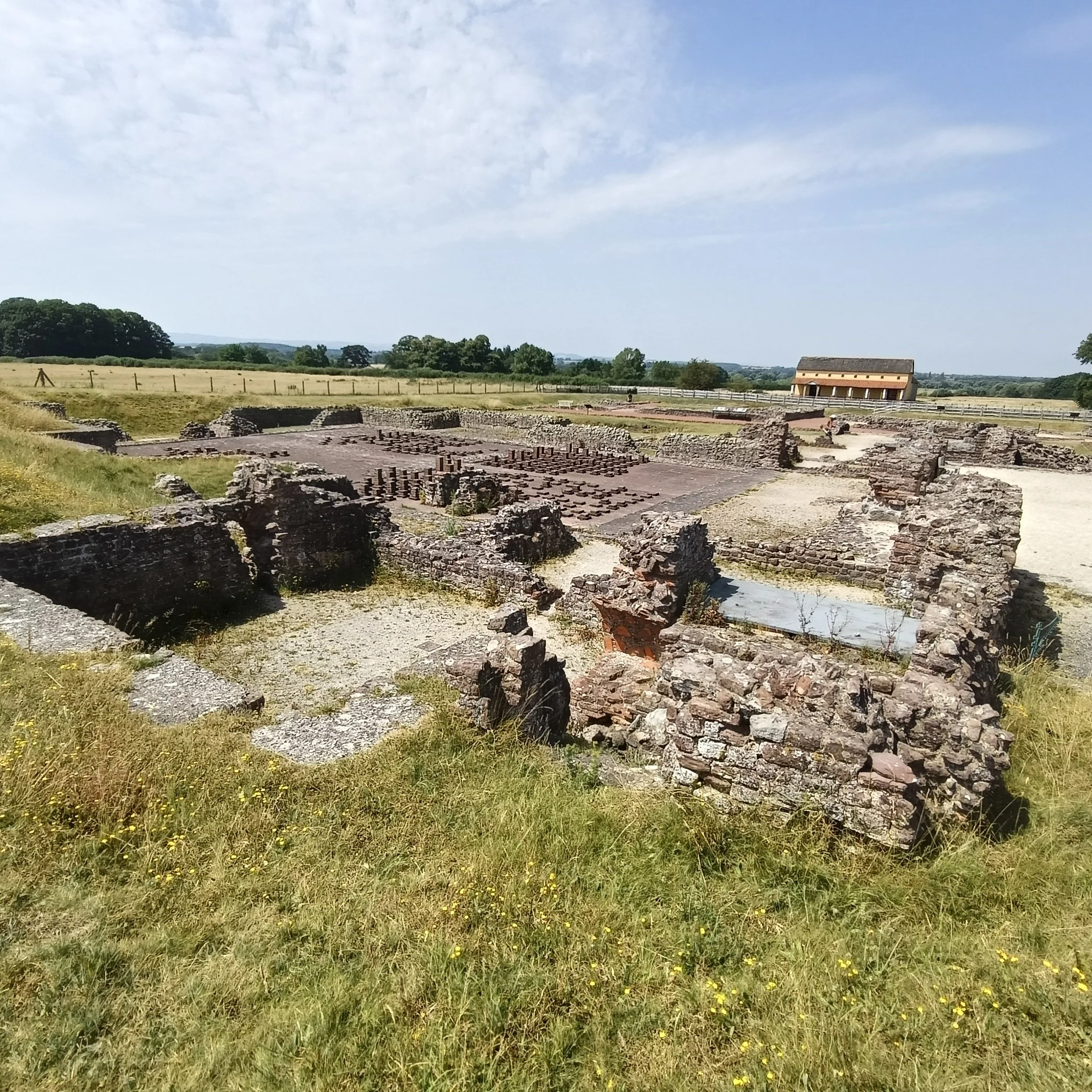
Most of Roman Wroxeter still lies hidden beneath the surrounding countryside.
Perhaps the most astonishing fact about Wroxeter is that what visitors see today represents only a tiny proportion of the original city.
Current estimates suggest that around ninety-five per cent of Viroconium Cornoviorum remains buried beneath the surrounding landscape.
Entire streets have never been excavated.
Countless homes remain untouched.
Workshops, shrines, gardens and public buildings still rest beneath fields where sheep now graze peacefully.
Every generation of archaeologists faces the same question.
Should we excavate now using today's techniques, or preserve the site for future researchers equipped with even more advanced technology?
For now, much of Wroxeter remains deliberately untouched.
It is not forgotten.
It is waiting.
A City That Lives Through Imagination.
Final Image
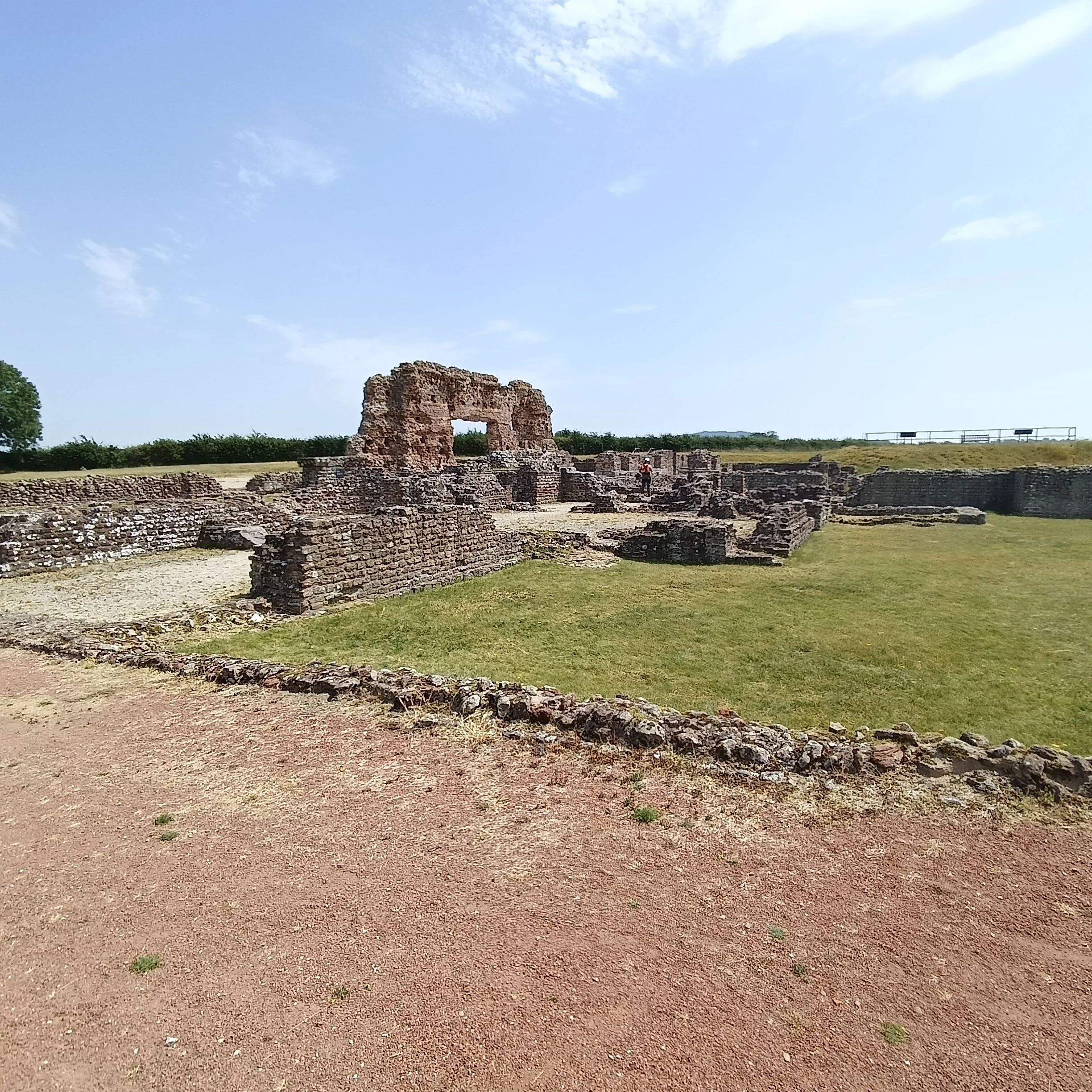
The ruins of Wroxeter reward those willing to imagine the city that once stood here.
Some historic places overwhelm visitors with what survives.
Wroxeter achieves something rather different.
It asks you to imagine.
York surrounds you with Roman walls.
Bath preserves magnificent public architecture.
Chester still follows the lines of its Roman streets.
Wroxeter offers foundations, fragments and one extraordinary wall, then quietly invites you to reconstruct an entire city in your mind.
Once you begin doing so, the experience becomes unforgettable.
The silence fills with conversation.
The empty courtyards become crowded.
Steam rises once more from the baths.
Merchants return to the forum.
Children race through streets that disappeared more than fifteen centuries ago.
The Old Work ceases to be an isolated wall and becomes part of a thriving basilica standing at the centre of one of Britain's greatest Roman cities.
That is the real magic of Wroxeter.
Not simply that it survives.
But that it still has the power to bring an entire civilisation back to life.
Echoes & Edges Reflection.
There is a temptation when visiting places like Wroxeter to measure them by what remains. To compare them with the walls of York, the baths of Bath or the amphitheatre at Chester and conclude that too little has survived.
That would be to misunderstand Wroxeter entirely.
Its greatest monument is not the Old Work, remarkable though it is. Nor is it the reconstructed townhouse, the forum or the baths. Its greatest monument is the imagination it demands from every visitor.
The Romans believed their cities represented permanence. Stone, brick and engineering would preserve their civilisation forever. Yet even one of Britain's largest cities eventually disappeared beneath pasture, its streets forgotten and its buildings dismantled by generations who no longer remembered their names.
And still, nearly two thousand years later, the city endures.
Not because every building survived, but because archaeology has given it a second life. Every excavation uncovers another fragment of a forgotten world. Every visitor walking quietly among the foundations reconstructs the city in their own mind. Every question asked about Wroxeter ensures that Viroconium lives a little longer.
Perhaps that is what history truly is.
Not the survival of stone, but the survival of memory.
The echoes remain.
We need only stop long enough to hear them.
